

Natural Chews for Dental Health: A 2026 Guide

Table of Contents
- Why Natural Chews for Dental Health Beat Brushing Alone
- How Chewing Action Scrapes Away Plaque and Tartar Buildup
- Rawhide Alternatives for Dogs: Safe, Digestible Options
- Ingredients to Look For (and Artificial Preservatives to Avoid)
- How to Clean Dog Teeth Naturally Between Chews
- Best Long-Lasting Chews for Dogs: Matching the Chew to Your Dog
- When to Pair Chews With Veterinary Dental Care
- Conclusion: Building a Daily Dental Routine That Sticks
- Frequently Asked Questions
Last Updated: September 12, 2026
Why Natural Chews for Dental Health Beat Brushing Alone
Most dog owners brush for a few seconds, miss the back molars, and call it done. Natural chews for dental health work differently: they clean the teeth a dog actually uses, for twenty minutes at a time, without a toothbrush. At Shake Wag & Roll, we hear it from owners of aggressive chewers and picky eaters alike: the chews get used, the toothbrush does not.
The American Veterinary Medical Association considers periodontal disease the most common clinical condition in adult dogs, which is why daily mechanical cleaning matters. A chew happens on its own.
Below, we break down how chewing removes plaque, which rawhide alternatives are actually safe, and how to match a chew to your dog's age, breed, and bite force.
How Chewing Action Scrapes Away Plaque and Tartar Buildup
Mechanical abrasion is how a chew's surface rubs against tooth enamel and gumline, lifting soft plaque before it hardens into tartar. No ingredient does the cleaning. Friction does.
Plaque is a soft, sticky film of oral bacteria that forms within hours of eating. Left alone, it mineralizes into tartar, which only a veterinary cleaning can remove, and then into gingivitis. That is why daily chewing beats an occasional chew: plaque is soft for roughly 24 to 48 hours, then it sets.
Texture determines effectiveness. Chews with nubs and ridges reach between teeth and along the gumline where a flat surface cannot. Softer chews flex and massage; firmer chews scrape. A fast, shallow chewer needs firmer texture; a senior with worn enamel does better with flex.
Rawhide Alternatives for Dogs: Safe, Digestible Options
Rawhide alternatives are chews made from digestible animal parts or plant-based material rather than cured hide, so they break down more predictably in the gut. The category exists because traditional rawhide is cured with chemicals, comes off in hard shards, and is a recurring cause of choking and intestinal blockage in dogs that gulp. The alternatives below are not interchangeable, each has a different texture, calorie density, and chew duration.
Bully sticks (pizzle). Dense, single-ingredient, high in protein, and long-lasting. A standard 6-inch bully stick gives a moderate chewer roughly 20 to 40 minutes of work, and softens into small pieces rather than shards. The trade-off: calorie-dense, strong-smelling, and a strong chewer can finish one in under 10 minutes.
Beef trachea. Softer than bully sticks, with natural ridges and rings that scrape the gumline. Good for puppies, seniors, and dogs with worn enamel. It breaks down faster, often 10 to 20 minutes, and suits dogs that lose interest in dense chews.
Dehydrated feet (beef, lamb, pork). Irregular texture that reaches awkward angles between teeth, with fewer calories per minute than bully sticks, useful for dogs on weight management. Feet can splinter at the toes if a dog crunches rather than gnaws, so they suit methodical chewers, not gulpers.
Dental bars and sticks. Shaped with grooves, nubs, or a star cross-section to mimic a brush. Useful for dogs that ignore traditional chews, and the most common plant-based format. Read the label: some are essentially starch and glycerin with a dental shape, which cleans less than the shape implies.
Plant-based and alternative-protein chews. Sweet potato chews, yak-milk hard cheese, and pea-protein sticks serve dogs with poultry or beef sensitivities. They are softer and shorter-lasting than animal-based options, so they fit light chewers and seniors rather than aggressive chewers.
Sourcing and sustainability, the question most guides skip
Eco-conscious owners increasingly ask where an animal-based chew came from and how the animal was raised. Look for these on the label or the brand's site:
- Named country of origin for the protein, not just "made in the United States." A chew can be packaged domestically from imported raw material.
- Grass-fed, pasture-raised, or free-range claims that are backed by a certifying body rather than a marketing phrase.
- Single-ingredient chews (bully sticks, trachea, feet) are inherently more traceable than multi-ingredient dental bars, because there is only one supply chain to audit.
- Byproduct utilization. Bully sticks, trachea, and feet are whole-animal utilization products, they use parts that would otherwise be discarded, which is a sustainability argument in their favor.
Digestibility and size, the two safety variables
Digestibility is the deciding factor. A chew that passes through in small, softened pieces is safer than one that comes off in hard shards. Protein-based chews break down more completely than starch-based dental bars, which can swell in the gut.
Size matters just as much. A common rule of thumb: the chew should be longer than your dog's muzzle so it cannot be swallowed whole, and thick enough that the dog cannot fit the whole piece behind its molars. When a chew gets short enough to swallow, take it away, that last inch is where most choking incidents happen.
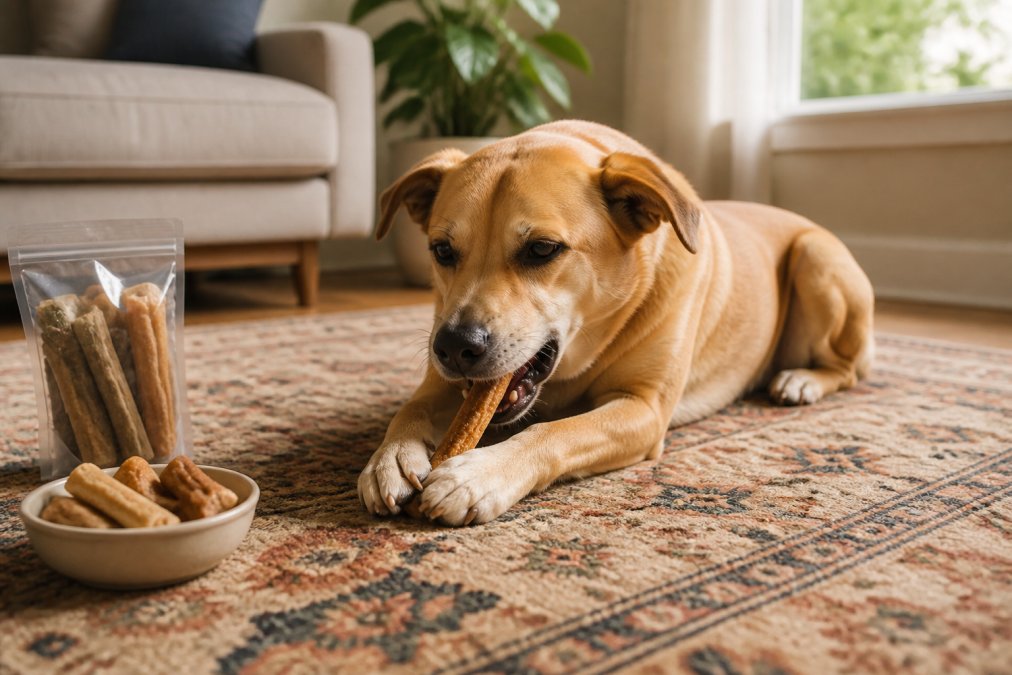
Ingredients to Look For (and Artificial Preservatives to Avoid)
Limited ingredients win. A short label tells you what your dog is actually eating, which matters most for sensitive stomachs.
Look for: a single named protein first, flaxseed for omega-3s, peppermint oil for breath, antler powder for mineral content, and pasture-raised or free-range sourcing when it is stated.
Avoid: artificial colors, artificial preservatives, added sugars, and vague "meat meal" listings with no species named. These add nothing to dental health and are common triggers for digestive upset.
Shake Wag & Roll stocks chews built on short ingredient lists, including the Ark Naturals Brushless Toothpaste Dental Chew, which uses rice flour, honey, canola oil, and dried cultured whey instead of synthetic additives.

| What to Look For | Why It Helps | What to Avoid |
|---|---|---|
| Single named protein | Easier to isolate sensitivities | Unnamed "meat meal" |
| Flaxseed, peppermint oil | Supports breath and coat | Artificial colors |
| Pasture-raised sourcing | Traceable supply chain | Artificial preservatives |
| Grooved or ridged shape | Reaches gumline | Added sugars |
| Vague sourcing claims |
How to Clean Dog Teeth Naturally Between Chews
Daily chewing does most of the work, but three small habits close the gaps, none require a toothbrush fight.
- Wipe the outer surfaces with a gauze pad or finger brush two or three times a week. Ten seconds per side is enough.
- Rotate chew textures so the same teeth are not cleaned the same way every day. Alternate a firm stick with a softer trachea.
- Offer a dental chew after the last meal rather than before it, so food residue gets scraped away instead of buried under it.
Fresh water matters more than most owners expect: a dog that drinks regularly rinses the mouth between meals, slowing oral bacteria growth. Add a dental water additive if your dog is a light drinker.

Best Long-Lasting Chews for Dogs: Matching the Chew to Your Dog
The best long-lasting chew is the one your dog can safely finish in one sitting without swallowing it whole. Duration comes from matching texture to bite force, not from buying the hardest product on the shelf. Most guides stop at "aggressive chewer vs. light chewer," which is too coarse. Two variables do most of the work: age and jaw mechanics.
Age-specific recommendations
Puppies (under 6 months). Baby teeth are softer, and the goal is gum massage and habit-building, not tartar removal. Choose flexible textures, beef trachea, thin sweet potato chews, or a textured rubber dental toy. Avoid antlers, hard nylon, and dense bully sticks until adult teeth arrive around 6 to 7 months; hard chews on baby teeth can fracture a tooth or shift the bite.
Adolescents and adults (7 months to 7 years). This is the tartar-control window. Firm, ridged chews, bully sticks, grooved dental bars, textured rubber sticks, do the most mechanical work. Rotate textures so the same surfaces are not cleaned the same way daily.
Seniors (7+ years). Enamel is worn, gums may be receding, and some dogs have undiagnosed periodontal disease. Softer chews that flex, trachea, plant-based sticks, rubber toys with shallow grooves, reduce the risk of pain and bleeding. A senior that suddenly refuses a chew it used to love is a veterinary signal, not a picky-eater phase.
Breed-specific chewing mechanics
Jaw structure, not size alone, determines which chew is safe.
- Small breeds (Chihuahuas, Yorkies, toy poodles). Narrow muzzles and crowded teeth mean plaque builds faster between teeth. They need thin, small-diameter chews that fit between the molars, not large sticks they cannot grip. Choking risk is higher because a small dog may try to swallow a proportionally too-big chew.
- Brachycephalic breeds (Bulldogs, Pugs, Boston Terriers, French Bulldogs). Flat faces and undershot jaws reduce chewing leverage. Long sticks frustrate them and can lodge across the roof of the mouth. Short, wide, softer chews held with the front of the mouth work best.
- Large and giant breeds (Great Danes, Mastiffs, Labs). High bite force means "long-lasting" chews disappear in minutes. Dense bully sticks, antler-style chews, and thick rubber dental toys are the realistic options. The risk is not choking but tooth fracture from chews harder than the enamel.
- Scissor-bite and level-bite dogs. Most dogs have a scissor bite; some have a level or undershot bite that changes which surfaces contact the chew. Watch your dog chew for two minutes, the teeth that touch the chew are the ones getting cleaned, and they may not be the ones you expect.
Chewing style, the third variable
- Gulpers need larger, firmer chews and full supervision. Size up, not down.
- Crushers destroy chews fast; pick dense textures and accept shorter sessions.
- Nibblers can handle softer chews and will extract more cleaning time from them.
- Picky chewers respond to strong smell and grooved shapes. A chew that gets ignored cleans nothing.
A note on hard chews
Antlers, hooves, and hard nylon are marketed as long-lasting, and they are, but they are also harder than many dogs' teeth. Veterinary dentists commonly see slab fractures from hard objects, and the repair is expensive. If your dog is a crusher, a dense bully stick or thick rubber dental toy is usually the safer long-lasting choice.
When to Pair Chews With Veterinary Dental Care
Chews handle maintenance. They do not remove established tartar, and they cannot treat periodontal disease once it has set in. That is a veterinary job.
Book a professional dental evaluation when you notice any of these:
- Persistent halitosis that returns within days of a chew
- Red, swollen, or bleeding gums
- Brown buildup along the gumline that does not shift
- Drooling, dropping food, or chewing on one side
- Loose or missing teeth
Chews reduce how often that cleaning is needed. They do not replace it.
The American Veterinary Medical Association dental care guidance outlines what a professional evaluation covers. For ingredient and labeling standards on the treats themselves, the FDA Center for Veterinary Medicine publishes current guidance for pet food and chews. If you want to understand how plaque forms at a microbial level, the NIH research on canine oral microbiome is a solid starting point.
Conclusion: Building a Daily Dental Routine That Sticks
The hardest part of canine oral health is consistency. A routine that depends on a toothbrush and a cooperative dog falls apart within a week; one built around a chew your dog actually wants survives.
Shake Wag & Roll carries the pieces that make it work: organic chews with limited ingredient lists, durable dental toys for aggressive chewers, and expert canine care tips to match the right texture to your dog. Our community shares what worked and what got ignored, often more useful than any breed chart.
Sign up with Shake Wag & Roll and build a dental routine your dog looks forward to, not one you have to fight for.
Frequently Asked Questions
How do natural chews help improve a dog's dental health?
Natural chews work through mechanical abrasion. As your dog chews, the textured surface of the chew scrapes against teeth, loosening plaque before it hardens into tartar. This chewing action also stimulates saliva, which helps wash away food particles and oral bacteria. Over time, regular chewing can reduce tartar buildup and support healthier gums.
What do vets recommend instead of rawhide?
Many veterinarians suggest rawhide alternatives that break down more easily in the digestive tract. Popular options include bully sticks, trachea, collagen chews, and dental chew sticks made with limited ingredients. Look for products that are rawhide-free, free of artificial preservatives, and sized appropriately for your dog's weight and chewing habits. Always supervise your dog during chewing and remove any small pieces that could become choking hazards.
What ingredients should I avoid in dog dental chews?
Skip chews that list artificial colors, artificial preservatives, and unidentified meat by-products. These additives offer no dental benefit and may upset sensitive stomachs. Instead, look for limited ingredient formulas with recognizable items like rice flour, honey, gelatin, and dried cultured whey. Chews that include peppermint oil or flaxseed can also help freshen breath naturally.
How often should my dog have a dental chew for optimal health?
Most dogs benefit from one dental chew per day, ideally at the same time each day so it becomes part of a routine. Always match the chew size to your dog's breed and chewing style. Aggressive chewers need denser, longer-lasting options, while puppies and seniors do better with softer textures that are gentle on gums.