

5 Low Calorie Dog Treats for Weight Management

Table of Contents
- Why Low-Calorie Dog Treats Matter for Weight Management
- How Many Calories Should Dog Treats Have?
- 5 Low-Calorie Dog Treats for Weight Management
- Low-Calorie Training Treats for Dogs: Keeping Rewards Light
- Vegetables Dogs Can Eat as Treats: A Safe Snack Guide
- Low-Calorie Homemade Dog Treats: Simple Prep and Safety
- Choosing Commercial Low-Calorie Dog Treats by Label
- Conclusion: Small Changes, Steady Weight Loss
- Frequently Asked Questions
Last Updated: October 6, 2026
Why Low-Calorie Dog Treats Matter for Weight Management
More than half of dogs in the United States are overweight or obese, according to the Association for Pet Obesity Prevention. That single fact explains why low calorie dog treats have moved from niche to necessity.
Here's the part most owners miss: it's rarely the main meals that cause weight gain. It's the steady stream of biscuits, chews, and table scraps between them.
Dogs gain weight the same way people do. They take in more calories than they burn. A few extra treats a day adds up fast over weeks and months.
Extra weight raises the risk of joint problems, diabetes, and heart issues. It also shortens a dog's life. Trimming treats is one of the easiest places to start.
Below, we'll show you how to calculate a treat budget, then walk through five low-calorie options with safe serving sizes.
How Many Calories Should Dog Treats Have?
Treats should make up no more than 10% of a dog's daily calorie intake. That's the general rule veterinarians use. So if your dog needs 500 calories a day, treats should stay under 50 calories.
The tricky part is that most owners don't know their dog's daily calorie needs. That number depends on weight, age, and activity level. A couch-loving senior needs far fewer calories than a young working breed.
Here's a simple starting point many vets use:
- A 10-pound dog needs roughly 200 to 275 calories a day
- A 25-pound dog needs roughly 400 to 550 calories a day
- A 50-pound dog needs roughly 700 to 900 calories a day
- A 75-pound dog needs roughly 950 to 1,200 calories a day
These are estimates. Your vet can give you a precise target for your dog.
Calculating Your Dog's Daily Treat Budget
A daily treat budget is the number of calories you set aside for treats each day. It keeps you from overdoing it without thinking.
Do the math once, then stick to it:
- Ask your vet for your dog's daily calorie target
- Multiply that number by 0.10 (the 10% rule)
- That result is your daily treat budget
- Divide it by how many treats you give per day
For a 25-pound dog eating 500 calories a day, the treat budget is 50 calories. If you hand out five rewards during training, each one should be about 10 calories.
That's why low-calorie options matter. A single large biscuit can blow the whole budget.
5 Low-Calorie Dog Treats for Weight Management
These five options are low in calories, easy to find, and safe for most dogs. We picked them because they're simple, affordable, and work well for training. Always introduce new foods one at a time and watch for any reaction.
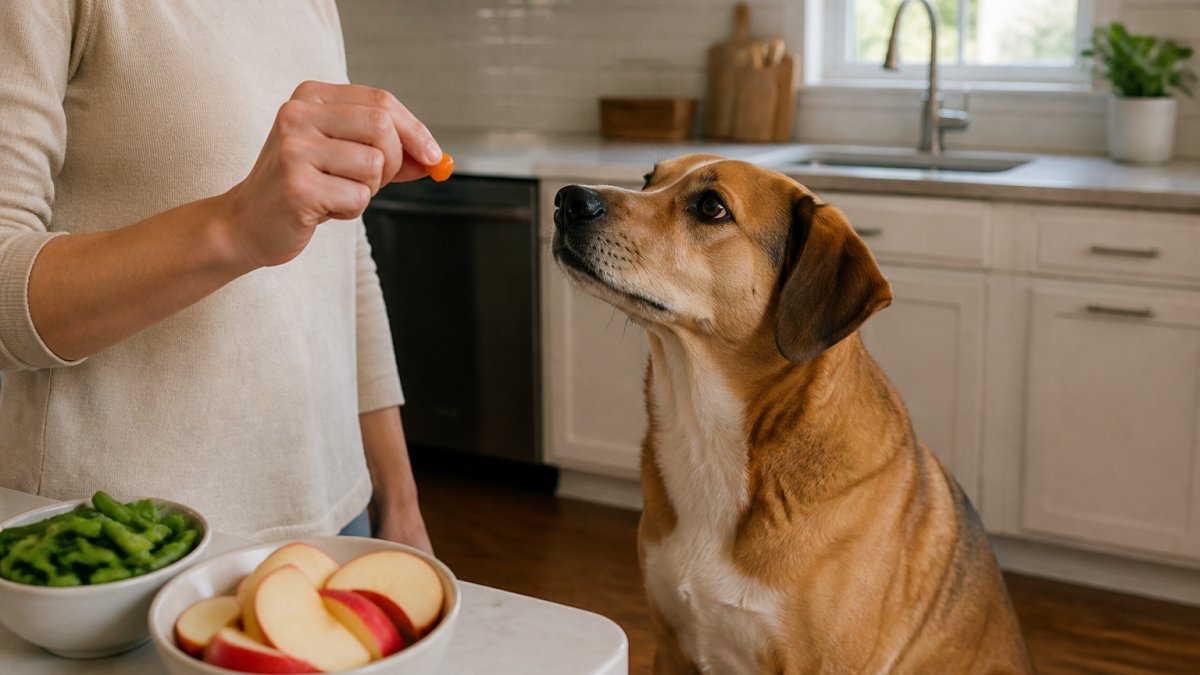
1. Carrots: Crunchy and Under 5 Calories
Carrots are one of the best low calorie dog treats you can hand out. A single baby carrot has only about 2 to 4 calories. That's a fraction of what a typical biscuit costs you.
The crunch is the real selling point. Chewing a carrot takes time, so it feels like a bigger reward than it is. That's useful for dogs who inhale their treats.
Carrots also give your dog fiber and beta-carotene. Fiber helps them feel full, which supports weight control.
How to serve them:
- Raw baby carrots for most dogs
- Cut into small rounds for small breeds
- Cooked and mashed for senior dogs or those with dental issues
2. Green Beans: Fiber-Rich and Filling
Plain green beans are a favorite for weight management. A handful of cut green beans has roughly 15 to 20 calories. The fiber content helps your dog feel satisfied between meals.
Many owners use green beans to bulk up a meal without adding many calories. That's a smart move for dogs who act hungry all the time.
Serve them fresh, frozen, or canned. If you use canned, pick the no-salt-added kind and drain them well.
Serving notes:
- Cut into bite-size pieces to avoid choking
- Skip any seasoning, butter, or oil
- Start with one or two pieces to check for stomach upset
3. Apple Slices: Sweet but Safe (No Seeds)
Apple slices give dogs a sweet treat without added sugar. A few thin slices add only a small number of calories. Most dogs love the crunch and the taste.
The safety rule here is firm: remove the seeds and the core. Apple seeds contain a compound that can be harmful in large amounts. The flesh of the apple is the safe part.
Prep checklist:
- Wash the apple well
- Remove the core and all seeds
- Cut into thin, bite-size slices
- Skip the skin if your dog has a sensitive stomach
One or two slices is plenty for a medium dog. More than that can add up.
4. Plain Pumpkin: Digestive Support in a Spoonful
Plain canned pumpkin is a low-calorie treat that also supports healthy digestion. A tablespoon has only about 5 to 10 calories. It's rich in fiber, which helps with both loose stools and constipation.
The key word is plain. Pumpkin pie filling has added sugar and spices that can upset your dog's stomach. Check the label and buy 100% pure pumpkin.
How to use it:
- One teaspoon for small dogs
- One tablespoon for medium and large dogs
- Mix into food or freeze in a small mold
5. Freeze-Dried Lean Meat: High-Protein Training Reward
Freeze-dried lean meat is the highest-value option on this list. It's high in protein and low in fat. Dogs go crazy for the smell, which makes it perfect for training.
Because it's so tempting, you can break each piece into tiny bits. A single piece becomes four or five rewards. That stretches your treat budget a long way.
Look for single-ingredient options. Chicken, turkey, and beef liver are common. Avoid anything with added sugar, fillers, or artificial flavors.
| Treat | Calories (approx.) | Best For | Prep Needed |
|---|---|---|---|
| Carrots | 2-4 per baby carrot | Crunchy chewers | Cut for small dogs |
| Green beans | 15-20 per handful | Hungry dogs | Cut, no seasoning |
| Apple slices | Low per slice | Sweet-tooth dogs | Remove seeds and core |
| Plain pumpkin | 5-10 per tablespoon | Sensitive stomachs | Buy 100% pure |
| Freeze-dried meat | Varies by brand | Training rewards | Break into bits |
Low-Calorie Training Treats for Dogs: Keeping Rewards Light
Training treats are where most owners lose control of the calorie count. You might reward your dog 20 or 30 times in a single session. If each reward is a full biscuit, that's a full meal in calories.
The fix is to shrink each reward. A treat the size of a pea works just as well as a full-size one for behavioral reinforcement. Dogs care about the taste and the moment, not the size.
Here's how to keep training rewards light:
- Break treats into pea-sized bits before you start
- Use freeze-dried meat for high-value moments
- Use carrots or green beans for routine rewards
- Mix in praise and play so not every reward is food
- Track your total treats per session
Vegetables Dogs Can Eat as Treats: A Safe Snack Guide
Vegetables are some of the best low-calorie snack options for dogs. They're low in fat, high in fiber, and cheap. Most dogs enjoy them once they get used to the crunch.
Safe vegetables for most dogs:
- Carrots
- Green beans
- Cucumber
- Zucchini
- Broccoli (in small amounts)
- Plain pumpkin
- Sweet potato (cooked, plain)
A few rules apply to all of them. Wash everything first. Cut into safe sizes. Skip butter, salt, oil, and seasoning. Introduce one new vegetable at a time.
Some dogs have food sensitivities. If your dog gets gas, loose stools, or itching after a new veggie, stop and check with your vet.
Fruit works too, in small amounts. Blueberries, apple slices, and melon are dog-friendly foods. Always remove seeds, pits, and cores.
Low-Calorie Homemade Dog Treats: Simple Prep and Safety
Homemade low-calorie dog treats give you full control over what goes in. You skip the fillers, added sugar, and mystery ingredients in many store-bought options.
You don't need a fancy recipe. Simple is better. Bake thin slices of sweet potato, or freeze plain pumpkin in small molds. Both take minutes to prep.
Basic safety rules for homemade treats:
- No added sugar, salt, or artificial sweeteners
- No xylitol, which is toxic to dogs (the FDA)
- No onion, garlic, grapes, or raisins
- No chocolate or caffeine
- Cook meat fully and cool before serving
Store homemade treats in the fridge. Most keep for a few days. Freeze extras so nothing goes to waste.
If your dog has a sensitive stomach, keep it simple. One or two ingredients per treat is easier on digestion than a long list.
Choosing Commercial Low-Calorie Dog Treats by Label
Reading the label is the fastest way to find a truly low-calorie treat. The front of the package is marketing. The back is facts.
Start with the guaranteed analysis and the calorie statement. Many brands list calories per treat or per kilogram.
What to look for:
- Calories per treat listed clearly
- A named protein as the first ingredient
- No added sugar or corn syrup
- Limited, recognizable ingredients
- A short ingredient list
What to avoid:
- Vague terms like "meat meal" or "by-products"
- Artificial colors and flavors
- Treats with no calorie info at all
This is where limited-ingredient treats shine for dogs with food sensitivities. Fewer ingredients means fewer chances of a reaction.
We stock organic chews and limited-ingredient options at Shake Wag & Roll for exactly this reason. It's how we choose what goes on our shelves.
If your dog is a picky eater, start with a small bag. Find what they love before you commit to a bigger size.
Conclusion: Small Changes, Steady Weight Loss
The hardest part of weight management isn't the big decisions. It's the small, daily ones. A few extra biscuits here and there adds up to real pounds over a year.
Swap those biscuits for carrots, green beans, apple slices, plain pumpkin, or freeze-dried lean meat. Measure your dog's treat budget once, then stick to it. The weight comes off slowly and safely.
At Shake Wag & Roll, we help dog owners find treats and chews that fit real goals. Our limited-ingredient treats and organic chews support sensitive stomachs and healthy weight.
Sign up with Shake Wag & Roll to get expert canine care tips, exclusive offers, and new product drops.
Frequently Asked Questions
How many calories should a dog treat have?
Treats should make up no more than 10% of your dog's daily calorie intake. For a 30-pound dog eating 700 calories a day, that means 70 calories or fewer from treats. Since most training sessions involve multiple rewards, aim for treats under 10 calories each so you can reward frequently without exceeding the daily budget.
Are vegetables good low-calorie treats for dogs?
Yes. Carrots, green beans, cucumber, and blueberries are all safe for most dogs and low in calories. Carrots and cucumber provide crunch with minimal calories, while green beans add fiber that helps dogs feel full. Always wash produce, cut into bite-sized pieces, and introduce one new vegetable at a time to watch for digestive upset.
Should treats count toward a dog's daily calories?
Absolutely. Every treat adds to your dog's total daily calorie intake. If you feed a 50-calorie biscuit, you need to reduce their regular food by roughly 50 calories to maintain weight. For weight loss, treats should stay under 10% of daily calories, and you may need to adjust meal portions to create a calorie deficit.
Can low-calorie treats help a dog lose weight?
Low-calorie treats support weight loss by letting you reward your dog without adding excess calories. Pair them with measured meals and regular exercise. A dog needs a calorie deficit to lose weight, so swap high-calorie biscuits for carrot sticks or green beans and reduce meal portions slightly. Check with your veterinarian before starting any weight-loss plan.