

Best Toys for Teething Puppies: 7 Top Picks

Table of Contents
- Why Puppies Chew During Teething
- Puppy Teething Timeline: What to Expect by Age
- Signs Your Puppy Is Teething
- Safe Materials and Durability Considerations for Teething Toys
-
7 Best Toys for Teething Puppies
- 1. Kong Toy for Puppies: Gentle Rubber for Sensitive Gums
- 2. Puppy Can Toy: Treat Dispenser and Teething Relief
- 3. Kong Puppy Tires Small: Freezable and Stuffable
- 4. BetterBone SOFT: Plant-Based and Eco-Friendly
- 5. Pet Life Ices Cooling Toy: Soothing Frozen Relief
- 6. Pet Life Denta-Twist: Dental Health and Gum Massage
- 7. Chicken Flavored Teething Ring: Durable for Aggressive Chewers
- How to Stop Puppy Biting and Redirect Chewing Behavior
- Interactive vs. Solo Play Toys: Which Is Right for Your Puppy
- Toy Rotation Strategy and Supervised Play Guidelines
Last Updated: August 29, 2026
Why Puppies Chew During Teething
Puppies chew because their baby teeth are erupting and their gums are sore. Between 3 and 6 weeks of age, a puppy's 28 deciduous teeth push through the gums, creating discomfort that demands relief (aaha.org). Chewing satisfies this biological need by massaging inflamed gums and helping teeth break through the surface.
This chew drive isn't misbehavior, it's a critical developmental stage where puppies learn about their environment and establish neural pathways for appropriate behavior. At Shake Wag & Roll, we understand that teething is temporary but the habits formed during this phase last a lifetime. Providing the right toys teaches puppies what they're allowed to chew and prevents destructive behavior from becoming ingrained.
Puppy Teething Timeline: What to Expect by Age
Puppy teething follows a predictable developmental timeline, though individual variation exists based on breed size and genetics.
3 to 5 weeks: Baby teeth begin erupting. Puppies may drool more and show mild gum sensitivity.
5 to 8 weeks: The full set of 28 baby teeth emerges (avma.org). Gum soreness peaks during this window. Puppies exhibit the strongest chew drive and may nip more frequently during play and handling.
8 to 12 weeks: Baby teeth are fully present, but discomfort continues as roots develop. Puppies remain highly motivated to chew.
3 to 4 months: Adult teeth begin replacing baby teeth. The process accelerates between 4 and 6 months when molars erupt.
6 to 7 months: Most adult teeth have erupted, though some molars may still be emerging. Chew drive remains elevated but begins normalizing.
7+ months: Teething is complete. Chewing behavior transitions from pain-relief seeking to enrichment and habit.
Breed size affects timing. Small breeds often complete teething by 5 to 6 months, while large breeds may not finish until 7 to 8 months.
Signs Your Puppy Is Teething
Recognizing teething symptoms helps you respond with appropriate relief and prevents misinterpreting normal behavior as misbehavior.
Excessive drooling is often the first sign. Teething stimulates salivary glands, and you'll notice wet chins and damp bedding.
Swollen, tender gums appear red and puffy. If you gently run your finger along the gum line, you may feel slight warmth and notice the puppy flinching.
Increased nipping and mouthing intensifies during teething. Puppies bite more frequently during play and may mouth your hands or clothing more aggressively than before.
Chewing everything escalates dramatically. Puppies seek out hard and soft objects alike, testing textures against their sore gums.
Loss of appetite or difficulty eating occurs when gum soreness peaks. Some puppies eat more slowly or show reduced interest in meals.
Mild fever sometimes accompanies teething, though it's usually not clinically significant. If fever exceeds 103°F or persists beyond a day, consult your veterinarian (vet.cornell.edu).
Behavioral changes include increased restlessness, difficulty settling, and heightened irritability.
Visible loose teeth occasionally appear. If a baby tooth remains after an adult tooth has erupted beside it, contact your veterinarian.
Safe Materials and Durability Considerations for Teething Toys
Not all toy materials are equally safe for teething puppies. The right material balances durability with gentleness on developing teeth and gums.
Natural rubber is the gold standard for teething toys. It's soft enough to protect sensitive gums and developing teeth without causing damage, yet durable enough to withstand enthusiastic chewing. The Kong Toy for Puppies ($6.99) is specifically formulated for puppies' baby teeth and offers the erratic bounce that keeps puppies engaged.

Nylon works well for puppies transitioning out of peak teething discomfort. It's extremely durable and resists tearing. The Chicken Flavored Teething Ring ($11.99) uses durable nylon infused with chicken flavor to keep puppies engaged for extended periods.
Plant-based materials offer an eco-friendly alternative. BetterBone SOFT ($12.49) is crafted from cellulose and plant-based polymers specifically designed for sensitive teeth. The toy flakes gently rather than splinters, reducing the risk of gastrointestinal obstruction.
TPR (thermoplastic rubber) combines durability with slight flexibility. The Pet Life Denta-Twist ($14.15) uses textured TPR designed to clean teeth and massage gums while withstanding moderate chewing pressure.
Freezable materials provide additional gum relief. The Pet Life Ices Cooling Toy ($11.38) is water-fillable and freezable, delivering soothing cold to sore gums. Fill the toy with water, freeze for 1-2 hours, and offer during peak discomfort periods.
Materials to avoid: Rawhide can splinter and cause intestinal blockages. Soft plush toys with rope fibers pose choking hazards. Hard plastic toys can crack teeth. Toys with small parts, bells, or squeakers that can detach create choking risks.
7 Best Toys for Teething Puppies
1. Kong Toy for Puppies: Gentle Rubber for Sensitive Gums
The Kong Toy for Puppies ($6.99) is specifically designed for a growing puppy's baby teeth. The unique natural rubber formula is the gentlest within the Kong rubber toy line, protecting sensitive gums while satisfying the chew drive. Available in blue or pink, this toy's erratic bounce makes it ideal for puppies that want to play fetch and chew.
Stuff it with puppy kibble, peanut butter, or Kong Puppy Snacks to extend engagement and create mental stimulation during crate training. For extra soothing relief, freeze the toy before offering it. The Kong Toy for Puppies excels at teaching appropriate chewing habits while offering genuine gum relief.
2. Puppy Can Toy: Treat Dispenser and Teething Relief
The Puppy Can Toy ($5.50) is a USA-made natural rubber chew toy with an integrated treat dispenser cavity. Made from FDA-compliant, non-toxic, eco-friendly rubber, this toy combines teething relief with mental stimulation.
Fill the cavity with puppy treats, kibble, or peanut butter, and the toy releases rewards gradually as your puppy works it. For maximum soothing relief, freeze the filled toy for 1-2 hours before offering it. The textured surface helps clean developing teeth and massage tender gums. Available in small (2.5 inches), medium (3.3 inches), and large (4.2 inches) versions, match the toy to your puppy's current size for optimal engagement.
3. Kong Puppy Tires Small: Freezable and Stuffable
The Kong Puppy Tires Small ($11.99) extends Kong's popular Tires line into the puppy market. This toy uses Kong's exclusive puppy rubber formula designed specifically to ease teething gums. The tire shape offers multiple textured surfaces for varied sensory input, and the stuffable inner track creates a mental challenge while teaching correct chewing habits.
Unlike standard Kong toys, the Tires design allows you to freeze the entire toy. The cold rubber numbs sore gums while the textured surface provides massage relief. The super-durable rubber resists puncturing better than standard Kong Puppy toys, extending the toy's lifespan. Available in pink and blue, the Kong Puppy Tires Small suits puppies in the 5-15 pound range.
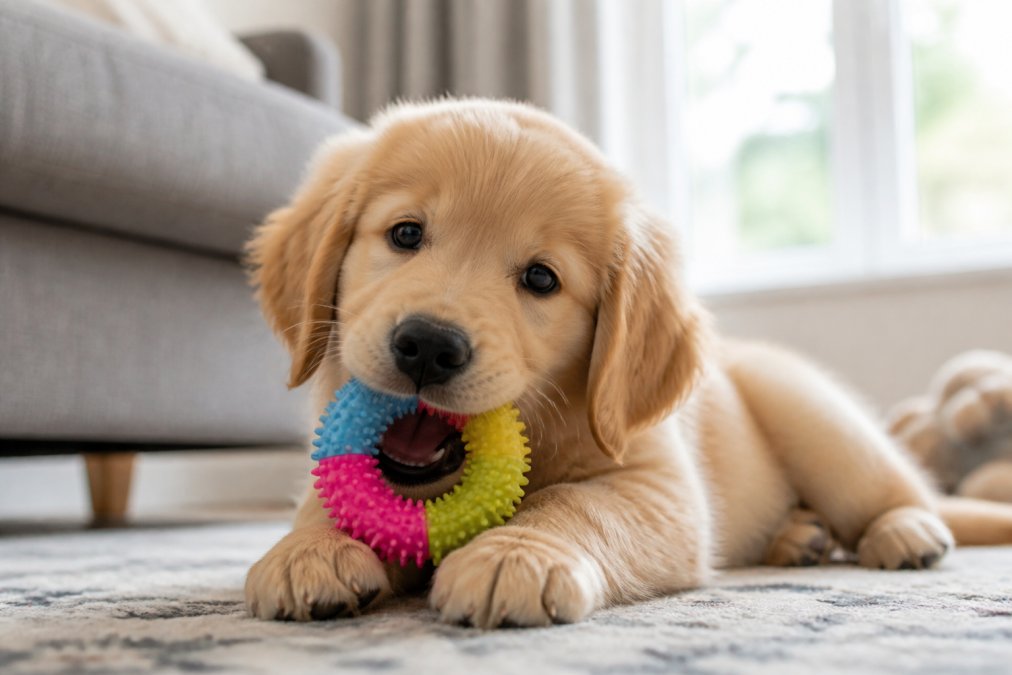
4. BetterBone SOFT: Plant-Based and Eco-Friendly
The BetterBone SOFT ($12.49) is crafted from cellulose and plant-based polymers with plant-based flavors. This toy is 40% softer than nylon while remaining durable enough for sustained chewing. For puppies with sensitive teeth or acute gum soreness, BetterBone SOFT offers relief that harder materials cannot match.
The plant-based formula is naturally hypoallergenic, making it ideal for puppies with food sensitivities or allergies. The toy is designed to flake gently rather than splinter, reducing the risk of intestinal blockage. The trident-shaped design features dental nubs and ridges that clean teeth and massage gums. Available in three sizes (mini for under 15 lbs, small for 15-50 lbs, and large for over 50 lbs) and two flavors (classic hypoallergenic and natural beef).
5. Pet Life Ices Cooling Toy: Soothing Frozen Relief
The Pet Life Ices Cooling Toy ($11.38) is a water-fillable, freezable rubberized chew toy designed specifically for teething relief. Simply fill the toy with water and freeze, then offer it to your teething puppy. The frozen toy delivers soothing cold to sore gums while providing a satisfying chewing surface.
The cooling mechanism works by numbing inflammation and reducing pain, similar to ice chips for human teething. During peak soreness periods, many puppies prefer frozen toys to room-temperature alternatives. The textured surface massages gums and helps clean emerging teeth. Keep multiple toys in the freezer for extended relief. The filled toy remains frozen for 30-45 minutes, depending on ambient temperature and the puppy's chewing intensity.
6. Pet Life Denta-Twist: Dental Health and Gum Massage
The Pet Life Denta-Twist ($14.15) is a TPR dental chew toy with a unique S-shaped design that provides targeted dental stimulation. The textured TPR material cleans crevices between teeth when chewed, while the multi-textured bumps and ridges massage sore gums.
The S-shape design allows puppies to grip the toy easily and work it against their gums from multiple angles. The varied textures create a toothbrush-like effect that promotes healthy dental habits from the beginning. The extremely durable construction resists breaking or tearing, giving you a toy that lasts through multiple teething phases and into adulthood.
7. Chicken Flavored Teething Ring: Durable for Aggressive Chewers
The Chicken Flavored Teething Ring ($11.99) is a USA-made nylon chew toy infused with real chicken flavor, designed for teething puppies and aggressive chewers. The unique honey dipper design features multiple ridges and grooves that massage sore gums and provide soothing relief.
The real chicken flavor baked into the nylon keeps puppies engaged for extended periods. The ultra-durable nylon construction is engineered to withstand teething puppies and power chewers who destroy ordinary toys. At 3.2 oz and 5.25 inches in diameter, it suits puppies up to 55 pounds. Introduce this toy once your puppy has moved past peak teething discomfort, typically around 8-12 weeks of age.
How to Stop Puppy Biting and Redirect Chewing Behavior
Puppy biting and destructive chewing are normal developmental behaviors, not signs of aggression or defiance. The key is redirecting the chew drive toward appropriate toys rather than suppressing the behavior entirely.
Recognize the difference between play biting and aggressive biting. Play biting is gentle mouthing during interaction, often accompanied by a play bow or wagging tail. Aggressive biting is stiff, deliberate, and often leaves puncture wounds. If your puppy shows aggressive biting, consult a professional trainer or veterinary behaviorist immediately.
Redirect immediately when biting occurs. If your puppy bites your hand during play, yelp loudly and withdraw attention for 30 seconds. Then offer an appropriate toy. This teaches the puppy that biting people stops the fun, while chewing toys continues it.
Provide constant access to appropriate toys. Puppies chew because they need to, not because they're misbehaving. Ensure multiple teething toys are available in every room where your puppy spends time.
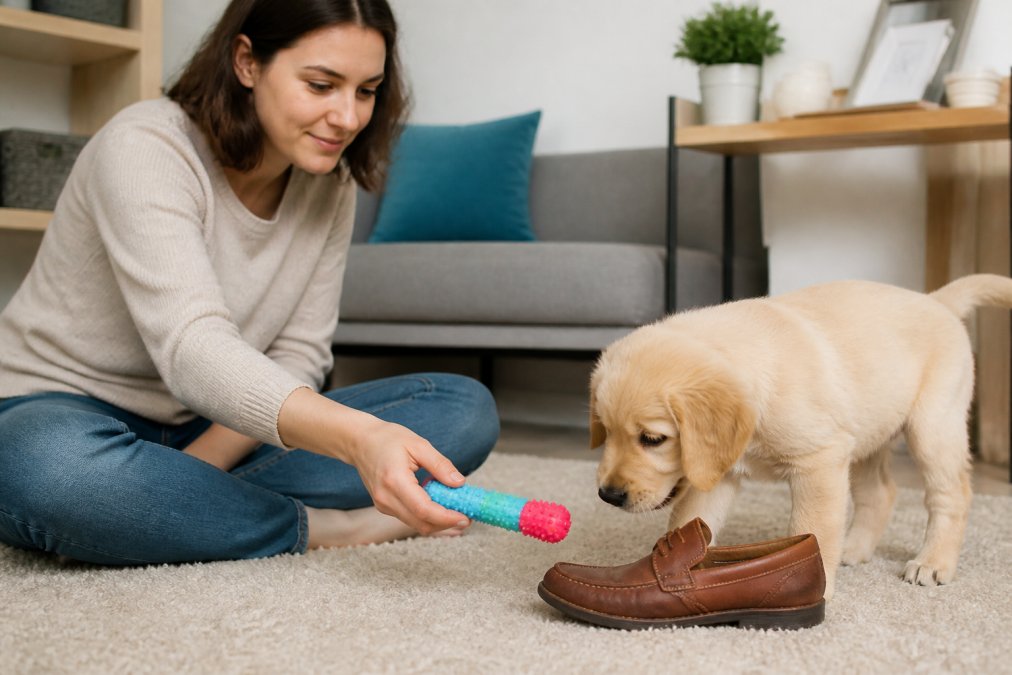
Use positive reinforcement aggressively. When your puppy chooses to chew a toy instead of your shoe, praise enthusiastically and offer a high-value reward.
Manage the environment to prevent failures. Put shoes in a closet, secure loose blankets, and use baby gates to limit access to tempting items. Prevention is more effective than correction.
Avoid punishment for chewing. Yelling, hitting, or rubbing the puppy's nose in chewed items teaches fear, not appropriate behavior.
Increase exercise and mental stimulation. Bored puppies chew more than engaged puppies. Daily play sessions, training practice, and puzzle toys reduce destructive chewing.
Freeze toys for extended engagement. Frozen toys hold a puppy's attention longer than room-temperature toys. Freeze multiple toys and rotate them throughout the day.
Supervise closely during peak teething. The 5-8 week period when all baby teeth are erupting is when destructive chewing peaks. Keep your puppy in sight or confined to a safe space. Use a crate during unsupervised periods.
Interactive vs. Solo Play Toys: Which Is Right for Your Puppy
The best teething toy strategy combines both interactive and solo play options. Each serves different purposes in your puppy's development and behavior management.
Interactive toys require your participation. Toys like the Kong Toy for Puppies and Puppy Can Toy become more engaging when you play with them, stuff them with treats, or freeze them. These strengthen your bond and teach puppies to focus on you.

Solo play toys occupy puppies independently. The Chicken Flavored Teething Ring, Pet Life Denta-Twist, and BetterBone SOFT all work as solo toys that puppies can chew without your involvement. These provide self-directed enrichment and help manage destructive behavior when you're unavailable.
The optimal strategy combines both. Use interactive toys during dedicated play sessions, 10-15 minutes multiple times daily. Use solo toys during other periods, when you're working, during crate training, or when the puppy needs independent engagement. Rotate toy types throughout the day to maintain engagement and prevent boredom.
Toy Rotation Strategy and Supervised Play Guidelines
A strategic toy rotation system maintains engagement, extends toy lifespan, and prevents boredom-related destructive behavior.
Implement a 4-5 toy rotation system. Provide one toy at a time, cycling through 4-5 different options every 2-3 days. When you rotate a toy back into active use after a few days away, it feels novel again. Select toys with different textures and functions: a soft rubber toy (Kong Toy for Puppies), a freezable toy (Pet Life Ices Cooling Toy), a treat-dispensing toy (Puppy Can Toy), a dental toy (Pet Life Denta-Twist), and a durable nylon toy (Chicken Flavored Teething Ring).
Supervise all teething toy sessions during peak teething. The 5-8 week period requires close monitoring. Watch for signs of excessive chewing, ingestion of toy pieces, or signs of oral injury. Check toys regularly for damage and remove any showing significant wear.
Monitor chewing intensity and adjust accordingly. If your puppy destroys soft toys within days, move to more durable options. If your puppy shows little interest in hard toys, stick with softer options.
Replace toys as they wear. Teething toys are consumables designed for a specific developmental phase. Plan to replace toys every 2-4 weeks depending on chewing intensity.
| Toy Type | Best Age | Durability | Primary Benefit | Replacement Frequency |
|---|---|---|---|---|
| Kong Toy for Puppies | 3-12 weeks | Moderate | Gentle gum relief | Every 3-4 weeks |
| Puppy Can Toy | 4-16 weeks | Moderate | Treat dispensing | Every 3-4 weeks |
| Kong Puppy Tires | 6-16 weeks | High | Freezable relief | Every 4-6 weeks |
| BetterBone SOFT | 4-12 weeks | Low | Sensitive gums | Every 2-3 weeks |
| Pet Life Ices Cooling | 5-16 weeks | High | Cold relief | Every 4-6 weeks |
| Pet Life Denta-Twist | 8-24 weeks | High | Dental health | Every 6-8 weeks |
| Chicken Flavored Ring | 8+ weeks | Very High | Aggressive chewing | Every 8-12 weeks |
Finding the right toys for teething puppies requires understanding your individual puppy's needs, chewing intensity, and developmental stage. At Shake Wag & Roll, we've curated a selection of premium teething toys designed to provide genuine relief while teaching appropriate chewing behavior. From the gentle Kong Toy for Puppies to the durable Chicken Flavored Teething Ring, each option serves a specific purpose in your puppy's development. Start with softer options during peak teething discomfort, rotate toys strategically to maintain engagement, and supervise closely to ensure safe chewing. The investment in quality teething toys pays dividends in preventing destructive behavior and establishing lifelong healthy habits. Join our community and discover expert canine care tips, exclusive offers, and a vibrant group of dog owners committed to their puppies' happiness and wellbeing.

Frequently Asked Questions
What is the best thing for teething puppies to chew on?
The best toys for teething puppies balance gentle relief with durability. Natural rubber toys like the Kong Toy for Puppies ($6.99) are ideal because they ease sore gums without damaging developing teeth. Freezable options provide extra soothing comfort, while plant-based alternatives like BetterBone SOFT ($12.49) offer non-toxic, hypoallergenic relief. Look for toys with textured surfaces that massage gums and clean emerging teeth.
At what age do puppies need teething toys?
Puppies begin losing their deciduous teeth around 3-4 weeks of age, with the process intensifying between 8-16 weeks. This is when teething toys become essential for managing discomfort and redirecting chew drive. By 6-7 months, most adult teeth have erupted, though puppies may continue chewing beyond this age. Starting teething toys early teaches healthy chewing habits and prevents destructive behavior during this critical developmental window.
What materials are safe for puppy teething toys?
Safe materials include natural rubber (non-toxic, BPA-free), food-grade silicone, plant-based polymers, and durable nylon. Avoid rawhide, small plastic pieces, and anything that splinters easily. The Kong Toy for Puppies uses gentle natural rubber, while BetterBone toys are made from cellulose and plant-based ingredients. Always supervise play and remove toys with pieces larger than rice grains to prevent swallowing risks and choking hazards.
Are frozen toys safe for teething puppies?
Yes, frozen toys are safe and highly effective for teething relief. Freezing reduces gum inflammation and provides soothing comfort. The Pet Life Ices Cooling Toy ($11.38) is specifically designed to be filled with water and frozen. Kong Puppy Tires ($11.99) and the Puppy Can Toy ($5.50) can also be frozen for 1-2 hours before use. Always supervise frozen toy play and thaw slightly if your puppy has very sensitive gums.
This article was written using GrandRanker