

Elk Antlers for Dogs: Benefits, Safety & Selection Guide

Table of Contents
- What Are Elk Antlers for Dogs and Why They Matter
- The Real Benefits of Elk Antlers for Dogs
- Are Elk Antlers Safe for Dogs to Chew
- Elk Antlers vs. Deer Antlers: Which Is Better
- How Long Should a Dog Chew an Antler
- How to Choose an Elk Antler for a Dog
- Safe Alternatives to Antlers for Dogs
- Frequently Asked Questions
Last Updated: October 10, 2026
What Are Elk Antlers for Dogs and Why They Matter
Elk antlers for dogs have become a popular choice among pet owners seeking durable, natural chew options for their animals. At Shake Wag & Roll, we understand that choosing the right chew toy involves balancing enrichment, safety, and durability.
The appeal is straightforward: dogs love chewing, and elk antlers provide a long-lasting outlet for that behavior. Unlike rawhide or synthetic chews that break down quickly, antlers can withstand aggressive chewing for weeks or months. Many owners report that their power chewers finally have something that doesn't get destroyed in a single session.

The Real Benefits of Elk Antlers for Dogs
Elk antlers do offer genuine advantages for certain dogs, but the benefits aren't universal across all animals or all chewing styles. Understanding what antlers actually deliver helps you decide if they're right for your dog.
Dental Health and Oral Hygiene
The mechanical action of chewing on a hard surface can help reduce plaque and tartar buildup on teeth. When a dog chews on an elk antler, the friction against tooth surfaces may contribute to cleaner teeth and healthier gums.
The key distinction here: elk antlers work through mechanical abrasion, not chemical action. The chewing motion itself does the work. For dogs prone to tartar accumulation, this consistent chewing activity may slow buildup between professional cleanings.
Mental Stimulation and Enrichment
Dogs need mental engagement as much as physical exercise. Chewing provides cognitive stimulation by occupying their attention and giving them a focused, satisfying activity. An elk antler that lasts for weeks offers extended enrichment compared to treats that disappear in minutes.
This matters more than many guides acknowledge. A bored dog is more likely to develop destructive behaviors like chewing furniture, excessive barking, or digging. Providing an appropriate outlet for chewing behavior redirects that natural instinct toward something acceptable. The longer the antler lasts, the more consistent enrichment it provides.
Nutritional Content and Minerals
Elk antlers contain minerals including calcium and phosphorus, which dogs absorb through chewing and ingesting small fragments. These minerals support bone health and overall skeletal function. The nutritional contribution is modest compared to a complete diet, but it's a genuine bonus rather than marketing hype.
The amount of mineral absorption depends on how much of the antler your dog actually consumes versus simply chewing on it. Dogs that gnaw off and swallow small pieces get more nutritional benefit than dogs that just chew the surface.
Joint Health and Mobility Support
Some antler advocates claim that glucosamine and chondroitin present in antler material support joint health. The evidence here is weaker than for other benefits. While these compounds do exist in antler material, the quantity your dog consumes through chewing is minimal compared to dedicated joint supplements.
If your dog has arthritis or joint concerns, an antler shouldn't replace veterinary-recommended joint support. It may provide a small supplementary benefit, but that's the realistic expectation.
Are Elk Antlers Safe for Dogs to Chew
Safety is where the conversation shifts from benefits to genuine risks. Elk antlers aren't inherently dangerous, but they carry specific hazards that require active management on your part.
Tooth Fracture Risks and Prevention
The hardness that makes elk antlers durable is the same property that can fracture teeth. Dogs have powerful jaws, but antlers are harder than natural dog teeth.
Fractured teeth are painful and require veterinary treatment, often resulting in extraction. Prevention involves matching antler hardness to your dog's chewing style and jaw strength.
One practical prevention strategy: offer antlers only during supervised chewing sessions. This lets you monitor for signs of excessive force or aggressive gnawing that might lead to fracture. If your dog attacks the antler with extreme intensity rather than methodical chewing, remove it.
Choking Hazards and Splintering Concerns
Whole antlers can splinter as they're chewed, creating sharp fragments that pose choking or intestinal blockage risks. Split antlers (cut lengthwise) reduce this risk by providing a wider chewing surface and limiting how small pieces can become. However, no antler is completely splinter-proof.
The choking risk is higher for dogs that gulp or swallow pieces without chewing thoroughly. Smaller dogs also face higher risk simply because fragments that are manageable for a large dog can obstruct a small dog's airway. Remove any antler that develops large cracks or shows significant splintering.
| Risk Factor | Whole Antlers | Split Antlers | Prevention Strategy |
|---|---|---|---|
| Splintering | Higher | Lower | Inspect regularly, remove if cracked |
| Choking hazard | Higher | Lower | Supervise, match size to dog |
| Tooth fracture | Possible | Possible | Monitor chewing intensity |
| Intestinal blockage | Possible | Lower risk | Remove antler if dog swallows large pieces |
Elk Antlers vs. Deer Antlers: Which Is Better
Both elk and deer antlers serve similar purposes, but they have practical differences. Elk antlers are larger and denser than deer antlers, making them more durable for power chewers but also harder and more prone to causing tooth fractures.
The choice depends on your dog's size and chewing behavior more than on inherent superiority. A small dog will benefit from a deer antler's smaller size. A large, aggressive chewer might get more longevity from an elk antler. Neither is objectively "better", they're suited to different dogs.
How Long Should a Dog Chew an Antler
There's no universal duration, but supervision and replacement guidelines matter more than clock time. Most dogs can safely chew an antler for 10-15 minutes per session, with multiple sessions throughout the week. The total duration depends on how your dog chews and the antler's condition.
Watch for these signals to know when to remove the antler:
- Visible cracks or splintering developing
- Your dog chewing with extreme force rather than steady gnawing
- Signs of gum irritation or bleeding around the chewing area
- Your dog swallowing large fragments rather than just gnawing
Replace the antler entirely once it becomes small enough to be a choking hazard, typically when it's shorter than your dog's muzzle length.
Ever Antler Nylon Chew Bone | Elk Antler Shaped Dog Toy for Aggressive Chewers →
How to Choose an Elk Antler for a Dog
Selecting the right antler involves assessing your dog's size, chewing style, and individual risk factors. A mismatch here is where most problems occur.
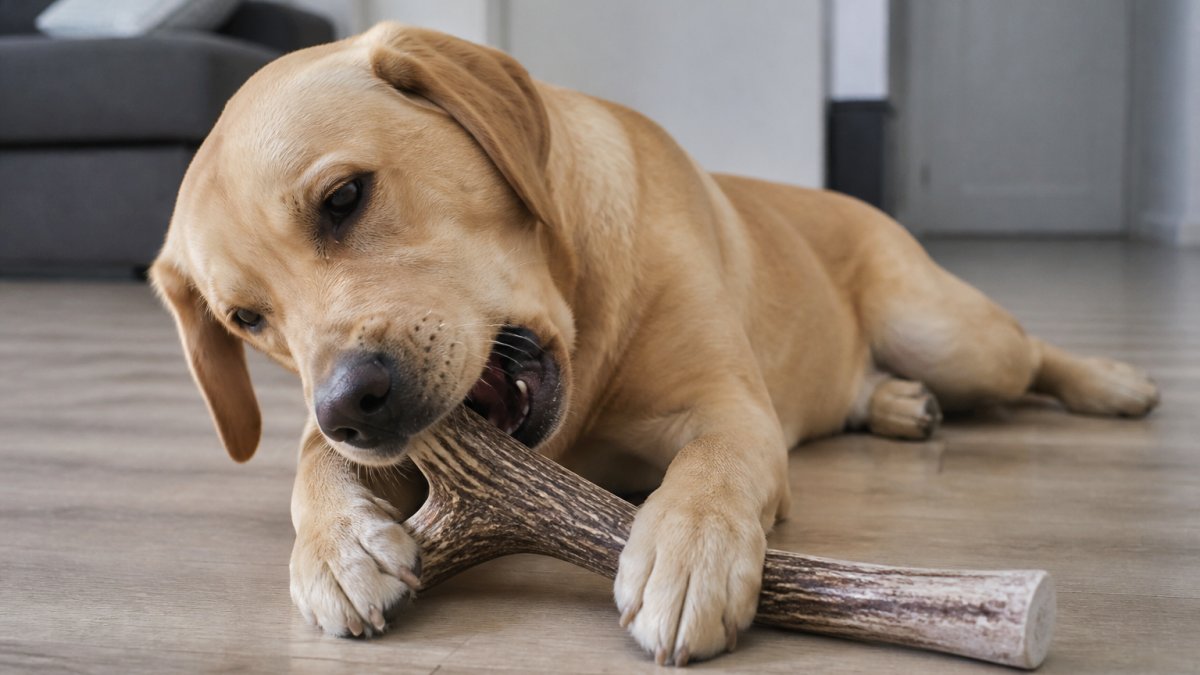
Sizing by Weight and Chewing Style
Antler size should match your dog's weight and jaw strength.
For dogs under 25 pounds, a deer antler or small elk antler is more appropriate than a full-sized elk antler. Medium dogs (25-60 pounds) can handle standard elk antlers with supervision.
Chewing style is equally important. A dog that methodically gnaws differs from one that attacks and tries to break pieces off aggressively. Aggressive chewers face higher fracture and blockage risks regardless of size.
Whole Versus Split Antlers
Whole antlers provide a more natural chewing experience and last longer. Split antlers are cut lengthwise, exposing the inner marrow and creating a wider surface. Split antlers splinter less and are safer for dogs that tend to swallow fragments.
The trade-off: whole antlers last longer but pose higher splintering risk. Split antlers are consumed faster but are gentler on teeth and safer for dogs prone to gulping. For most dogs, split antlers represent the better safety choice, especially if your dog hasn't chewed antlers before.
Sourcing, Hygiene, and Quality Standards
Antler quality varies significantly. Antlers shed naturally from elk, so ethically sourced options exist without harming animals. However, sourcing practices and hygiene standards differ between suppliers.
Look for antlers that are cleaned and free from visible dirt or mold. Antlers stored in humid conditions can develop mold, which poses health risks. Reputable suppliers process antlers to remove contaminants and store them properly.
At Shake Wag & Roll, we prioritize sourcing antlers that meet rigorous hygiene standards. Our Ever Antler Nylon Chew Bone combines the antler shape dogs love with the safety benefits of premium nylon construction, eliminating splintering and fracture risks while maintaining the enrichment value.
Safe Alternatives to Antlers for Dogs
If antlers don't fit your dog's needs or risk profile, several alternatives provide similar enrichment and durability benefits.
Nylon chew toys designed with antler shapes offer the aesthetic and enrichment appeal without the fracture or splintering risks.
Yak cheese chews, made from hardened cheese, provide long-lasting chewing satisfaction with less fracture risk than natural antlers.
Rubber or silicone chew toys designed for power chewers offer durability without the hardness that causes tooth fractures.
Bully sticks and other natural chews break down more quickly than antlers but pose lower fracture risk.
Choosing the right chew for your dog means balancing enrichment, durability, and individual safety factors. Explore our range of premium toys and chews, including alternatives designed for dogs with different risk profiles and chewing styles. Sign up for exclusive offers and expert guidance tailored to your dog's unique needs.
Frequently Asked Questions
What are the main benefits of elk antlers for dogs?
Elk antlers for dogs provide multiple benefits: they promote dental health by naturally cleaning teeth and reducing plaque buildup through chewing action, offer mental stimulation and enrichment to combat boredom, deliver essential minerals like calcium and phosphorus, and support joint health through glucosamine and chondroitin. The sustained chewing also reduces destructive behavior by channeling your dog's natural instincts appropriately.
Are elk antlers safe for dogs to chew?
Elk antlers can be safe when supervised and chosen correctly, but they carry specific risks. The primary concern is tooth fracture, especially in dogs with weaker teeth or aggressive chewing styles. Real antlers may splinter or create choking hazards if pieces break off. Synthetic alternatives like the Ever Antler Nylon Chew Bone reduce splintering risk while maintaining the antler shape dogs love. Always supervise chewing and remove the antler if it becomes damaged.
How long should a dog chew an antler each day?
Most dogs benefit from 15-30 minutes of supervised antler chewing per session. For power chewers, start with shorter sessions and gradually increase as you monitor for tooth sensitivity or damage. Never leave antlers unsupervised for extended periods. Replace the antler once it becomes small enough to pose a choking risk, typically when only 1-2 inches remain. Individual tolerance varies based on your dog's age, jaw strength, and chewing style.
How do I choose the right size elk antler for my dog?
Match antler size to your dog's weight and chewing intensity. Small dogs (under 25 lbs) need smaller antlers or split pieces to prevent jaw strain. Medium dogs (25-60 lbs) typically handle medium whole antlers well. Large and giant breeds (over 60 lbs) can manage larger whole antlers. Consider your dog's chewing style: aggressive chewers benefit from split antlers that are harder to fracture teeth on, while moderate chewers can handle whole antlers. Always supervise initial use to assess your dog's safety.
What are safer alternatives to real elk antlers for dogs?
Synthetic options like nylon antler-shaped chews reduce splintering and tooth-fracture risks while maintaining the antler appeal. The Ever Antler Nylon Chew Bone combines realistic antler design with durable, non-toxic FDA-compliant nylon. Other safe alternatives include rubber Kong toys, braided yak cheese chews, bully sticks, and rope toys. Choose based on your dog's chewing intensity and any dietary sensitivities. Synthetic options are particularly ideal for puppies, senior dogs, or those with a history of tooth problems.
Can puppies chew elk antlers?
Puppies should not chew real elk antlers because their baby teeth are still developing and more prone to fracture. Additionally, puppies are more likely to swallow large pieces, creating choking hazards. Wait until permanent teeth fully erupt (around 6-7 months) before introducing any hard chews. Even then, supervise closely and choose appropriately sized options. Synthetic alternatives designed for puppies offer safer enrichment during the teething phase.
Do elk antlers actually help clean a dog's teeth?
Yes, the mechanical action of chewing elk antlers does help reduce plaque and tartar buildup on teeth. The friction from chewing massages gums and naturally scrapes tooth surfaces, supporting oral hygiene. However, antler chewing is not a substitute for professional dental care or regular brushing. It works best as part of a comprehensive dental health routine that includes veterinary checkups and appropriate brushing practices.