

How to Introduce New Treats to a Sensitive Dog

Table of Contents
- Why Slow Introduction Matters for a Sensitive Dog
- Step 1: Screen Ingredients Before You Buy Dog Treats for Sensitive Stomachs
- Step 2: Start With a Tiny Portion and a Five-Day Test
- Step 3: How to Transition Dog Food Slowly Alongside New Treats
- Step 4: Watch for Dog Food Allergy Symptoms and Digestive Reactions
- Step 5: Pick Training Treats for Dogs With Sensitive Stomachs
- When to Call Your Veterinarian
- Conclusion: Build a Treat Routine Your Dog Can Trust
- Frequently Asked Questions
Last Updated: October 12, 2026
Why Slow Introduction Matters for a Sensitive Dog
Most guides skip this: a dog can eat chicken for years and still develop a reaction, because sensitivities build slowly with repeated exposure.
Owners tell us every week they have cycled through five or six treat brands with no luck. The problem is rarely the brand. It is the pace.
Slow introduction does three things:
- It pinpoints which ingredient caused a reaction
- It gives your dog's gut time to adjust to a new protein or fiber
- It protects training progress, since a sick dog cannot train
Skip it and you lose all three, with no idea what went wrong.
Step 1: Screen Ingredients Before You Buy Dog Treats for Sensitive Stomachs
Start with the label, not the taste test. A treat your dog loves is worthless if it contains a trigger. Look for short ingredient lists, fewer ingredients means fewer suspects, and single-protein treats as the safest start.
Reading Labels and Spotting Common Triggers
Check the full ingredient panel, not the front of the bag. Claims like "natural" or "wholesome" tell you nothing about what is inside.
Watch for these common triggers:
- Chicken, beef, and dairy - the most frequent protein and dairy allergens in dogs
- Wheat, corn, and soy - common fillers that upset sensitive guts
- Artificial colors, flavors, and preservatives - unnecessary additives with no nutritional value
The FDA's pet food labeling guidance explains what must appear on a treat label and what "natural" legally means.
Grain-free does not automatically mean gentle. Some grain-free treats swap in pea protein or chickpea flour, which bother some dogs.
Step 2: Start With a Tiny Portion and a Five-Day Test
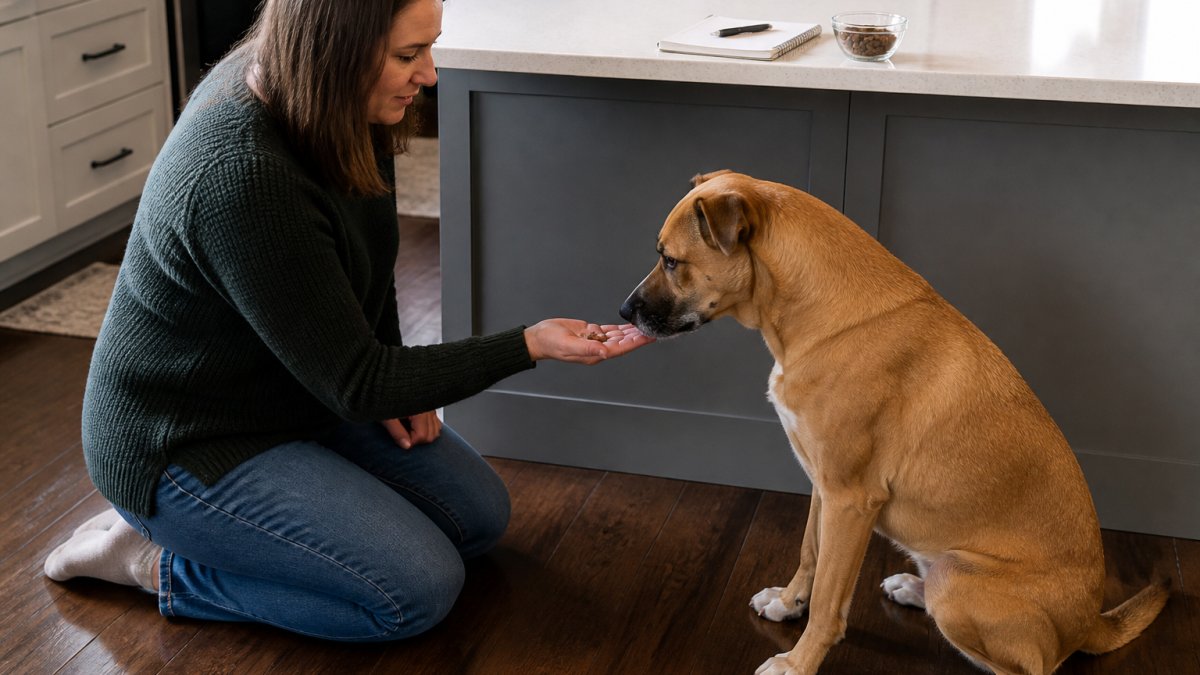
Give one small piece on day one, then wait. A piece the size of your pinky nail is enough.
The five-day introduction works like this:
| Day | Portion Size | What to Watch |
|---|---|---|
| Day 1 | 1 tiny piece | Any immediate reaction |
| Day 2 | 1 tiny piece | Stool quality next morning |
| Day 3 | 2 small pieces | Energy and appetite |
| Day 4 | 3 small pieces | Gas, scratching, ear redness |
| Day 5 | Normal training portion | Overall condition |
If your dog stays clean through day five, the treat is likely safe. If anything changes, stop and note which day it started.
Keeping a Simple Treat-Testing Log
A log turns guesswork into evidence. Most owners forget which treat caused which symptom after two or three tries.
Track five things per test:
- Treat name and main protein
- Date and portion size
- Stool quality that day and the next
Step 3: How to Transition Dog Food Slowly Alongside New Treats
Never change food and treats in the same week, or you cannot tell which caused the problem. That single rule is the whole reason this step exists, and the one most owners skip.
The Four-Week Ratio, With Actual Portions
Ratios mean nothing without a starting number. Measure your dog's current daily food amount first, then apply the split. For a dog eating 2 cups per day:
| Week | Old Food | New Food | Total Per Day |
|---|---|---|---|
| 1 | 1 1/2 cups | 1/2 cup | 2 cups |
| 2 | 1 cup | 1 cup | 2 cups |
| 3 | 1/2 cup | 1 1/2 cups | 2 cups |
| 4 | 0 | 2 cups | 2 cups |
Keep the total volume the same each week. The common mistake is adding new food on top of the old, which increases calories and often causes the loose stool owners blame on the new food.
Pause Criteria: When to Hold at the Current Ratio
Do not advance on a calendar, advance when the current week is clean, and hold an extra three to five days if you see:
- Soft stool that is not fully formed
- Noticeable gas after meals
- A drop in appetite at any meal
- New scratching or paw licking
If a yellow-tier reaction appears (see Step 4), drop back one week's ratio and hold until symptoms clear for 48 hours. If symptoms return when you advance, stop and call your vet, some dogs cannot tolerate a given food no matter how slowly you go.
Treats Stay Frozen During the Transition
This part gets lost: while changing food, feed only the treat your dog already tolerated before the transition. Do not test a new treat, swap proteins, or add a new chew, a second variable makes the four weeks unreadable.
Once your dog has been on 100% new food for a full week with normal stool and appetite, you have a clean baseline.
Why This Sequencing Beats a Fast Switch
A dog's gut microbiome shifts with diet over days to weeks, not hours. Most practitioners find a gradual transition reduces vomiting and diarrhea compared with a sudden switch, especially in dogs with a history of sensitivity.
If your dog is on a prescription diet, do not run this transition on your own. Your veterinarian sets the schedule, and some therapeutic diets require a longer or shorter ramp depending on the condition being managed.
Cookie Pal - Dog Treat Pmpkm Chia - Case Of 4-10 Oz →
Step 4: Watch for Dog Food Allergy Symptoms and Digestive Reactions
Most reactions to a new treat show up within 24 hours, but timing and body system tell you different things. A gut reaction and a skin reaction are not the same problem and do not call for the same response.
What to Monitor, and When
Check these four things on a fixed schedule so you compare like with like:
- Stool - grade it the morning after each test day. A common shorthand is a 1-to-7 scale, where 1 is rock-hard and 7 is watery; anything at 5 or above is a flag. Note color and any mucus or blood.
- Appetite - did your dog finish normal meals the next day, or leave food behind?
- Skin and ears - itching, paw licking, redness in the ear flap, or a new hot spot.
- Energy - a dog that normally greets you at the door and now stays on the bed is telling you something.
Log each one the day you feed the test treat, not from memory a week later.
Grading the Reaction: Green, Yellow, Red
A three-tier system keeps you from overreacting to a soft stool or underreacting to something serious.
Green - continue the test. One soft stool that firms up by the next meal, a little extra gas, or a single episode of scratching.
The American Veterinary Medical Association's pet owner resources outlines when a reaction moves from "watch it" to "call now."
Why Timing Matters More Than the Symptom
A reaction within minutes points toward immediate hypersensitivity and is most urgent. A reaction building over two to three days of repeated feeding points toward cumulative sensitivity, which is why the five-day test spaces portions out. Feed a new treat twenty times in one session and you compress a week of exposure into an hour, losing the ability to tell which day triggered what.
When Home Monitoring Is Not Enough
If your dog has a diagnosed condition such as inflammatory bowel disease, pancreatitis, or a known food allergy, do not run a home treat test without your vet's sign-off. The same goes for puppies under six months, dogs on prescription diets, and any dog with two or more yellow-tier reactions in a month. A vet can run an elimination diet or allergy test no home log can replicate.
Step 5: Pick Training Treats for Dogs With Sensitive Stomachs
Small, simple, and low in fillers is the short answer for training treats for dogs with sensitive stomachs. Training means repetition, so a treat eaten twenty times a session has to be gentle. Look for:
- Small size - pea-sized or smaller, so you are not overfeeding
- Single protein - one clear protein source, no blends
- Short ingredient list - five to eight items, ideally
- Low calorie - training sessions add up fast
Our Cookie Pal - Dog Treat Pmpkm Chia treats are organic, gluten-free, and built on organic ground lentils, organic pumpkin, and organic chia seeds, a short list with no wheat, making them a reasonable starting point for many sensitive dogs.

For dogs who need a long-lasting chew, our Dog Macarons - Count of 6 are hard treats designed for a long-lasting chew. Break them into smaller pieces for elderly or small dogs, as the maker recommends.
When to Call Your Veterinarian
Call your vet if symptoms last more than 48 hours, your dog stops eating, or you see blood, swelling, or breathing changes.
Bring your testing log. A written record of what changed and when helps your vet narrow the cause fast.
Red flags that skip the wait:
- Vomiting more than twice in a day
- Diarrhea with blood or black stool
- Lethargy or refusal to drink
- Any facial swelling
The ASPCA Animal Poison Control Center is a resource if you suspect your dog ate something toxic rather than simply reacted to a new treat.
Conclusion: Build a Treat Routine Your Dog Can Trust
Finding the right treat for a sensitive dog takes patience, but the payoff lasts. Screen the label, test one small piece at a time, log what happens, and change only one thing per week.
That routine protects your dog's gut and your training progress at the same time.
Shake Wag & Roll carries limited-ingredient treats and organic chews built for exactly this problem. Our short ingredient lists make screening easy.
Frequently Asked Questions
How much of a new treat should I give my dog first?
Start with a piece no bigger than your thumbnail. For a sensitive dog, one small bite is enough to reveal whether a new treat causes a reaction. Wait 24 hours and watch for changes in stool, appetite, or energy. If nothing changes, offer two small pieces the next day. Increase gradually over five days, never jumping straight to a full treat. This slow ramp gives you a clear signal about which ingredient caused any problem.
What are the signs that a dog is reacting badly to a new treat?
Watch for diarrhea, loose stool, vomiting, excessive gas, itching, paw licking, or ear redness within 24 to 48 hours of a new treat. Some dogs also lose appetite or seem lethargic. Mild gas alone may pass, but repeated diarrhea or vomiting means stop the treat and call your veterinarian. Keep notes on timing so you can tell whether the reaction started after the treat or after something else in your dog's day.
Can I give my dog treats while switching foods?
Yes, but keep the treat consistent during the food transition. Switching food and introducing a new treat at the same time makes it impossible to tell which change caused a reaction. Use a treat your dog already tolerates, or pause new treats until the food switch is complete. A slow transition over seven to ten days, mixing increasing amounts of the new food with the old, keeps the process manageable.
When should I contact a veterinarian about a reaction to a treat?
Call your veterinarian if diarrhea lasts more than 24 hours, if your dog vomits repeatedly, refuses food, seems painful, or shows blood in the stool. Facial swelling, hives, or difficulty breathing are emergencies and need immediate care. For mild gas or one soft stool, pause the treat, offer plain water, and monitor. Your vet can also help identify whether the issue is a food sensitivity or something unrelated.