

How to Stop Dog Destroying Toys: A Step-by-Step Guide

Table of Contents
- Why Dogs Destroy Toys and What It Means
- Choose Durable Toys for Aggressive Chewers
- Provide Mental Stimulation for Dogs to Reduce Destructive Play
- How to Teach Your Dog to Play Gently With Toys
- Supervise Play and Interrupt Destructive Behavior
- Implement a Toy Rotation System and Know When to Remove Toys
- Medical and Dental Screening: Rule Out Underlying Issues
- Conclusion
Last Updated: August 26, 2026
Why Dogs Destroy Toys and What It Means
Dogs destroy toys for reasons far deeper than simple mischief. Understanding the root causes is the first step toward solving the problem.

Natural instinct is the most common culprit. Dogs have an inherent drive to hunt, pounce, and shred. A toy stuffed with material mimics prey, and your dog's jaw strength and predatory instincts kick in automatically. This is especially true for breeds with strong hunting or terrier backgrounds.
Boredom ranks as the second major driver. A dog left alone with limited mental stimulation will destroy toys as an outlet for frustration and excess energy. Separation anxiety also plays a significant role; destructive behavior often intensifies when owners leave, as your dog expresses stress and attempts self-soothing through tearing and chewing.
Teething in puppies causes temporary destructive behavior, typically resolving by 12-18 months (aafco.org). Medical issues can also trigger unusual toy destruction, dental pain, nutritional deficiencies, or gastrointestinal discomfort sometimes manifest as sudden changes in chewing habits. If your dog's destructive behavior appears suddenly or intensifies without obvious cause, a veterinary checkup should come first.
Choose Durable Toys for Aggressive Chewers
Not all toys are created equal, and aggressive chewers will expose weaknesses in poorly designed ones within minutes.

Material matters most. Rubber compounds engineered specifically for power chewers hold up far better than standard plush toys. Look for toys made from reinforced nylon or natural rubber with double-stitched seams and reinforced stress points. Avoid toys with small parts, bells, or plastic components that create choking hazards.
Shake Wag & Roll offers Dog Toys for Aggressive Chewers using industrial-grade nylon and rubber compounds engineered for dogs that destroy toys in minutes. These toys withstand sustained chewing without shredding or breaking apart, preventing ingestion risk.
Shape and size matter too. A toy should be large enough that your dog can't fit the entire thing in their mouth (aspca.org). Toys with varied textures and ridges provide more engaging chewing experiences than smooth surfaces.
The Bone eChew Ultra Durable Nylon Dog Chew Toy is USA-made and designed specifically for power chewers, resisting shredding and splintering.

Provide Mental Stimulation for Dogs to Reduce Destructive Play
Physical exercise alone won't solve destructive behavior. Mental stimulation is equally critical.
Puzzle toys, foraging toys, and interactive toys that require problem-solving force your dog to think rather than simply chew. A puzzle toy that takes 20 minutes to work through provides far more value than a standard toy destroyed in two minutes.
Rotate your toys strategically. When you remove toys for a few days and reintroduce them, they feel fresh again. A rotation system of 8-12 toys, with only 2-3 available at any given time, maintains consistent interest while extending lifespan.
Interactive toys that dispense treats tap into your dog's natural foraging instincts, engaging both body and mind. Scheduled play sessions of 15-30 minutes with active participation transform toy time from passive destruction into interactive bonding.
How to Teach Your Dog to Play Gently With Toys
Teaching your dog to play gently with toys requires patience, consistency, and reward-based training.
Start with soft toys and gentle handling. When your dog engages gently with a toy, reward immediately with praise or treats. Interrupt escalation before it happens by watching for the moment when play shifts from gentle mouthing to aggressive shaking, then redirect with a calm command like "easy" or "gentle."
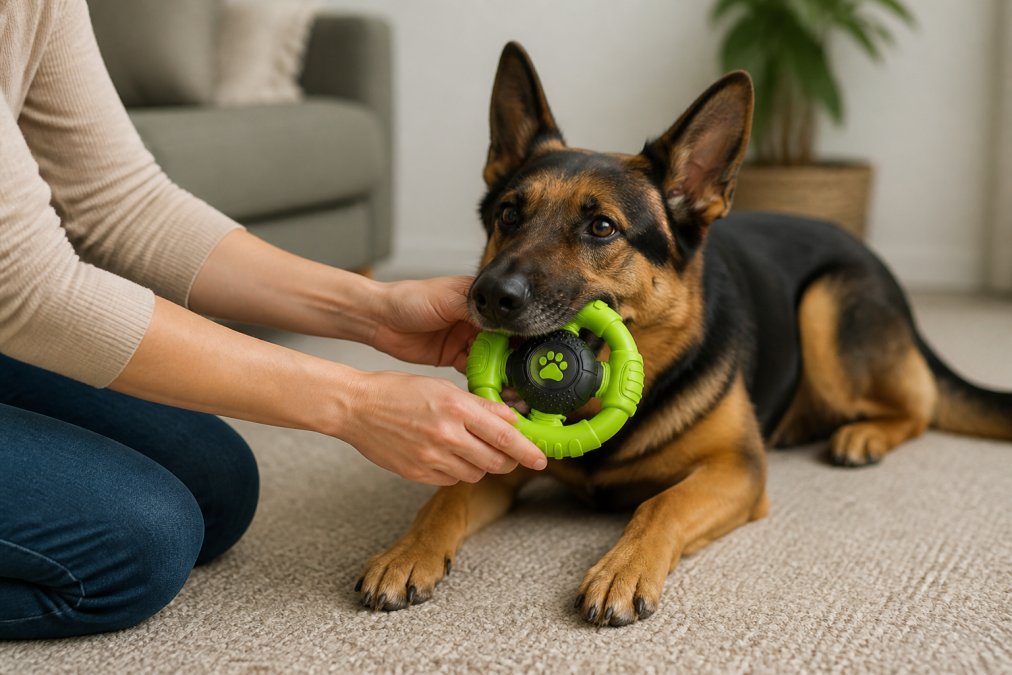
Teach impulse control through training cues. Dogs that know "drop it," "leave it," and "take it gently" have the behavioral vocabulary to respond to redirection. Practice these commands daily in low-stakes scenarios before you need them during intense play.
Model the behavior you want. When you play with your dog using toys, demonstrate gentle interaction through slow movements and calm energy. Reward calm toy interaction specifically, when your dog picks up a toy and carries it gently without shaking or tearing, mark that behavior and reward it.
Supervise Play and Interrupt Destructive Behavior
Supervision is the foundation of managing destructive behavior. You can't redirect what you don't see.
Active supervision means being present and attentive during toy play. Watch for the moment when play shifts toward destruction and intervene before damage occurs. Early interruption prevents the behavior from becoming reinforced through the satisfaction of shredding.
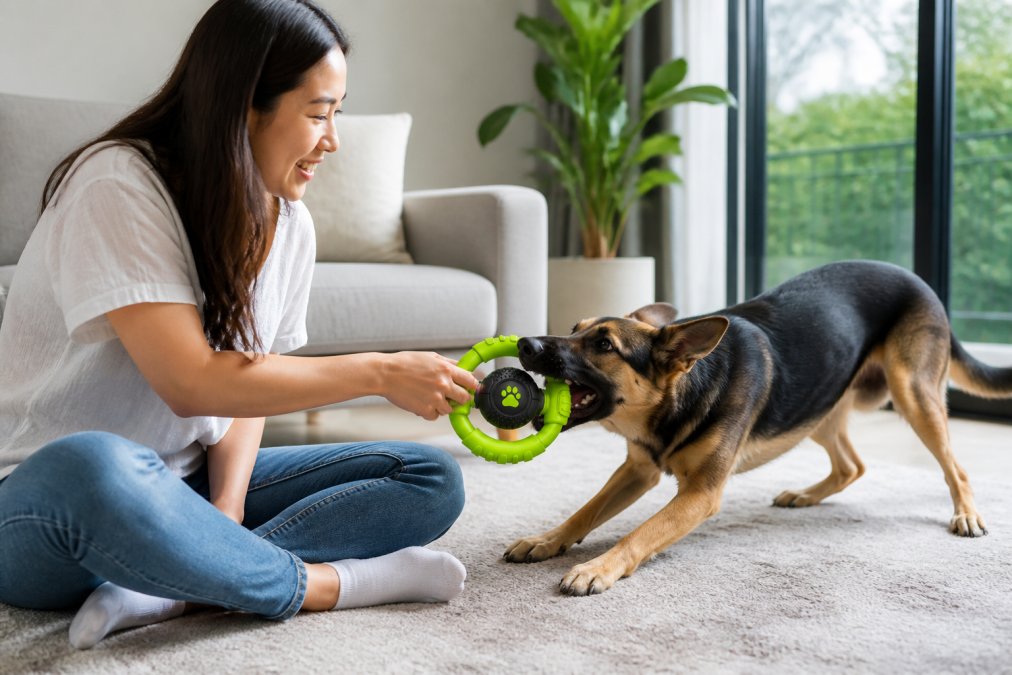
Develop a consistent interruption protocol. When you notice your dog beginning to shake or aggressively chew a toy, interrupt with a calm, clear command. Don't yell; instead, calmly redirect by removing the toy and offering an alternative. Timing is critical, intervene the moment you see the jaw position shift from gentle chewing to aggressive shaking.
Use redirection, not punishment. When you catch destructive behavior starting, immediately offer an alternative toy or activity. Designate specific areas where toy play happens under your watch to make supervision easier.
Implement a Toy Rotation System and Know When to Remove Toys
A strategic toy rotation system prevents habituation while extending the lifespan of your collection.
Start with 8-12 toys total, keeping only 2-3 accessible at any given time. Rotate the available toys every 3-5 days. When you reintroduce a toy after a week away, your dog perceives it as novel again.
Know when to remove toys permanently. If a toy shows signs of tearing, splintering, or material separation, remove it immediately. A toy with loose threads or exposed stuffing poses ingestion risks. Watch for toys that trigger excessive destruction specifically, if a particular toy consistently results in aggressive shredding within minutes, remove it from rotation.
Remove toys when your dog is unsupervised. Leaving toys accessible during times you can't watch dramatically increases destructive incidents. Reserve toy access for supervised periods. Inspect toys regularly for wear, checking seams and stress points weekly.
| Toy Type | Best For | Rotation Frequency | Safety Check |
|---|---|---|---|
| Durable Nylon/Rubber | Aggressive chewers | Every 5 days | Weekly seam inspection |
| Puzzle Toys | Mental stimulation | Every 3 days | Check treat compartments |
| Plush Toys | Supervised play only | Every 7 days | Remove if any tearing |
| Long-lasting Chews | Unsupervised time | As consumed | Monitor for splinters |
Medical and Dental Screening: Rule Out Underlying Issues
Before attributing all destructive behavior to psychology or training gaps, rule out medical causes. Sudden changes in toy destruction patterns often signal physical problems.
Dental pain is a common culprit (avma.org). If your dog's destructive behavior intensifies suddenly or focuses specifically on toys they can chew intensely, dental issues may be responsible. A veterinary dental exam can identify problems that behavior modification alone won't solve.
Schedule a veterinary checkup if destructive behavior appears suddenly or escalates without obvious environmental changes. Your vet can rule out nutritional deficiencies, gastrointestinal discomfort, or other physical conditions. Teething in puppies causes temporary increased chewing, typically resolving by 18 months.
Ask your veterinarian about your dog's specific chewing patterns. Excessive focus on one type of toy, sudden intensity changes, or destructive behavior concentrated on certain materials might indicate medical factors worth investigating.
Managing a dog that destroys toys requires addressing multiple factors simultaneously: selecting appropriate durable materials, providing adequate mental and physical stimulation, teaching gentle play through positive reinforcement, and supervising actively to interrupt destructive patterns before they escalate. Shake Wag & Roll specializes in toys engineered for aggressive chewers, their Dog Chew Toys for Aggressive Chewers use reinforced nylon that withstands sustained chewing without shredding. Combined with a structured toy rotation system and consistent behavioral training, these durable toys give you the foundation to stop dog destroying toys patterns and redirect that natural chewing drive toward safe, engaging outlets. Get started with Shake Wag & Roll and transform how your dog interacts with toys.
Frequently Asked Questions
Q: Is it normal for dogs to destroy their toys?
A: Yes, toy destruction is a natural behavior rooted in a dog's instinct to hunt, chew, and explore. However, excessive destructive behavior can signal boredom, separation anxiety, or insufficient mental stimulation. The key is channeling this natural instinct into appropriate outlets with durable toys for aggressive chewers and supervised play sessions. If destruction is sudden or obsessive, consult your veterinarian to rule out underlying anxiety or dental issues.
Q: How can I tell if my dog is destroying toys out of boredom or anxiety?
A: Dogs bored by lack of mental stimulation typically destroy toys during the day or when left alone, and they often seem playful during the destruction. Anxiety-driven destruction is usually frantic, focused on escape routes, and accompanied by pacing or whining. Separation anxiety often triggers destructive behavior only when you leave. Observe the timing and your dog's body language. Mental stimulation for dogs through puzzle toys, foraging games, and interactive play can help distinguish between the two and reduce both behaviors.
Q: What materials are best for durable toys for aggressive chewers?
A: Look for toys made from reinforced rubber compounds, double-stitched nylon, or solid rubber without stuffing that can be ingested. Avoid plush toys with easily removable stuffing, as these pose an ingestion risk. Toys designed specifically for aggressive chewers are engineered to withstand strong jaw pressure without shredding. Shake Wag & Roll offers indestructible nylon and rubber toys like the Bone eChew ($12.99) and interactive chew toys designed to last through intense chewing sessions while keeping your dog safely engaged.
Q: How do I know if my dog's toy destruction is a medical issue?
A: Sudden changes in chewing behavior, excessive drooling, difficulty eating, or focusing chewing on one area may indicate dental pain, teething, or other health concerns. Puppies teething naturally chew more intensely as their adult teeth emerge. If your dog previously had normal toy habits but suddenly destroys everything, or if destruction is paired with behavioral changes, schedule a veterinary exam. Your vet can screen for dental disease, nutritional deficiencies, or underlying pain that might drive compulsive chewing behavior.
This article was written using GrandRanker