

What Happens If a Dog Eats Too Many Treats?

Table of Contents
- How Many Treats Can a Dog Have Per Day?
- What Happens If a Dog Eats Too Many Treats: Digestive Upset
- What to Do If a Dog Eats Too Many Treats: First Steps
- When a Dog Ate a Whole Bag of Treats: Emergency Signs
- Long-Term Risks of Overfeeding Dog Treats
- How to Prevent Overfeeding and Choose Safe Treats
- Conclusion: Keeping Treat Time Safe and Enjoyable
- Frequently Asked Questions
Last Updated: October 13, 2026
How Many Treats Can a Dog Have Per Day?
Most healthy adult dogs should get no more than 10% of their daily calories from treats, roughly 30 to 60 calories for a small dog and 90 to 150 for a large one.
Owners are often shocked by how fast treat calories add up, a single large biscuit can eat a third of a small dog's daily treat budget.
The math is simple: find your dog's daily calorie target (your vet can give you this), multiply it by 0.10, and treat that number as a ceiling, not a target.
The 10% Rule: Daily Calories From Treats
The 10% guideline is the standard vets use to split daily calories between regular food and everything else. The other 90% should come from a complete diet that meets your dog's nutritional needs.
Some foods blur the line. Dental chews, rawhide-style chews, and food-stuffed toys can carry serious calories. If your dog gets one of those, it counts against the 10%, not on top of it.
What Happens If a Dog Eats Too Many Treats: Digestive Upset
The most common result of a treat overload is digestive upset, usually within a few hours. The dog's gut is not built to process a sudden flood of rich, fatty, or sugary food.
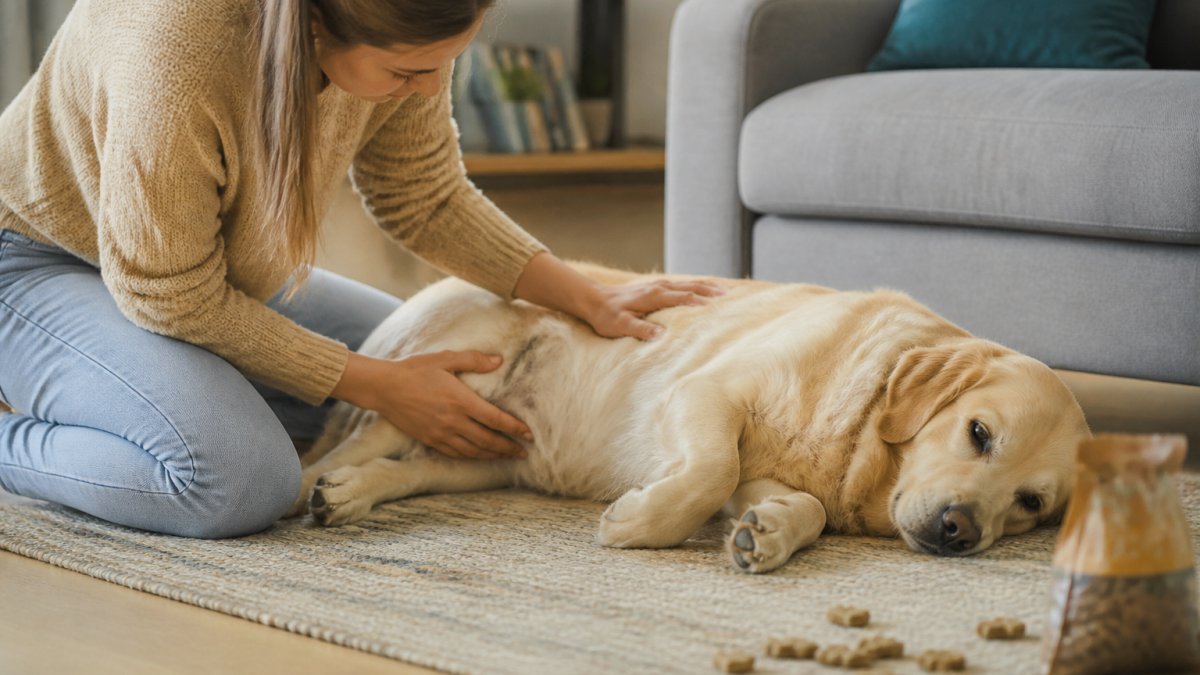
That protest looks like an upset stomach, ranging from mild to genuinely worrying. The type of treat matters as much as the amount: ten plain, limited-ingredient biscuits may be fine, while three greasy, preservative-heavy chews may not be.
Symptoms of a Dog Upset Stomach
Watch for these symptoms of dog upset stomach in the hours after a treat binge:
- Vomiting, especially repeated episodes
- Diarrhea, which may start soft and turn watery
- Gas and flatulence that is worse than usual
One episode of soft stool is not a crisis. Repeated vomiting plus diarrhea plus lethargy together is a different story, and that combination means a call to your vet.
What to Do If a Dog Eats Too Many Treats: First Steps
If a dog eats too many treats, stop the supply and assess what was eaten. Quick triage means three numbers: how many calories, what ingredients, and how big is the dog.
Here is the step-by-step plan to walk owners through:
- Take the treats away, including the bag, so the dog cannot keep grazing.
- Check the package for calories per treat and the full ingredient list.
- Estimate the quantity by counting what is missing against the original package size. A 16-ounce bag with two-thirds gone is roughly 10 to 11 ounces eaten, not "a few."
- Note the time the dog ate them. Most digestive upset shows up within 2 to 12 hours.
- Offer fresh water but do not force it; a vomiting dog may need small, frequent sips.
- Skip the next scheduled treat and feed a smaller, plain meal of the dog's normal complete diet if your vet approves.
- Keep activity calm. A short, gentle walk is fine; rough play on a full stomach can trigger vomiting.
- Watch for symptoms over the next 12 to 24 hours, checking the dog's belly, gums, and energy level.
- Call your vet if anything in the emergency list below appears.
For most mild cases, the dog will settle within a day. The gut needs time, not more food.
Triage: Assess Amount, Ingredients, and Packaging
Not every overeating incident is equally dangerous. The same 200 calories of treats is a minor blip for a 90-pound dog and a serious overload for a 5-pound puppy.
Step 1, Estimate the calories. Multiply the number of treats eaten by the calories per treat on the label, then compare that to the dog's daily treat ceiling (10% of daily calories).
Step 2, Read the ingredient list. Most treats are simply calorie-dense and cause nothing worse than an upset stomach. A smaller group contains ingredients that are toxic regardless of quantity:
- Xylitol (also listed as birch sugar or wood sugar), even small amounts can cause dangerous drops in blood sugar and, in higher doses, liver failure.
- Chocolate, the darker and more bitter, the more methylxanthines, which affect the heart and nervous system.
- Grapes and raisins, linked to kidney injury in dogs, and there is no established safe amount.
If any of the toxic ingredients are on the label, skip home monitoring and call a veterinarian or a pet poison hotline right away, even if the dog looks fine.
Step 3, Check the packaging. Was the bag chewed open, torn, or missing pieces? Swallowed plastic, foil, string, or a large chew can cause a blockage that has nothing to do with calories.
Step 4, Weigh the dog's risk factors. Size, age, and health history change the math:
- Small dogs and puppies hit calorie and toxicity thresholds far faster than large adults, and puppies dehydrate faster from vomiting or diarrhea.
- Senior dogs and dogs with kidney disease, diabetes, pancreatitis history, or food sensitivities need a lower threshold for calling the vet.
- Flat-faced breeds (brachycephalic) can struggle more with vomiting and breathing at the same time.
What Not to Do After a Treat Binge
A few common reactions make things worse:
- Do not induce vomiting unless a veterinarian specifically directs it. Some treats and wrappers are more dangerous coming back up, and the wrong technique can cause aspiration.
- Do not give human medications. Ibuprofen, acetaminophen, and most human anti-nausea or anti-diarrheal drugs are unsafe for dogs.
- Do not withhold water to "rest the stomach." Dehydration is a bigger risk than a little extra water.
When a Dog Ate a Whole Bag of Treats: Emergency Signs
A dog that ate a whole bag of treats needs urgent veterinary care if any of these signs of distress appear. Know which symptoms are "watch and wait" and which are "go now."
Mild vs. Emergency: How to Tell the Difference
Most treat binges cause mild, self-limiting stomach upset; a smaller number are genuine emergencies.
Mild, monitor at home, call your vet if it does not improve within 24 hours:
- One or two episodes of vomiting
- Soft stool or a single bout of diarrhea
- Mild gas or a slightly gurgly belly
Emergency, call your vet or an emergency clinic right away:
- Repeated vomiting that will not stop, or vomiting more than 3 to 4 times in a few hours
- Diarrhea with blood, or black, tarry stool
- A hard, swollen, painful abdomen that the dog does not want touched
When in doubt, call, veterinary staff are used to triage questions.
The ASPCA Animal Poison Control Center runs a 24-hour hotline for suspected poisonings, including toxic treat ingredients.
Packaging Ingestion: A Separate Emergency
Packaging ingestion is its own emergency, and it is easy to miss because the dog may seem fine for hours or even a day.
Signs of a blockage often lag behind the ingestion:
- Vomiting that comes and goes, sometimes after meals
- Refusing food or eating less than normal
- Abdominal pain or a hunched posture
If you suspect your dog swallowed any packaging, treat it as urgent even if the dog seems fine. Do not wait for symptoms. Call your vet and describe what was swallowed, how big it was, and when.
What to Have Ready When You Call
Emergency staff can move faster when you have the basics ready. Before you dial, gather:
- Your dog's weight and age
- The treat brand, package size, and calories per treat
- Your best estimate of how many treats were eaten, and when
If you can, bring the packaging with you, the ingredient list and calorie information help the vet decide whether this is a wait-and-watch case or a treat-now case.
Long-Term Risks of Overfeeding Dog Treats
Occasional overindulgence passes; habitual overfeeding does not, and the damage builds quietly. Two problems matter most: obesity and nutrient imbalance.
Obesity and Weight Gain
Extra treat calories become weight gain, and obesity is one of the most common health problems vets see in dogs. Ten extra treat calories a day is about 3,650 calories a year, for a small dog, a meaningful chunk of body weight. Extra weight raises the risk of joint disease, diabetes, and breathing problems, and shortens lifespan. The fix is portion control, not deprivation: measure treats, cut them into pieces, and count them against the daily total.
Nutritional Imbalance and Nutrient Deficiency
Treats crowd out real food, creating a nutrient imbalance: a dog filling up on biscuits eats less of the complete diet that supplies balanced protein, fat, vitamins, and minerals. Over time this can lead to a genuine nutrient deficiency, especially in puppies whose skeletal development depends on precise nutrition, a puppy raised on table scraps and treats can develop lifelong bone and joint problems.
How to Prevent Overfeeding and Choose Safe Treats
Prevention comes down to portion control, smart treat choices, and a little planning.
Start with these habits:
- Measure treats instead of free-pouring from the bag
- Break treats into small pieces for training sessions
- Use part of the daily kibble as training rewards
When you shop, look for treats with short ingredient lists and no artificial preservatives. If your dog has a food sensitivity or a history of allergic reaction, a limited-ingredient treat is the safer bet.
And keep physical activity in the mix. A dog that moves more burns more, which gives you a little more room in the treat budget.
| Situation | What to Do | Why It Matters |
|---|---|---|
| A few extra biscuits | Skip the next treat, monitor for 24 hours | Mild upset usually passes on its own |
| Whole bag of plain treats | Call your vet, watch for vomiting and diarrhea | Large quantity can trigger serious gut upset |
| Treats with xylitol, chocolate, grapes | Call poison control immediately | These ingredients are toxic to dogs |
| Bag or packaging swallowed | Go to an emergency vet | Risk of choking or intestinal blockage |
| Repeated vomiting, lethargy, swollen belly | Emergency vet visit now | Signs of a serious problem, not a mild upset |
Conclusion: Keeping Treat Time Safe and Enjoyable
Treats are one of the best tools we have for training, bonding, and rewarding a good dog. The trick is keeping them a small, thoughtful part of the day, not the main event.
Our limited-ingredient treats and organic chews make it easier to reward your dog without loading up on fillers, and our durable toys give active chewers something to work on that is not another snack.
Frequently Asked Questions
Can dogs get sick from eating too many treats?
Yes, dogs can get sick from eating too many treats. Overfeeding treats can lead to digestive upset, including vomiting, diarrhea, gas, and bloating. It can also cause lethargy and abdominal discomfort. In severe cases, especially if a dog eats a whole bag of treats or treats containing toxic ingredients like xylitol or chocolate, it can be a medical emergency. Always monitor your dog after they eat a large quantity of treats and contact your veterinarian if symptoms appear.
What should I do if my dog eats a whole bag of treats?
First, stay calm and assess the situation. Check the package label for ingredients, especially xylitol, chocolate, grapes, or raisins, and note how much your dog ate. Call your veterinarian or a pet poison control hotline immediately for guidance. Do not induce vomiting unless instructed by a professional. Monitor your dog for symptoms like vomiting, diarrhea, lethargy, or abdominal pain. If the treats are safe but eaten in excess, your vet may recommend withholding food for a few hours and watching for digestive upset.
How many treats can a dog have per day?
Treats should make up no more than 10% of your dog's daily calorie intake. For a typical 30-pound dog eating about 700 calories per day, that means no more than 70 calories from treats, which is roughly 3 to 4 small biscuits. Adjust based on your dog's size, activity level, and the calorie density of the treats. Always subtract treat calories from their regular food to avoid overfeeding. When in doubt, consult your veterinarian for a personalized recommendation.
What are the signs of a dog upset stomach after too many treats?
Signs of a dog upset stomach include vomiting, diarrhea, gas, bloating, abdominal discomfort, lethargy, and loss of appetite. Your dog may also pace, whine, or refuse to lie down comfortably. Mild upset often resolves within 24 hours with rest and a bland diet, but if symptoms persist beyond a day, worsen, or are accompanied by blood in vomit or stool, contact your veterinarian. Puppies, seniors, and dogs with sensitive stomachs are at higher risk.
Sign up for the Shake Wag & Roll community to get expert canine care tips, early access to new treat drops, and exclusive offers. Your dog will thank you.