

Durable Collars for Large Breeds: 2026 Guide

Table of Contents
- What Makes Durable Collars for Large Breeds Different
- Best Collar Width for Large Dogs: How Wide Is Wide Enough
- How to Measure for a Dog Collar (Step-by-Step)
- Martingale Collars for Strong Pullers: Are They the Right Choice?
- Top Durable Collars for Large Breeds at Shake Wag & Roll
- Long-Term Wear, Sustainability, and When to Replace a Collar
- Conclusion
Last Updated: August 21, 2026
Finding a collar that genuinely holds up on a 100-pound dog is harder than it looks. At Shake Wag & Roll, we've tested and curated durable collars for large breeds across materials, hardware types, and construction methods. This guide covers everything from hardware failure points and breed-specific neck anatomy to collar width, measuring technique, and our top picks across every price point.
Quick Picks:
- Best Budget: Heavy Duty Waterproof Dog Collar with Metal Buckle, $31.99
- Best for Training: Bestia Dog Sport Handle Collar, $59.90
- Best Everyday Nylon: Bestia GripPro Print Collar (Gold), $42.90
- Best Premium Leather: The Candy Dog Collar, $161.90
- Best Limited Edition: The Scare Collar Limited, $99.90
What Makes Durable Collars for Large Breeds Different
A durable collar for a large breed is not simply a bigger version of a small dog collar. A 90-pound Rottweiler generates pulling power that can exceed the tensile strength of standard nylon webbing or plastic hardware, causing sudden hardware failure mid-walk, a genuine safety event.

Large and giant breeds have wider, more muscular necks that demand wider collar widths for proper load distribution. A 1-inch flat collar on a Bullmastiff concentrates all leash pressure on a narrow band of tissue. A 2-inch or 2.5-inch collar spreads that force across a much larger contact area, reducing tracheal stress and skin irritation.
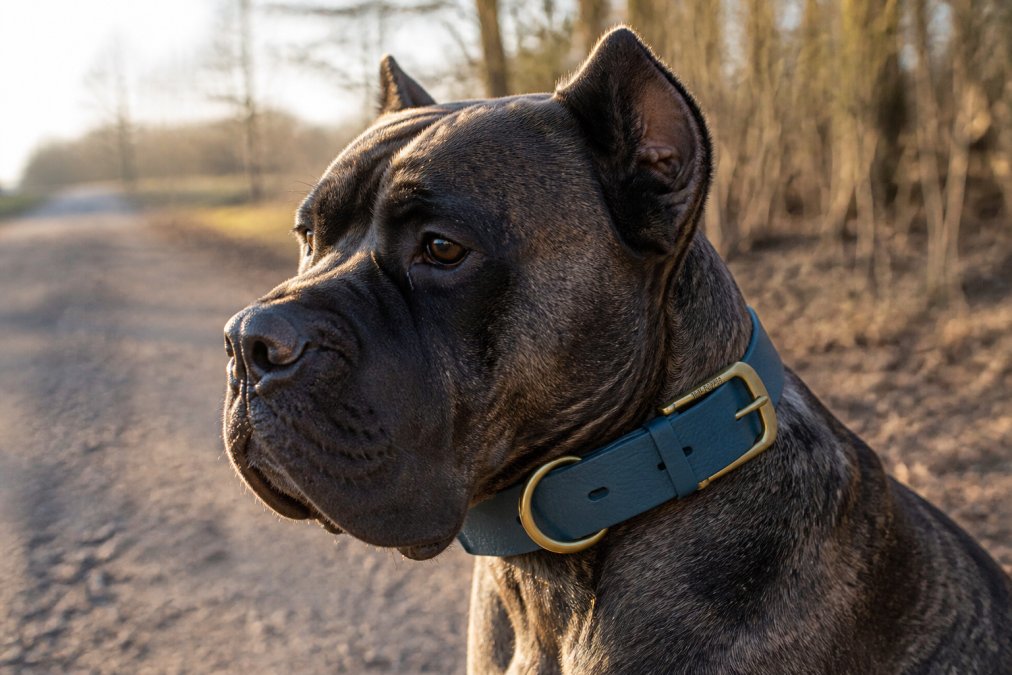
Large dogs that swim, hike, or work outdoors destroy fabric collars fast. Materials like biothane, ballistic polymer weave, and waterproof-coated nylon webbing solve this problem at the construction level.
Hardware Failure: The Weak Point Most Owners Overlook
The stitching and webbing on a collar rarely fail first. The hardware does. Plastic quick-release buckles crack under sustained lateral stress or degrade with UV exposure. The D-ring, which takes every leash attachment load, is the second most common failure point. A stamped D-ring with thin gauge will bend open under a strong lunge; a welded or cast stainless steel D-ring will not.
What to look for in hardware built for large breeds:
- D-ring gauge: Look for thick-gauge stainless steel or solid brass. Avoid lightweight stamped rings.
- Buckle material: Stainless steel or zinc alloy buckles outlast plastic by years and resist UV degradation.
- Rust resistance: Any hardware that contacts water should be explicitly rust-proof. Stainless steel is the standard.
- Reinforced stitching: Bar-tack stitching at D-ring attachment points distributes stress across multiple thread rows.
According to American Kennel Club's guidance on collar safety, owners should inspect collar hardware regularly for signs of bending, cracking, or corrosion, especially on large, powerful breeds.
Breed-Specific Neck Anatomy and Why It Matters
Not all large breeds are built the same. Brachycephalic breeds like English Bulldogs have short, thick necks with significant skin folds and need wider collars with smooth interior edges. Sighthounds have necks wider than their heads, making standard flat collars slip off entirely; martingale designs are the only safe option. Giant working breeds like Kangals and Caucasian Shepherds carry substantial muscle mass in the neck and upper chest, requiring collars that handle both pulling force and the torque generated when a 150-pound dog turns its head sharply.
Best Collar Width for Large Dogs: How Wide Is Wide Enough
Collar width is the single most important specification most buyers skip. The heavier and more muscular the dog, the wider the collar should be.
| Dog Weight | Recommended Collar Width | Notes |
|---|---|---|
| 40-60 lbs | 1 - 1.5 inches | Standard flat collar range |
| 60-90 lbs | 1.5 - 2 inches | Minimum for active, pulling dogs |
| 90-130 lbs | 2 - 2.5 inches | Standard for giant breeds |
| 130+ lbs | 2.5 - 3 inches | Tactical width for working dogs |
A 1-inch collar on a 90-pound dog concentrates leash force on a narrow area of the trachea and cervical spine. Repeated pulling stress on a narrow band is linked to tracheal compression issues, according to veterinary guidance on collar-related tracheal injury. Wider collars distribute that force more evenly across the neck musculature.
How to Measure for a Dog Collar (Step-by-Step)
Accurate measuring prevents both safety failures and comfort problems.
What you'll need: A flexible fabric measuring tape or a length of string and a ruler.
Step 1: Position your dog. Have the dog stand naturally or sit.
Step 2: Find the right location. Measure at the base of the neck, approximately where the collar will sit during normal wear.
Step 3: Wrap the tape snugly. The tape should be flush against the coat but not compressing it. Record the neck circumference in inches.
Step 4: Add the two-finger rule. Add approximately 2 inches to account for the two-finger fit standard. You should be able to slide two fingers flat between the collar and your dog's neck.
Step 5: Match to the size chart. Always use the manufacturer's chart rather than generic sizing guides.
Step 6: Recheck every 6 months. Dogs' weight and muscle mass change, especially in working or training breeds.
This is the same process recommended by the American Veterinary Medical Association's pet safety resources for ensuring proper collar fit and preventing injury.
Martingale Collars for Strong Pullers: Are They the Right Choice?
Martingale collars work by tightening to a preset limit when the dog pulls, then releasing when tension eases. They were originally designed for sighthounds whose heads are narrower than their necks, but they've become popular training gear for strong pullers across all breeds.
Where martingales work well:
- Dogs that back out of flat collars during leash walks
- Breeds with wide necks relative to skull size
- Training contexts where the collar needs to provide a correction signal
Where martingales fall short:
- True escape artists who have learned to manipulate the tightening loop
- Dogs with severe pulling behavior that requires a no-pull harness
- Giant breeds over 130 pounds where the martingale's tightening mechanism may not generate enough signal
A martingale is not a substitute for training. It's a management tool that reduces collar escape while walks are in progress.
Top Durable Collars for Large Breeds at Shake Wag & Roll
The collars below represent the range of materials, price points, and use cases across the Shake Wag & Roll catalog.
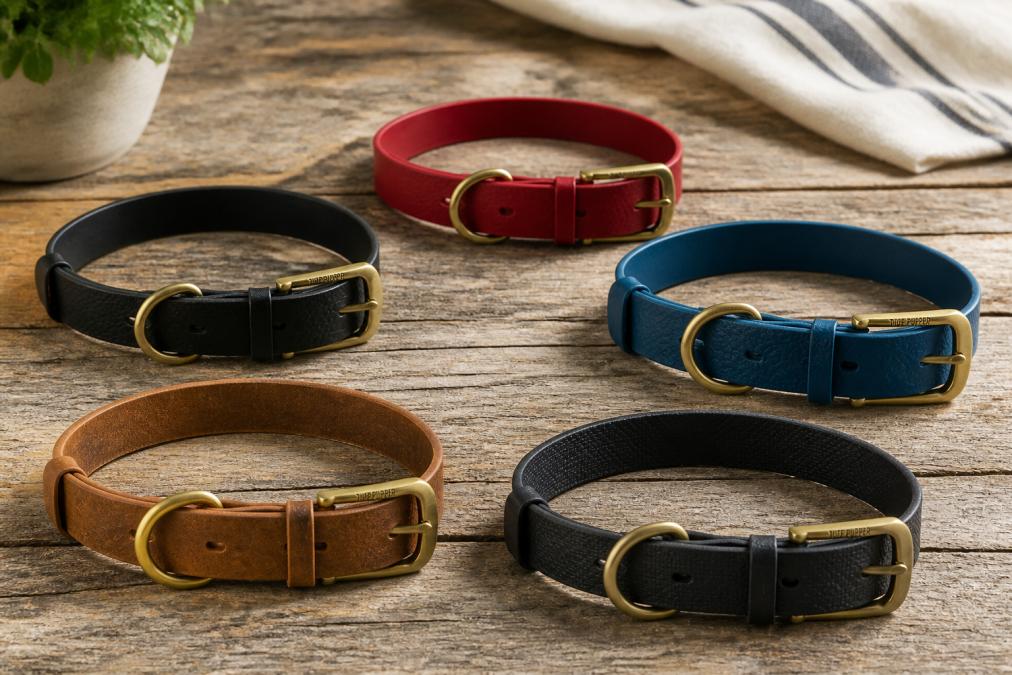
1. Heavy Duty Waterproof Dog Collar with Metal Buckle, $31.99
The best entry point for large breed owners who want genuine durability without spending over $50. This collar is built from 3mm thick ballistic polymer weave, significantly stronger than standard nylon webbing and fully waterproof at the construction level. The metal buckle and rust-proof hardware are standout features at this price point. The D-ring is rust-proof metal, and the edges are smooth enough for daily wear.
Best for: Active large dogs in the 55-90 lb range that swim, hike, or work in wet conditions regularly.
2. Waterproof 2-Inch Collar, $60.00
For dogs that need a full 2-inch width and serious weather resistance, this collar delivers both. Built from waterproof-coated webbing with stainless steel hardware throughout, it handles rain, mud, and saltwater without degrading. The 2-inch width makes it appropriate for large to giant breeds where load distribution matters.
Best for: Giant breeds and bully breeds used to outdoor and water activities.
3. Bestia Dog Sport Handle Collar, $59.90
The training gear pick. The defining feature is the reinforced handle built into the collar body, giving handlers a direct grip point for quick control during training sessions. The interior uses soft cushion padding, making this collar comfortable for all-day wear. All hardware is stainless steel and the collar is machine washable on a gentle cycle.
Best for: Working dog owners and serious trainers who need both control and comfort in one collar.
4. Bestia GripPro Print Collar (Gold), $42.90
The everyday-use nylon collar done right. High-grade nylon webbing, a fast-release buckle that operates one-handed, and weather-resistant construction across the full collar. Soft edges prevent rubbing during long wear.
Best for: Large breed owners who want a reliable, attractive everyday collar at a mid-range price point.
5. The Candy Dog Collar, $161.90
The premium leather option for owners who want genuine craftsmanship alongside durability. Built on 100% genuine leather with brass-plated hardware and Bestia's patented orthopedic foam cushion on the interior, this 2.5-inch collar is appropriate for the largest breeds. Handmade in Europe, it's built to last years.
Best for: Style-focused owners of giant breeds who want a collar that looks as good as it performs.
6. The Scare Collar Limited, $99.90
The limited-edition pick for owners who want something genuinely unique. This handcrafted genuine leather collar from Bestia's Halloween Collection features year-round capability with genuine leather exterior, orthopedic foam cushion interior, durable metal hardware, and a 6-7 cm width profile. The three-monster artwork is applied with high-resistance finishes.
Best for: Owners of powerful breeds who want limited-edition craftsmanship with no compromise on function.
Long-Term Wear, Sustainability, and When to Replace a Collar
The most durable collars for large breeds will still wear out. Knowing when to replace a collar is as important as knowing how to choose one.
Signs a collar needs immediate replacement:
- Any crack or deformation in the buckle or D-ring hardware
- Fraying at the D-ring attachment point or buckle anchor
- Webbing that has stretched and no longer holds its adjustment
- Leather that has cracked through the outer grain
- Any collar that has been in a serious lunge incident
A common approach is to inspect collars monthly and replace them annually as a baseline, more frequently for dogs that swim or work in abrasive conditions.
On sustainability: The most sustainable collar is the one that lasts longest. Ballistic polymer weave, biothane, and full-grain leather all outperform standard nylon webbing in longevity by a significant margin. Buying a $60 collar that lasts four years is more sustainable than buying a $20 collar three times. Biothane collars are also vegan leather alternatives that avoid animal products while maintaining excellent weatherproofing and durability.
| Collar Material | Typical Lifespan | Maintenance Required | Eco Notes |
|---|---|---|---|
| Ballistic polymer / biothane | 4-6 years | Wipe clean, no conditioning | Vegan option available |
| Waterproof coated nylon | 3-5 years | Hand wash, air dry | Synthetic, long-lasting |
| Full-grain leather | 5-10 years | Condition every 2-3 months | Natural material |
| Standard nylon webbing | 1-2 years | Machine washable | Lowest lifespan |
For owners interested in the sustainability angle, guidance on pet product material durability from the Pet Industry Joint Advisory Council provides a useful framework for evaluating long-term product value versus replacement cycles.
Choosing the right collar for a large breed dog is a safety decision as much as a style one. Hardware failure, poor fit, and inadequate width are the three most common causes of collar-related incidents in large and giant breeds. Shake Wag & Roll carries a curated range of durable collars built specifically for the demands of powerful dogs, from the waterproof everyday option at $31.99 to handcrafted European leather at $161.90. Sign up to the Shake Wag & Roll community for exclusive offers, new product drops, and expert care tips delivered directly to your inbox.
Frequently Asked Questions
Q: What are the most durable materials for large dog collars?
A: Heavy-duty nylon webbing, genuine leather, biothane (waterproof vegan leather), and ballistic polymer weave are the strongest options for large breeds. Nylon and biothane resist moisture and odors, making them ideal for active or outdoor dogs. Genuine leather develops strength over time but requires conditioning to prevent cracking. For giant breeds and bully breeds, look for reinforced stitching and stainless steel or rust-proof metal hardware, the hardware is often where cheaper collars fail first.
Q: How wide should a collar be for a large breed dog?
A: For large breeds, a collar width of at least 1.5 inches (about 4 cm) is the general starting point. Giant breeds, Mastiffs, Rottweilers, Cane Corsos, benefit from 2 to 2.5 inches (5-6.3 cm) or wider. A wider collar distributes pulling pressure across a larger area of the neck, reducing the risk of injury during strong lunges. Several collars in the Bestia range run 2 to 3 inches wide and include orthopedic foam padding for added comfort on thick, muscular necks.
Q: Are martingale collars safer for large, powerful breeds?
A: Martingale collars are a good choice for dogs that can back out of a flat collar, a common problem with bully breeds and dogs with necks wider than their heads. The limited-tighten design prevents escape without choking the dog the way a traditional choke chain can. They work best as training gear during walks rather than for all-day wear. For the strongest pullers, pair a martingale with a front-clip harness to reduce forward pulling force on the neck entirely.
Q: How do I know if a dog collar is strong enough for my large dog?
A: Check three things: the webbing or leather thickness, the stitching quality, and the hardware rating. A collar for a dog over 55 lbs should use metal buckles and D-rings rather than plastic. Reinforced stitching at stress points, where the D-ring attaches and where the buckle meets the webbing, is the first place a collar fails under pulling power. Collars with stainless steel hardware, like the Bestia Handle Collar, are built to handle both daily wear and intensive training sessions.
Q: How often should I replace my dog's collar for safety?
A: Inspect the collar monthly. Replace it when you notice fraying on the nylon webbing, cracking or stiffening in leather, rust on any metal hardware, or a buckle that no longer clicks firmly shut. For large breeds that pull hard, plan on checking the D-ring weld and quick-release buckle every few weeks. A collar used daily in wet or muddy conditions will wear faster than one kept dry. Waterproof materials like biothane or coated webbing typically outlast standard nylon in high-moisture environments.
This article was written using GrandRanker