

High Protein Dog Treats vs Standard Treats: Which Wins?

Table of Contents
- High Protein Dog Treats vs Standard Treats: The Core Difference
- Protein Content Compared: What the Numbers Actually Mean
- How to Read Dog Treat Labels Without Getting Fooled
- Low Calorie Dog Treats: When Protein Isn't the Priority
- Dog Treats for Training: Which Type Works Best
- Daily Treat Allowance for Dogs: How Much Is Too Much
- Cost and Value: What You Pay Per Effective Serving
- Conclusion: Matching the Treat to the Dog
- Frequently Asked Questions
Last Updated: October 9, 2026
High Protein Dog Treats vs Standard Treats: The Core Difference
Walk down any pet aisle and you'll see the same claim printed on a dozen bags: "high protein." But the real difference between high protein dog treats vs standard treats comes down to what fills the rest of the label.
This guide from Shake Wag & Roll breaks down protein numbers, label reading, training math, and cost per serving so you can choose with confidence.
Protein Content Compared: What the Numbers Actually Mean
Protein percentage on a treat label is measured by weight, not by calories. That distinction matters more than most owners realize.
A treat listed at 30% protein sounds impressive until you check the serving size. A small biscuit weighing a few grams delivers a tiny absolute amount of protein no matter what the percentage says.
Here's how the two categories usually shake out:
- High protein treats: Named meat or fish first on the ingredient panel, often grain-free, higher cost per ounce
- Standard treats: Flour, wheat, or corn first, protein appears third or later, lower cost per ounce
- Semi-moist treats: Often rely on glycerin and syrups for texture, with modest protein content
Treats are a supplement, not a meal. They should never carry the full protein load your dog needs daily.
How to Read Dog Treat Labels Without Getting Fooled
Reading a dog treat label takes about 60 seconds once you know the order of operations. Start with the ingredient list, because it's ranked by weight before cooking.
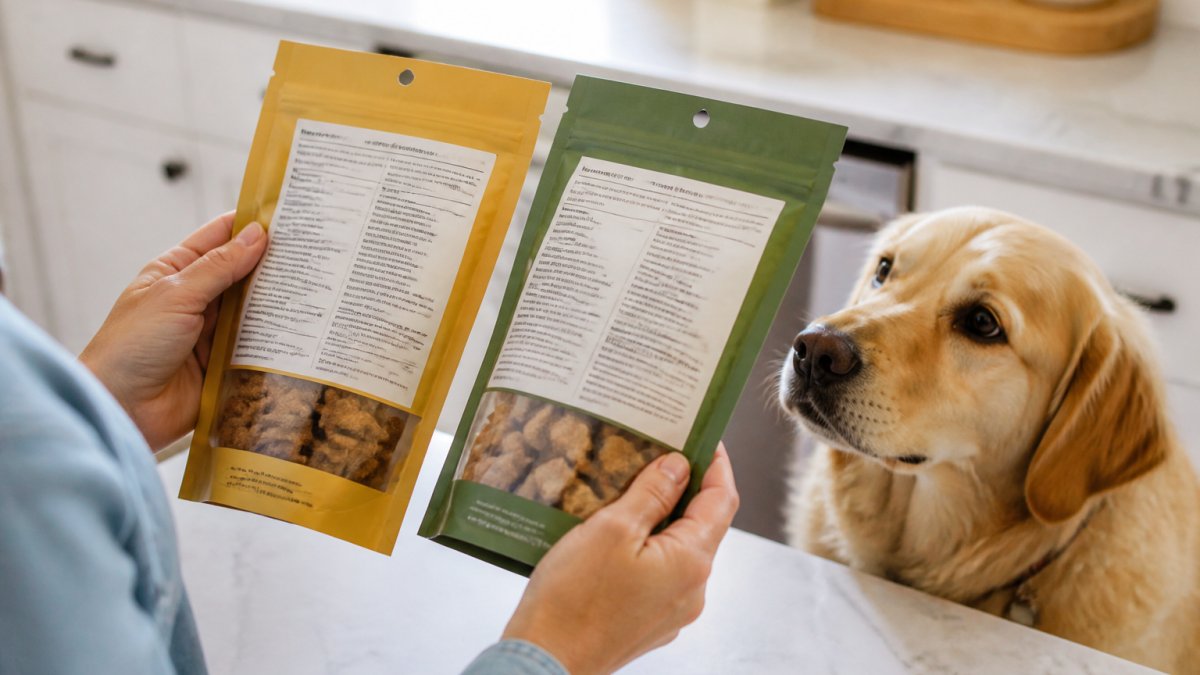
Work through these steps every time:
- Find the first three ingredients. Is a named animal protein first?
- Check for a calorie statement (kcal per treat or per kg)
- Note the protein source: single animal, blend, or plant-based
- Look for "made in" origin and a lot or best-by date
- Check whether the label names a specific protein source or hides behind "meat meal" or "animal digest"
The FDA's guidance on pet food labeling explains that ingredient lists must be ordered by weight, which is why position matters so much.
What the Guaranteed Analysis Does and Doesn't Tell You
The guaranteed analysis uses minimums and maximums, not exact values. A bag can legally guarantee "protein, min 12%" and contain considerably more. Use the number as a floor, not a promise. It also tells you nothing about digestibility, a plant protein blend can hit a high percentage while delivering less usable amino acid value to your dog than a smaller amount of a named animal protein.
Sourcing, Testing, and Storage
Three label details separate a serious product from a bag with a good front panel:
- Named protein source. "Chicken," "salmon," or "beef liver" is specific. "Poultry meal" or "meat by-products" is a category, not a source.
- Manufacturer and testing. A named manufacturer with a stated testing or quality program is a stronger signal than an anonymous co-packer. Third-party testing claims should name the lab or the standard.
- Storage and shelf life. Soft and semi-moist treats often need resealing or refrigeration after opening. If the label doesn't say, assume the product is more perishable than a dry biscuit and buy smaller quantities.
A Two-Minute Comparison Method
Put two bags side by side and score them on the same five lines: first ingredient, named protein source, calorie statement present, testing or manufacturer named, storage instructions clear. The bag that wins on more lines is usually the better value regardless of price. This is the same method we use when deciding what to stock, and it's why our catalog leans toward short ingredient lists and named protein sources.
Low Calorie Dog Treats: When Protein Isn't the Priority
Low calorie dog treats matter more than protein content for dogs carrying extra weight or on a vet-managed diet.
The math is simple. Small dogs often need only a few hundred calories a day. A handful of calorie-dense treats can represent a meaningful share of that total.
For training sessions with many repetitions, tiny low-calorie treats beat large protein-rich ones. That's why we stock Bixbi - Trainer Treats Bacon, a grain-free training treat built for exactly this kind of repetition.
Dog Treats for Training: Which Type Works Best
Small, soft, low-calorie treats win for training. High protein dog treats have their place, but a hard biscuit or a large chew slows a training session to a crawl.
Training rewards need three qualities: small size, quick to eat, and high enough value to hold attention. Soft chews and trainer-specific treats check all three.
A practical split for most households:
| Treat Type | Best Use | Why |
|---|---|---|
| Soft trainer treats | Repetition training | Fast to eat, low calorie |
| Hard biscuits | Rewarding calm behavior | Long-lasting, satisfying |
| Protein-rich chews | Enrichment, alone time | Occupies the dog, high value |
| Flavored soft chews | Picky eaters | Strong aroma, easy to chew |
Match the format to the job, not the marketing on the bag.
Daily Treat Allowance for Dogs: How Much Is Too Much
Treats should make up no more than about 10% of a dog's daily calories.
Cookie Pal - Dog Treat Pmpkm Chia - Case Of 4-10 Oz →
The World Small Animal Veterinary Association's global nutrition guidelines support keeping treats as a small supplement rather than a meal replacement.
Here's how to apply it:
- Weigh or measure treats the first week to calibrate your eye
- Subtract treat calories from the meal portion, not in addition to it
- Switch to lower-calorie treats during heavy training weeks
- Recheck the allowance if your dog's weight drifts
If you're unsure of your dog's daily calorie needs, ask your veterinarian. Body condition scoring, done by hand, tells you more than the scale alone.
Cost and Value: What You Pay Per Effective Serving
Cost per bag tells you almost nothing. Cost per effective serving tells you everything. A large bag of low-value treats you use sparingly can cost more per useful reward than a smaller bag of high-value treats you use by the piece.
Value comes down to four factors: how many servings the bag holds, how many your dog actually needs per reward, how much of the bag goes stale before you finish it, and how much usable protein each serving delivers.
The Math, Step by Step
You don't need a spreadsheet. Do this once per product:
- Count treats per bag. Divide the bag weight by the average treat weight, or count a handful and multiply.
- Divide case price by treat count. That's your cost per treat.
- Multiply by treats per day. That's your cost per day for that product.
- Compare cost per day, not cost per bag. A $60 case that lasts two months can beat a $25 bag that lasts two weeks.
For a dog getting a dozen small training treats a day, cost per day is the only number that matters. For a dog getting one chew a week, cost per chew is the right lens.
Our Current Lineup, Priced by the Case
| Product | Case Price | Format | Best For |
|---|---|---|---|
| Cookie Pal Pumpkin Chia Treats | $41.81 | 95%+ organic biscuits | Everyday rewards |
| Dog Macarons | $25.42 | Hard chew, human-grade | Gifts and long chews |
| Portland Pet Food Pumpkin Biscuits | $57.86 | Grain-free biscuits | Sensitive stomachs |
| Bixbi Trainer Treats Bacon | $60.81 | Soft training treats | Repetition training |
The Cookie Pal treats are 95% organic and gluten-free, which suits owners who want a clean everyday biscuit. The Dog Macarons are a hard chew, best broken into pieces for smaller dogs. Portland Pet Food biscuits are made in the USA with a short ingredient list, a solid pick for dogs with sensitive stomachs. Bixbi trainer treats land at about 3.9 calories each, the lowest per-treat calorie count in the group.


Why High Protein Costs More Per Treat, and When It's Worth It
Protein-rich treats usually cost more per ounce because animal protein costs more than flour or starch. That premium buys you three things: a more satisfying chew, a stronger training reward for a distracted dog, and a treat that fits a limited-ingredient or grain-free diet.
It does not automatically buy you better nutrition. Treats are a supplement, not a meal, so the protein in a treat is a small addition to a complete diet, not a substitute for one.
The Staleness Tax
A treat your dog won't finish is a treat you paid for twice, once at checkout, once in wasted calories and a bag in the trash. Soft and semi-moist treats dry out or spoil faster than hard biscuits. If your dog is a slow eater, smaller bags and hard formats usually win on real cost per serving even when the sticker price looks higher.
Conclusion: Matching the Treat to the Dog
The right treat depends on the job. High protein dog treats earn their price for enrichment, chew time, and dogs who need more animal protein in their day.
At Shake Wag & Roll, we built our treat selection around that split: organic biscuits for daily use, hard chews for gifts and long-lasting satisfaction, limited-ingredient options for sensitive stomachs, and low-calorie trainer treats for repetition work.
Sign up with Shake Wag & Roll and build a treat plan that fits your dog's size, stomach, and training goals.
Frequently Asked Questions
What is the difference between high protein dog treats and standard treats?
High protein dog treats typically list a named animal protein as the first ingredient and contain a higher percentage of protein by weight. Standard treats often lead with grains, starches, or fillers like wheat flour and corn. The practical difference shows up in calorie density, ingredient quality, and how filling the treat feels to your dog. A high protein treat delivers more nutrition per bite, which matters most for training sessions where you hand out many small pieces.
Are high protein treats better for dogs?
Not automatically. High protein treats suit active dogs, working breeds, and dogs in training who need satisfying, nutrient-dense rewards. But dogs with kidney conditions, certain metabolic disorders, or specific veterinary diets may need controlled protein intake. Standard treats work fine for a dog who eats a complete balanced diet and just needs an occasional reward. Match the treat to your dog's health status and activity level, not to a general rule.
How much protein should a dog treat contain?
There is no single required percentage. What matters is the treat's role in your dog's total diet. The Association of American Feed Control Officials (AAFCO) sets minimum protein requirements for complete dog foods, not treats. Treats should make up no more than 10 percent of daily calories. So if your dog eats 400 calories a day, treats should stay under 40 calories. Read the guaranteed analysis on the label and compare protein content across products rather than chasing a target number.
How many treats can I give my dog each day?
The standard guideline is 10 percent or less of your dog's daily calorie intake. For a 30-pound dog eating about 700 calories daily, that means roughly 70 calories from treats. Training treats like Bixbi Trainer Treats Bacon, at about 3.9 calories each, let you hand out more pieces during a session without blowing the budget. High-calorie biscuits and chews add up fast, so break them into smaller pieces or reserve them for occasional rewards.
How do I compare protein in dog treats?
Start with the ingredient list: a named protein such as pork, chicken, or salmon should appear first. Then check the guaranteed analysis for crude protein minimum. Be aware that percentages are listed on a moisture basis, so a dry biscuit and a soft chew with the same protein percentage may not deliver the same amount per calorie. Divide the protein percentage by the calorie content per treat to compare across formats fairly.