

How to Entertain Active Dogs: 7 Vet-Approved Games

Table of Contents
- Why Physical Exercise Alone Isn't Enough
- How to Entertain Active Dogs With a Daily Play Schedule
- Mental Stimulation for Dogs: The Snuffle Mat Method
- Interactive Games That Burn Energy Indoors
- Durable Toys for Aggressive Chewers That Last
- DIY Dog Enrichment Activities Using Household Items
- How to Tire Out a Puppy Without Overdoing It
- The Calm-Down Phase: Ending Play the Right Way
- Frequently Asked Questions
Last Updated: September 4, 2026
Why Physical Exercise Alone Isn't Enough
Most owners assume a long run or an hour of fetch is the answer to how to entertain active dogs. But physical endurance and mental enrichment are entirely different systems, and a tired body does not guarantee a settled mind.
To truly entertain active dogs, you need to target cognitive stimulation through problem-solving skills, not just muscle fatigue. This guide from Shake Wag & Roll breaks down seven games that combine physical activity with mental challenges.

The core principle is simple: a mentally tired dog is a calm dog. Below, we'll show you how to structure play so your pup gets the full benefit, including the often-skipped cool-down phase that prevents over-arousal.
How to Entertain Active Dogs With a Daily Play Schedule
A common mistake is playing randomly throughout the day, which can leave a high-energy dog in a constant state of anticipation. Instead, structure your day into three distinct blocks. The ideal schedule is not one-size-fits-all; it must shift based on your dog's age and breed.
Puppies (Under 1 Year): Short Bursts, Frequent Rests
Puppies have developing joints and limited bladder control, so a structured schedule should prioritize frequent, short sessions over long workouts. A typical day might include:
- Morning: A 10-minute walk focused on sniffing, followed by a 5-minute training session for basic cues like "sit" and "touch."
- Midday: A 10-minute meal served via a snuffle mat or a simple muffin-tin puzzle to engage their brain.
- Afternoon: A 5-minute game of gentle tug or a short "find it" game in a single room.
- Evening: A 10-minute walk and a final 5-minute training session before a calm-down period.
A good rule of thumb is the "5-minute rule": about five minutes of structured exercise per month of age, twice a day (akc.org). A three-month-old puppy, for example, should only get about 15 minutes of formal walking or play per session. This prevents over-tiring, which often manifests as "zoomies" or nipping.

Adult High-Energy Breeds (1-7 Years): The Working Dog Model
For adult dogs of high-drive breeds like Border Collies, Australian Shepherds, or Belgian Malinois, the schedule must mimic a "job." These breeds were developed to work for hours, so their entertainment needs to be both physically demanding and cognitively complex. A sample schedule includes:
- Morning: A 30-minute walk that includes 10 minutes of dedicated sniffing in a new environment.
- Midday: A 15-minute obedience training session focused on impulse control (e.g., "leave it," "stay" with distractions) or a short agility course in the backyard.
- Afternoon: A 20-minute session of structured play like fetch with a "sit-to-start" rule, or a scent work game where they must find a hidden toy in another room.
- Evening: A 15-minute game of tug with clear rules ("drop it" on command) followed by a 10-minute calm-down phase.
For these breeds, the key is to switch between physical and mental tasks. Doubling fetch time often fails because it builds endurance without tiring the mind.
Senior Dogs (7+ Years): Gentle Engagement
Senior dogs still need entertainment, but the focus shifts to low-impact mental challenges and gentle movement. Their schedule should protect aging joints while keeping their mind sharp. A senior-friendly day might look like:
- Morning: A 15-minute leisurely walk with ample time for sniffing.
- Midday: A 10-minute session with a food puzzle or a snuffle mat to encourage gentle foraging.
- Afternoon: A short, 5-minute session of trick training (e.g., "spin" or "paw") to maintain cognitive function.
- Evening: A 10-minute walk and a chew session with a soft, digestible chew to promote relaxation.
Mental Stimulation for Dogs: The Snuffle Mat Method
Mental stimulation for dogs doesn't require expensive electronics; a snuffle mat is one of the most effective tools you can own. It is a fleece mat with strips of fabric where you hide kibble or treats, forcing your dog to use its nose to forage.
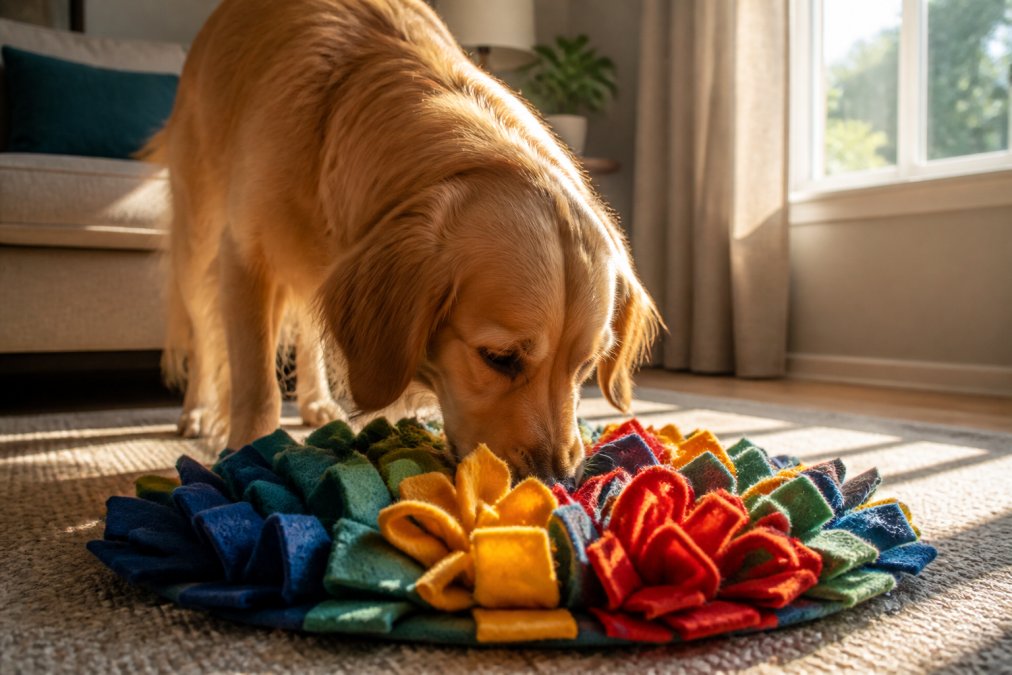
This activity taps into a dog's natural foraging instinct, providing sensory play that is deeply satisfying. A general rule of thumb is that 10 minutes of sniffing can equal about an hour of running in terms of mental fatigue (vcahospitals.com). It also slows down fast eaters, which aids digestion.
When choosing a mat, look for one that is machine washable. The Shake Wag & Roll Pet Sniffing Pad is a great option because it is soft, durable, and designed for daily use. Start by scattering a few high-value treats on top, then gradually hide them deeper in the fleece as your dog gets the hang of it.
Interactive Games That Burn Energy Indoors
When the weather turns, you still need ways to entertain active dogs inside. The goal is to replicate the exertion of outdoor play without the space. A structured game of indoor fetch using a soft toy and a long hallway encourages running and turning.
Another excellent option is the "find it" game, which combines obedience training with scent work. Have your dog stay in one room while you hide a favorite toy or treat in another. Release them with a "find it" command. This provides a powerful mental workout as they problem-solve to locate the hidden item.
For dogs that need to chase, an interactive moving ball can be a lifesaver. The Interactive Moving Ball from Shake Wag & Roll is rechargeable and moves on its own, encouraging chasing and pouncing. This type of automated play is perfect for keeping a dog occupied while you are working from home or preparing dinner.

Durable Toys for Aggressive Chewers That Last
If you have a "power chewer," you know the frustration of buying toys that are destroyed in minutes. The secret to finding durable toys for aggressive chewers is not just about hardness, but about the toy's design, material, and how you deploy it. Categorize your approach by budget: zero-cost strategies, mid-range gear, and premium investments.
Zero-Cost Strategies: Management First
Before spending money, change how you manage the environment. The most durable "toy" is often the one that is not accessible all day. Rotate toys every 2-3 days to keep them novel. Also, supervise all solo chewing sessions for the first 10 minutes to gauge how the dog is interacting with the toy.
Mid-Range Gear: The $15-$30 Sweet Spot
For most power chewers, the best value lies in solid natural rubber toys without hollow chambers. Hollow toys with holes are prone to cracking when a determined chewer applies pressure to the seams. Solid rubber, like that used in the Rolling Ball for Dogs from Shake Wag & Roll, offers a little give, which is gentler on teeth, yet is extremely tough. This toy also moves and bounces, turning a chewing session into a chasing game.
Another mid-range option is a heavy-duty canvas or ballistic nylon toy. These are not indestructible, but they are often safer than hard plastics. Look for toys with double-stitched seams and no loose threads. Avoid toys with squeakers if your dog is a "dissector" who will work to extract the squeaker.
Premium Investments: When to Spend More
If your dog destroys mid-range toys in under 15 minutes, you may need to invest in a premium product. These are typically made from a single piece of molded rubber or a specialized composite and are often warrantied by the manufacturer. Look for one that is dishwasher-safe and has a shape that is easy for your dog to grip. Some are designed to be stuffed with food, adding a mental enrichment component.
The "Stuffable" Strategy: Extending Any Toy's Life
Regardless of the toy you choose, the "stuffable" strategy can extend its life. Smear a thin layer of peanut butter (xylitol-free) or wet food inside a durable rubber toy, then freeze it. This turns the toy into a 20-30 minute puzzle, redirecting the dog's energy from destruction to problem-solving.
By categorizing your approach by cost and strategy, you can manage a power chewer without breaking the bank or risking their dental health.
DIY Dog Enrichment Activities Using Household Items
You don't need a big budget to provide excellent DIY dog enrichment activities. A classic is the "stuffed Kong" or a similar hollow toy filled with a mixture of wet food, peanut butter, and kibble, then frozen overnight. This provides a long-lasting challenge.
Another easy idea is a muffin tin puzzle. Place a few treats in the cups of a muffin tin, then cover each cup with a tennis ball. Your dog has to figure out how to remove the balls to get the treats. This is a fantastic problem-solving task that keeps them busy for a solid 15-20 minutes.
You can also create a simple "box shredding" game. Place a treat inside a small cardboard box and let your dog tear it open. This satisfies the urge to shred without destroying your furniture. These activities are excellent for building confidence in shy dogs and providing an outlet for natural behaviors.
How to Tire Out a Puppy Without Overdoing It
Knowing how to tire out a puppy requires a different approach than with an adult dog. Puppies have growing bones and joints, so excessive running or jumping can cause long-term damage. Focus on short bursts of activity followed by rest.
A good rule is the "5-minute rule": about five minutes of structured exercise per month of age, twice a day. A three-month-old puppy, for example, should only get about 15 minutes of formal walking or play per session. This is where mental games shine, as they tire a puppy out without stressing their developing body.
For a young pup, use training sessions that teach basic cues like "sit," "down," and "touch." Use a snuffle mat for meals to combine feeding with a gentle mental workout. Always end the session with a calm-down period to prevent over-tiredness.
The Calm-Down Phase: Ending Play the Right Way
The most overlooked part of any play session is the transition back to a calm state. If you stop a frantic game of fetch abruptly, your dog's adrenaline is still high, which can lead to hyperactive behavior.
Start by slowing the game down. Switch from frantic fetch to a "sit and wait" game where you toss the toy only when your dog is calm. After a few minutes, move to a mat or bed and practice a "settle" command, rewarding your dog for lying down quietly.
Finish with a gentle chew toy or a licking mat, as licking is a naturally soothing behavior for dogs. This structured ending prevents the "overtired toddler" syndrome and reinforces that playtime ends with relaxation.
Keeping a high-energy dog happy is about working smarter, not harder. The challenge is balancing physical activity with mental enrichment to prevent boredom and its related behaviors. Shake Wag & Roll is built for this exact purpose, offering durable toys for aggressive chewers, interactive puzzles, and calming aids that support a healthy play routine. Explore our collection of toys and enrichment tools to build a routine that works for your pup, and sign up for exclusive tips and product drops. Get started with Shake Wag & Roll and turn your dog's energy into a source of joy.
Frequently Asked Questions
How much mental stimulation does an active dog need daily?
Most active dogs benefit from at least 15 to 30 minutes of focused mental stimulation each day. This is separate from physical exercise. A single 10-minute snuffle mat session can equal about an hour of running in terms of energy expenditure. Watch your dog for signs of calmness and satisfaction after a session. If they settle down and nap, you have hit the right amount for that day.
What is the best way to use durable toys for aggressive chewers?
Rotate durable toys to keep them interesting. Offer a tough rubber toy stuffed with food during crate time or while you work. For aggressive chewers, inspect toys regularly for tears or chunks. Replace them at the first sign of damage. Pairing a durable chew with a training session gives your dog an appropriate outlet for their need to bite and gnaw.
How can I tell if my dog is bored or under-stimulated?
Bored dogs often develop problem behaviors. Look for destructive chewing on furniture, excessive barking, digging, or pacing. A bored dog may also follow you constantly or nudge you for attention. If your dog is getting physical exercise but still acts restless, they likely need more mental enrichment. Adding puzzle feeders and scent work usually resolves these signs within a few days.
What is the 15-minute mental stimulation rule for dogs?
The guideline suggests that 15 minutes of focused mental work can be as tiring as 30 to 60 minutes of physical activity. This works because problem-solving requires intense concentration. Try a 15-minute session of obedience training, nose work, or a puzzle toy. You should see your dog yawn, settle, or choose to rest shortly after, which signals the mental workout was effective.
This article was written using GrandRanker