

Premium Dog Treats for Training: What Actually Works

Table of Contents
- Premium Dog Treats for Training: What Makes Them Worth It
- Quick Comparison: Top Training Treats at a Glance
- High-Value Dog Training Treats vs. Everyday Treats
- Bixbi Pocket Trainers: Soft, Low-Calorie Favorites
- Bixbi Trainer Treats Bacon: Crunchy Rewards for Focused Sessions
- Best Limited Ingredient Dog Treats for Sensitive Stomachs
- How to Use Treats for Dog Training Without Overfeeding
- Which Premium Training Treat Should You Pick?
- Frequently Asked Questions
Last Updated: September 9, 2026
Choosing the right premium dog treats for training is about more than finding something your dog will eat. The best options balance high palatability with low calories so you can reward frequently without wrecking your dog's daily food intake. The ones that actually work share a few specific traits: they are small, soft enough to swallow quickly, and made with clean ingredients you can pronounce.
Most training failures are reward problems. If your treat takes too long to chew, breaks into crumbs, or upsets a sensitive stomach, your training session stalls. Below, we show you how to pick premium dog treats that keep sessions moving, protect your dog's health, and fit your budget.
Premium Dog Treats for Training: What Makes Them Worth It
A premium dog treat for training earns its label through three measurable qualities: ingredient sourcing, calorie density, and texture design. Unlike everyday biscuits or rawhide chews, training treats are engineered for repetition. They are typically under 4 calories each, which means you can deliver dozens of rewards in a single session without exceeding your dog's daily caloric needs.
The texture matters more than most owners realize. Soft and chewy treats allow your dog to swallow in under two seconds and return focus to you. Crunchy treats require chewing that breaks the reinforcement loop. For shaping behavior or clicker training, fast-acting rewards are non-negotiable. Many premium options also avoid artificial colors, corn, wheat, and soy, which are common triggers for food sensitivities.
Quick Comparison: Top Training Treats at a Glance
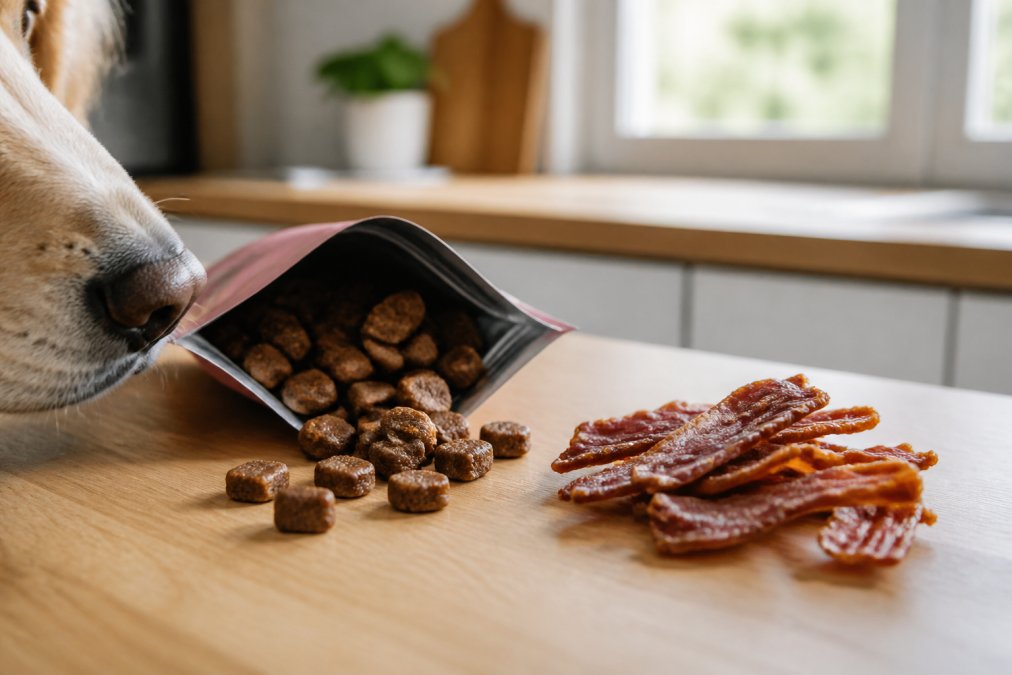
Not all premium dog treats for training serve the same purpose. Some shine for high-frequency obedience drills, while others are better reserved for high-value moments like recall or reactivity work. Here is how the top options we carry compare:
| Treat | Texture | Calories per Treat | Best For | Price |
|---|---|---|---|---|
| Bixbi Pocket Trainers (Chicken) | Soft and chewy | Less than 4 | Everyday obedience, puppies | $8.99 per bag |
| Bixbi Trainer Treats (Bacon) | Crunchy | About 3.9 | Focused sessions, outdoor recall | $60.81 per case of 8 |
The soft Pocket Trainers are your daily workhorse. The crunchy bacon variety serves as a higher-value reward for difficult tasks. A practical training kit includes both: soft treats for rapid-fire repetitions and crunchy treats for breakthrough moments.

High-Value Dog Training Treats vs. Everyday Treats
High-value dog training treats are the rewards your dog will work hardest to earn. They are the difference between a dog that sits because you asked and a dog that sits with enthusiastic, locked-in focus. Everyday treats, like standard biscuits or pieces of your dog's regular kibble, work fine in low-distraction environments at home. They fall apart when you train at the park, near other dogs, or during adolescence.
The key to using high-value rewards effectively is a reinforcement schedule. Reserve your most desirable treats for the hardest behaviors: recall, loose-leash walking past triggers, or settling in stimulating environments. Use lower-value kibble for known behaviors in easy settings. This creates a reward hierarchy where your dog learns that exceptional focus earns exceptional rewards. It also prevents the treat from losing its power through overuse.
The Luring vs. Maintenance Distinction
A more precise way to think about treat value is to separate luring treats from maintenance treats. Luring treats are the highest-value options you own, the ones your dog will perform novel or difficult behaviors for, like a first recall in a busy park or a down-stay next to a passing skateboard. Maintenance treats are lower-calorie, everyday rewards for known behaviors in low-distraction settings.
Most training programs fail when owners use the same treat for both jobs. If you reward a simple sit with a bacon-scented, high-calorie morsel, you devalue that reward for the moments you truly need it. The fix is a deliberate two-tier system:
- Tier 1 (Maintenance): Your dog's regular kibble or a low-calorie soft treat like Bixbi Pocket Trainers (under 4 calories each) for known cues at home.
- Tier 2 (High-Value): A strongly aromatic, limited-ingredient treat like the Bixbi Trainer Treats in Bacon for recall, reactivity work, or first-time behaviors in new environments.
Behavioral Science Behind the Hierarchy
This two-tier approach mirrors what animal behaviorists call the reinforcement value of a reward. A reward's value is not fixed; it shifts based on deprivation state, novelty, and the effort required. A dog that just finished a meal will value a biscuit less than a dog that has been working for 10 minutes. A dog that has eaten the same chicken treat for three weeks will respond less enthusiastically than one offered a novel bacon flavor.

This is why rotating your high-value treats matters. If you use the same bacon treat every single session, its novelty fades. Most practitioners find that rotating between two or three high-value proteins, say, pork-based bacon, freeze-dried liver, and a fish-based option, sustains engagement better than relying on a single flavor. The mechanism is simple: unpredictability increases the perceived value of the reward.
Practical Application for Common Training Scenarios
| Training Scenario | Recommended Treat Tier | Why It Works |
|---|---|---|
| Puppy sit/stay at home | Tier 1 (kibble or Pocket Trainers) | Low distraction; builds fluency without calorie load |
| Adolescent loose-leash walking | Tier 2 (Bacon Trainer Treats) | Strong aroma competes with environmental triggers |
| Recall in a fenced yard | Tier 2 (Bacon Trainer Treats) | High value for a life-safety behavior |
| Trick training (spin, touch) | Tier 1 (Pocket Trainers) | Rapid repetitions; low calories per rep |
| Reactivity counter-conditioning | Tier 2 (Bacon Trainer Treats) | Needs maximum motivational power at threshold distances |
When to Upgrade or Downgrade Treat Value
A common pattern in successful training is systematic downgrading. Once a behavior is fluent in a low-distraction setting, you can gradually shift from Tier 2 to Tier 1 rewards. This is called thinning the reinforcement schedule. The behavior stays strong because the dog never knows when the high-value reward will appear, a concept known as variable reinforcement.
Conversely, if your dog stops responding to a known cue, that is a signal to temporarily upgrade the treat value, not to repeat the cue louder. A sudden loss of interest often means the reward has become too predictable or too low-value for the current distraction level. Switching to a novel high-value treat for a few sessions typically restores engagement.
The Takeaway
The distinction between high-value and everyday treats is not about the price tag, it is about strategic deployment. Use low-calorie maintenance treats for the reps that build fluency, and reserve intensely aromatic, limited-ingredient treats for the behaviors that matter most. Track which treats your dog will work hardest for, rotate them to preserve novelty, and adjust your reward tier based on the distraction level of your training environment.
Bixbi Pocket Trainers: Soft, Low-Calorie Favorites
Our top pick for everyday premium dog treats is the Bixbi Pocket Trainers in Chicken flavor. These soft, bite-sized morsels are formulated specifically for training, with less than 4 calories per treat so you can reward generously during long sessions. They are grain-free and contain no wheat, corn, or soy, which makes them a safer choice for dogs with common food sensitivities.
The soft texture is what sets them apart in practice. Pocket Trainers are easy to break into smaller pieces for tiny puppies or toy breeds, yet substantial enough for a large dog to notice. They are made in the USA with no ingredients sourced from China. At $8.99 per bag, they offer an accessible entry point into premium training rewards without the commitment of a bulk case.
What most reviews miss is how well these treats work inside puzzle toys and snuffle mats. Because they are soft and non-crumbly, they do not leave greasy residue on fabric or plastic feeders. That makes them a clean pairing with the interactive feeding guidelines from veterinary nutritionists that recommend using treat-dispensing toys to slow down fast eaters.

Bixbi Trainer Treats Bacon: Crunchy Rewards for Focused Sessions
When you need a high-value dog training treat for tough situations, the Bixbi Trainer Treats in Bacon flavor deliver. These crunchy bites pack approximately 3.9 calories per treat and are made with pork as the primary protein source, plus chickpea flour and natural maple-flavored syrup for palatability. The bacon flavor is intensely aromatic, which helps capture your dog's attention in distracting environments.
The crunchy texture serves a specific purpose. While soft treats are ideal for rapid repetitions, crunchy treats work better for behaviors where you want a natural pause, such as after a successful recall or a clean stay. The chewing time gives your dog a moment to process the reinforcement before the next rep. This makes them an excellent choice for outdoor training, where the stronger flavor and texture create a more memorable reward.
One consideration for owners is the case format. These come in a case of eight 6-ounce bags at $60.81, which works out to a per-bag cost that is competitive for premium, grain-free treats. The resealable bags keep treats fresh between sessions, and the crunchy texture holds up well in a treat pouch without turning to powder. For multi-dog households or owners training daily, this bulk format makes sense.
Best Limited Ingredient Dog Treats for Sensitive Stomachs
For dogs with food allergies or sensitive digestion, the best limited ingredient dog treats minimize the number of protein and carbohydrate sources to reduce the risk of triggering a reaction. The Bixbi Trainer Treats in Bacon fit this profile with a short ingredient list: pork, chickpea flour, vegetable glycerin, tapioca starch, and natural flavorings. There are no artificial colors, wheat, corn, or soy.
Signs that your dog may need a limited ingredient treat include chronic itching, ear infections, loose stools, or excessive gas after eating certain foods. If you notice these symptoms, switching to a single-protein treat can help isolate the trigger. Pork is an underutilized protein in commercial dog food, which makes it a good option for dogs who have developed sensitivities to chicken or beef through repeated exposure.
The treats also include natural preservatives like mixed tocopherols and rosemary extract rather than synthetic options. For owners managing a dog's sensitive stomach, the absence of artificial additives reduces the variables that can cause digestive upset. As with any new food, introduce these treats gradually and monitor your dog's response over the first week.
How to Use Treats for Dog Training Without Overfeeding
How to use treats for dog training without weight gain comes down to a simple calculation: track every calorie and adjust meal portions accordingly. A good rule of thumb is that treats should make up no more than 10% of your dog's daily caloric intake (avma.org). For a 30-pound dog eating about 800 calories per day, that means roughly 80 calories worth of treats, which translates to about 20 Pocket Trainers per day.
A practical strategy is to subtract treat calories from your dog's meals. If you plan a 15-minute training session, set aside a portion of your dog's breakfast or dinner kibble and replace it with the treats you will use. This keeps total daily calories steady while preserving the motivational power of the training reward. Many owners find that using a portion of the dog's regular meal for low-difficulty behaviors stretches the high-value treats further.
The Treat-to-Weight Ratio Calculator
Rather than guessing, use this simple framework to calculate your dog's daily training treat budget. For practical purposes, most adult dogs need between 15 and 30 calories per pound of body weight per day, depending on activity level (vcahospitals.com). A moderately active adult dog typically needs about 20 calories per pound.
Here is a working chart for common dog weights:
| Dog Weight | Daily Caloric Intake (Moderate Activity) | 10% Treat Budget (Calories) | Pocket Trainers per Day (under 4 cal each) | Bacon Trainer Treats per Day (approx. 3.9 cal each) |
|---|---|---|---|---|
| 10 lbs | 200 calories | 20 calories | 5 treats | 5 treats |
| 20 lbs | 400 calories | 40 calories | 10 treats | 10 treats |
| 30 lbs | 600 calories | 60 calories | 15 treats | 15 treats |
| 50 lbs | 1,000 calories | 100 calories | 25 treats | 25 treats |
| 70 lbs | 1,400 calories | 140 calories | 35 treats | 35 treats |
These numbers assume your dog is at an ideal body condition. If your dog is overweight, reduce the treat budget to 5% of daily calories and focus on non-food rewards like play or praise for low-difficulty behaviors. If your dog is underweight or highly active (agility, hunting, extended hiking), you can increase the budget to 15% under veterinary guidance.
The Meal-Subtraction Method in Practice
Here is a step-by-step protocol that works for most owners:
- Weigh your dog's daily kibble portion using a kitchen scale, not a measuring cup. Kibble density varies by brand, and measuring cups can overestimate by 20-30%.
- Calculate the treat budget using the chart above.
- Set aside the treat portion from the daily kibble before you feed breakfast. This is your training fund for the day.
- Use the set-aside kibble first for known behaviors in low-distraction settings.
- Switch to premium treats (like Pocket Trainers or Bacon Trainer Treats) only when the kibble no longer holds your dog's attention or when you are training in a high-distraction environment.
- At dinner, subtract the kibble you set aside from the evening meal. If you did not use all the set-aside kibble, return it to the bowl.
This method ensures your dog's total daily intake stays constant, even on heavy training days. It also creates a natural incentive to use lower-calorie options for easy reps, reserving premium treats for the moments they matter.
Portion Control for Small and Toy Breeds
For dogs under 15 pounds, even a 4-calorie treat can represent a significant portion of the daily budget. A 10-pound dog with a 20-calorie treat budget can only afford five Pocket Trainers per day. That is often not enough for a productive training session.
The solution is treat splitting. Pocket Trainers are soft enough to break into quarters, effectively turning one treat into four training rewards. A single Pocket Trainer cut into four pieces gives a 10-pound dog 20 training repetitions within the daily budget. The same logic applies to the Bacon Trainer Treats, though the crunchy texture makes them slightly harder to split cleanly, a sharp knife or kitchen shears works well.
For puppies, the calculus is different. Puppies need more calories per pound for growth, but their stomachs are smaller. A 12-week-old puppy eating 400 calories per day can afford 40 calories of treats, but you should still split treats into pea-sized pieces to avoid overfeeding and to keep training sessions long enough to be productive.
Timing and Frequency: The 15-Minute Rule
Most training sessions should last no more than 10 to 15 minutes for puppies and 15 to 20 minutes for adult dogs. Beyond that, attention wanes and treat consumption climbs without corresponding learning gains. Within a session, the ideal rate of reinforcement is one treat every 3 to 5 seconds during active shaping, dropping to one treat every 10 to 15 seconds once the behavior is established.
A 15-minute session at one treat every 5 seconds uses about 180 treats, which is why treat splitting is essential. At a quarter-treat per rep, that is 45 full treats' worth of calories, which fits within the daily budget for most dogs. Without splitting, a single session would blow the entire daily treat budget for a 30-pound dog.
Non-Food Rewards to Stretch the Budget
Premium treats do not have to be the only reinforcer in your toolkit. A well-timed game of tug, a thrown ball, or access to a sniffing opportunity can be equally reinforcing for many dogs. The key is to pair these non-food rewards with the treat on a variable schedule. For example, reward three reps with treats, then one rep with a 10-second tug game, then two reps with treats. This keeps the dog engaged while reducing total treat consumption by 20-30%.
Monitoring Weight and Adjusting
Weigh your dog every two weeks during intensive training periods. If you notice weight gain of more than 1-2% of body weight, reduce the treat budget by 25% or shift more reps to kibble and non-food rewards. If your dog is losing weight or losing motivation, increase the treat budget slightly or upgrade the treat value before increasing quantity.
The Bottom Line
Overfeeding during training is almost always a math problem, not a discipline problem. Use the treat-to-weight chart to set a daily budget, split treats for small dogs and puppies, subtract treat calories from meals, and incorporate non-food rewards on a variable schedule. With this system, you can train daily without watching your dog's waistline expand.
Which Premium Training Treat Should You Pick?
The right premium dog treats for training depend on your dog's age, health status, and training goals. For most owners, we recommend starting with the Bixbi Pocket Trainers in Chicken as your everyday reward. The soft texture, low calorie count, and clean ingredient list make them the most versatile option for puppies and adult dogs alike.
Add the Bixbi Trainer Treats in Bacon for specific situations that demand extra motivation: outdoor recall, reactivity training, or working through a stubborn behavior plateau. The case format is worth the investment if you train daily or have multiple dogs. For dogs with sensitive stomachs, the bacon variety's limited ingredient list provides a safer alternative to multi-protein treats.
| Scenario | Recommended Treat | Why |
|---|---|---|
| Puppy obedience classes | Pocket Trainers (Chicken) | Soft, low-calorie, easy to break small |
| Adult dog daily drills | Pocket Trainers (Chicken) | Non-crumbly, clean ingredients |
| Outdoor recall training | Trainer Treats (Bacon) | Strong aroma, crunchy texture |
| Sensitive stomach management | Trainer Treats (Bacon) | Limited ingredients, no artificial additives |
| Multi-dog households | Trainer Treats (Bacon) case | Bulk format, cost-effective |
Both options are available through Shake Wag & Roll, where we curate every product for ingredient quality and training effectiveness. Picky eaters often respond well to the Pocket Trainers, and the bacon variety can earn high marks for holding attention in distracting settings.
Choosing premium dog treats for training does not have to be complicated. Focus on soft textures for daily sessions, reserve crunchy high-value rewards for difficult behaviors, and track calories to protect your dog's waistline. Shake Wag & Roll carries both the Bixbi Pocket Trainers and the Trainer Treats in Bacon, along with expert guidance on canine nutrition and training. Sign up for our community to get exclusive offers, new product drops, and tips from fellow dog lovers who care about quality as much as you do.
Frequently Asked Questions
What treats do professional dog trainers use?
Professional trainers typically choose small, soft, and highly palatable treats that dogs can swallow quickly to keep training sessions moving. Many favor options like Bixbi Pocket Trainers because they are under 4 calories each, grain-free, and made without wheat, corn, or soy. The key is finding a treat your dog finds irresistible, which makes it a high-value reward. Trainers also look for treats that are easy to break into smaller pieces and carry in a treat pouch for fast delivery during clicker training or behavior modification work.
What makes a dog treat high-value for training?
A high-value dog training treat is one your dog will work for even in distracting environments. It typically has a strong aroma, a soft and chewy texture that is fast to eat, and a flavor your dog craves, like chicken or bacon. Protein-rich, single-ingredient options often rank high because they are both palatable and digestible. The treat should be small, around 3 to 4 calories, so you can reward frequently without ruining your dog's dinner appetite or exceeding their daily calorie needs.
How many training treats should a dog have per day?
Training treats should make up no more than 10% of your dog's daily calorie intake. For a 30-pound dog eating about 800 calories per day, that means roughly 80 calories from treats. If you are using a low-calorie option like Bixbi Pocket Trainers at under 4 calories per piece, you can safely give around 20 treats during a training session. For longer sessions, subtract the treat calories from your dog's regular meals or use a portion of their kibble as a low-value reward.
Are limited ingredient treats better for training?
Limited ingredient treats are an excellent choice for training, especially for dogs with food sensitivities. They reduce the risk of digestive upset while still providing the motivation your dog needs. Look for treats with a single protein source, like chicken or pork, and minimal additives. The best limited ingredient dog treats avoid artificial colors, fillers, and common allergens such as wheat, corn, and soy. Always introduce any new treat gradually to confirm your dog tolerates it well before using it in a high-stakes training session.