

Buy Organic Dog Chews Online: 5 Vet-Safe Picks

Table of Contents
- Best Organic Dog Chews: Our Top Picks Compared
- Deer Antler Chews: For the Most Demanding Chewers
- Elk Antler Chews: A Balanced Choice for Most Dogs
- Reindeer Antler Chews: The Toughest Natural Option
- Himalayan Yak Cheese Chews: A Great Alternative
- What to Look For in Rawhide-Free Dog Chews
- How to Choose Safe Dog Chews by Age and Size
- Best Limited Ingredient Dog Treats for Sensitive Pups
- Frequently Asked Questions
Last Updated: September 5, 2026
Best Organic Dog Chews: Our Top Picks Compared
Finding the right organic dog chews for a power chewer often feels like a losing battle. At Shake Wag & Roll, we have curated a selection of single-ingredient, rawhide-free chews that survive tough jaws while supporting dental hygiene and joint health.
The best organic dog chews are antler sheds because they are naturally shed, fully digestible in marrow form, and packed with minerals like calcium and glucosamine. Below, we break down five picks based on chew intensity, dog size, and durability.
| Chew Type | Price | Best For | Toughness Level |
|---|---|---|---|
| Deer Antler | $18.95 | Aggressive chewers 35+ lbs | Toughest |
| Elk Antler | $14.95 | Most dogs, all sizes | Tough |
| Reindeer Antler | $16.95 | Power chewers of any size | Toughest |
| Yak Cheese | $2.99 | All sizes and ages | Moderate |
Deer Antler Chews: For the Most Demanding Chewers
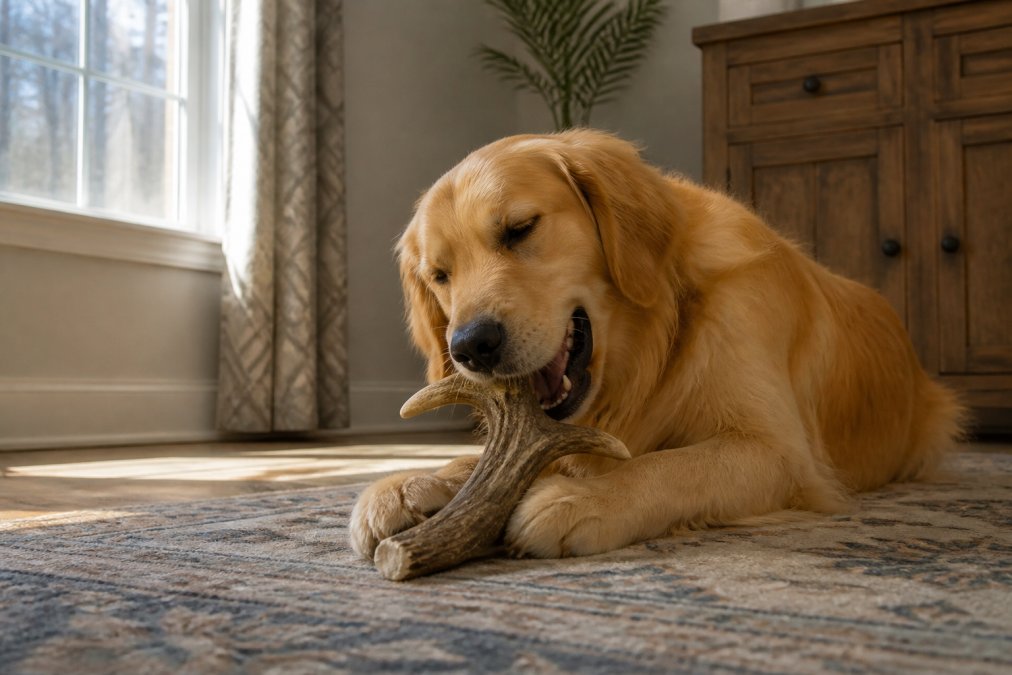
Deer antler chews are the hardest natural option we carry, designed exclusively for vigorous chewers weighing 35 pounds or more. These wild-gathered whitetail sheds require serious gnawing to reach the nutrient-packed marrow inside.


Each chew contains calcium, phosphorus, magnesium, zinc, and glucosamine, which supports strong bones and joints for active large breeds. Because they are only available in whole form in large and extra-large sizes, they discourage gulping and promote safer chewing habits.
The texture also acts as a natural toothbrush, scraping away plaque and tartar as your dog chews.
Elk Antler Chews: A Balanced Choice for Most Dogs
Elk antler chews hit the sweet spot between durability and accessibility. These hand-gathered sheds are slightly softer than deer antlers, so novice chewers can make progress while power chewers still get a satisfying workout.

A key advantage is the choice between whole and split versions. Whole elk antlers require determined chewing to reach the marrow, while split antlers expose it immediately, rewarding less aggressive chewers or those with shorter attention spans.
Elk antlers promote dental hygiene and bone health. They are non-allergenic, odorless, and mess-free, making them practical for indoor chewing. At $14.95, they also offer an affordable entry point into premium antler chews.
Reindeer Antler Chews: The Toughest Natural Option
Reindeer antler chews, also called caribou antlers, are the most durable natural chew we offer. These ultra-hard chews provide hours of satisfaction without splintering or breaking.
According to the product specifications, reindeer antlers are tougher than both elk and deer, making them ideal for dogs that have conquered every other chew on the market. They come in small, medium, and large sizes, so even smaller aggressive chewers can benefit.
Reindeer antlers contain protein, calcium, phosphorus, and glucosamine, supporting bone and joint health while the chewing action promotes oral hygiene. They are also odor-free, unlike tendons or ears that can leave a lingering smell in your home.
Himalayan Yak Cheese Chews: A Great Alternative
Himalayan yak cheese chews offer a completely different texture, making them perfect for dogs that prefer a softer challenge or for puppies transitioning from milk teeth. Made from hardened cow and yak milk cheese, they are fully digestible and suitable for dogs of all sizes and ages.
They do not stain carpets, splinter, or produce strong odors, making them a favorite for indoor use. When the chew wears down, microwave it for 45 to 60 seconds, and it puffs up into a crunchy treat, eliminating waste.
At just $2.99 per chew, they are an affordable option for owners who want to rotate chews frequently. While they do not last as long as antlers, they offer a gentler, fully digestible alternative.
What to Look For in Rawhide-Free Dog Chews
Rawhide-free dog chews have become the gold standard for health-conscious pet parents. The core principle is simple: a chew should be single-ingredient, fully digestible, and free from additives, synthetics, and artificial preservatives.
Prioritize products that are responsibly sourced and USA-made. Wild-gathered antler sheds are ethically harvested without harming animals and decompose naturally, contrasting sharply with mass-produced chews that may involve questionable farming practices.
Chew intensity varies dramatically between animal parts: antlers are the hardest, followed by tendons, then ears and other softer tissues. Matching hardness to your dog's chewing style prevents frustration and potential tooth fractures.
How to Choose Safe Dog Chews by Age and Size
Most chew guides stop at a simple size chart. But a puppy's jaw is not a small adult jaw, and a senior's dental health is not the same as a young adult's. Choosing a chew that matches your dog's life stage is just as important as matching it to their weight.
Puppies (Under 1 Year)
Until all 42 adult teeth have fully erupted and the roots have closed, typically between 6 and 9 months of age, the jawbone is still developing, and the enamel on new adult teeth is softer and more vulnerable to fractures.
- Under 6 months: Avoid hard chews like antlers, bones, or hooves entirely. The pressure required to gnaw on these can damage emerging adult teeth and cause painful misalignment. Instead, focus on puppy-specific teething toys made of soft rubber or chilled (not frozen) washcloths. If you want an edible option, a single-ingredient, freeze-dried puppy chew that softens quickly with saliva is a safer choice.
- 6 to 12 months: As adult teeth settle in, you can introduce a softer, fully digestible chew like a Himalayan yak cheese chew. Its hardness is moderate, and it softens as the dog chews, providing a forgiving texture for a still-maturing bite. Always supervise the first few sessions to ensure your puppy is gnawing, not trying to swallow large chunks.
Adult Dogs (1 to 7 Years)
Adult dogs with full dentition and normal chewing behavior can handle the full range of natural chews, but the selection must still be matched to their bite force and chewing style.
- Light to moderate chewers: A split elk antler or a yak cheese chew provides accessible marrow and a satisfying texture without overwhelming the jaw.
- Aggressive chewers: Whole deer or reindeer antlers are appropriate for dogs over 35 pounds that have a history of destroying softer chews. The key is to match the chew's diameter to the dog's mouth, the chew should be large enough that the dog cannot fit the entire end between its back molars.
Seniors (7+ Years)
Senior dogs often have worn enamel, receding gums, or missing teeth. Dental disease affects an estimated 80% of dogs by age three, and that prevalence only increases with age (avma.org). For these dogs, the primary goal is mental stimulation and joint support, not dental scraping.
- Dental caution: Do not give hard antlers to a senior with visible dental disease, loose teeth, or a history of fractured teeth. The hardness can exacerbate pain and lead to costly extractions.
- Better alternatives: A ground antler powder topper is an excellent way to deliver calcium, collagen, and glucosamine without any chewing risk. For dogs that still want to gnaw, a yak cheese chew that has been microwaved to a puffy, airy texture is soft enough to be safe but still provides engagement.
The 10% Rule for Size Selection
A practical rule from veterinary nutritionists is that a chew should never be smaller than 10% of your dog's body weight. This is not a precise formula, but a mental check: if the chew looks too small to hold comfortably between the front paws and chew on one end, it is too small. A chew that can be swallowed whole is a choking and intestinal blockage risk.
When to Retire a Chew
Regardless of age, inspect chews before every session. Retire a chew when it wears down to a size that could be swallowed whole, for most dogs, this is roughly the size of a golf ball. For antlers, discard them if they splinter or if the marrow cavity becomes so hollow that the outer shell is paper-thin. For yak chews, microwave the remaining piece until it puffs, then let it cool before giving it back.
A Note on Supervision
The American Veterinary Medical Association's resources on pet dental health emphasizes that no chew is 100% risk-free. Even the safest chew can become a hazard if a dog is left unsupervised. Always confine chewing sessions to a safe area, and have a pair of pliers or a jaw spreader on hand to remove a chew that becomes lodged. This is not paranoia, it is the standard of care for a responsible pet parent.
Best Limited Ingredient Dog Treats for Sensitive Pups
Food allergies and intolerances in dogs are not rare. According to the FDA's guidance on pet food labeling and allergies, the most common canine allergens are beef, dairy, chicken, and wheat. For a dog with a confirmed protein sensitivity, choosing the wrong chew can trigger itching, hot spots, ear infections, or gastrointestinal distress within hours. A "limited ingredient" label is not enough, you need to know exactly which protein is in the chew and whether it is a novel protein for your dog.
The Problem with "Limited Ingredient" Labels
Many commercial treats labeled "limited ingredient" still contain trace amounts of common allergens due to cross-contamination in shared manufacturing facilities. The safest approach is to choose single-ingredient chews where the protein source is explicitly stated and the manufacturing process is transparent.
A Protein-Specific Chew Matrix
Here is how to match a chew to your dog's specific dietary restrictions:
| Protein Sensitivity | Safe Chew Options | Chews to Avoid |
|---|---|---|
| Beef Allergy | Deer antler, elk antler, reindeer antler, yak cheese (if dairy is tolerated) | Bully sticks (beef pizzle), beef tendons, beef ears, any chew with "beef" in the ingredients |
| Chicken Allergy | All antler types, yak cheese, fish-based chews | Chicken feet, chicken jerky, any chew with "poultry" or "chicken" in the ingredients |
| Dairy Allergy | Deer, elk, or reindeer antler (no dairy) | Yak cheese chews, any chew with "milk" or "cheese" in the ingredients |
| Multiple Protein Allergies | Deer antler, elk antler, reindeer antler (all are single-source, novel proteins for most dogs) | Any chew with a blend of animal proteins or unspecified "meat" byproducts |
Why Antlers Are a Safe Default
Antler chews are naturally hypoallergenic in the sense that they are a single, unprocessed protein source. A deer antler is just that, deer antler. There are no fillers, no binders, no artificial flavors, and no cross-contamination risk from other proteins.
The Novel Protein Advantage
For dogs exposed to beef and chicken their entire lives, a deer or elk antler represents a novel protein. Many veterinary dermatologists recommend a novel protein diet for managing food allergies, as offering a chew the immune system has not seen before reduces the likelihood of an allergic response.
How to Test a New Chew Safely
If you are introducing an antler chew to a dog with known sensitivities, follow a structured introduction protocol:
- Day 1: Offer the chew for 5 minutes under supervision. Watch for immediate signs of distress, excessive drooling, or facial swelling.
- Day 2-3: If no reaction, extend the session to 15 minutes. Monitor for delayed reactions like scratching, licking paws, or soft stool.
- Day 4-7: If the dog tolerates the chew well, you can allow normal chewing sessions. Continue to monitor for any changes in skin condition or digestion.
A Note on Cross-Contamination
Even if a chew is single-ingredient, the facility where it is processed may also handle beef, chicken, or dairy. If your dog has a severe allergy, contact the manufacturer directly to ask about their allergen control procedures. If they cannot provide a clear answer, choose a different brand.
The Bottom Line for Sensitive Pups
For a dog with protein sensitivities, the best limited ingredient chew is one that is truly single-ingredient, sourced from a novel protein, and processed in a facility that controls for cross-contamination. Antler chews from wild-gathered sheds meet all three criteria.
Frequently Asked Questions
What are the safest organic dog chews?
The safest organic dog chews are single-ingredient, fully digestible options that resist splintering. Antler chews from deer, elk, and reindeer are naturally splinter-resistant and long-lasting. Always choose a chew size appropriate for your dog's weight and supervise chewing sessions. Replace any chew that wears down to a size that could become a choking hazard.
Are organic dog chews better than rawhide?
Yes, organic dog chews are generally a safer choice than rawhide. Rawhide can be difficult to digest and may contain additives or synthetics. Organic chews like antlers are single-ingredient, fully digestible, and free from artificial chemicals. They also last longer and provide more dental and nutritional benefits. For dogs with sensitive stomachs, natural chews are often easier to process.
How do I know if a dog chew is truly organic?
Check the product label for a single-ingredient claim and the source of that ingredient. For example, Farm to Pet antlers are wild-gathered, ensuring they are free from additives and preservatives. Look for transparency about sourcing and manufacturing standards. Products labeled as all-natural or organic should clearly state what they contain and where they come from.
Can organic chews help with dog dental health?
Yes, chewing on firm organic chews like antlers helps reduce plaque and tartar buildup. The mechanical action of gnawing scrapes teeth clean and massages gums. Antler chews also contain minerals that support strong teeth and bones. Regular chewing, combined with routine veterinary dental care, can contribute to better oral hygiene and fresher breath for your dog.
This article was written using GrandRanker