

How to Choose Safe Dental Chews for Puppies

Table of Contents
- Why Dental Chews Matter for Puppies
- Are Dental Chews Safe for Puppies
- Puppy Dental Chews by Age
- How to Choose the Right Size Dog Dental Chew
- Puppy Dental Chew Ingredients to Prioritize
- Supervision and Safety Checklist
- Dental Chews Versus Brushing for Puppies
- Frequently Asked Questions
Last Updated: October 10, 2026
Why Dental Chews Matter for Puppies
Dental chews reduce plaque buildup, support healthy gums, and satisfy puppies' natural chewing instinct during teething. At Shake Wag & Roll, we understand that how to choose safe dental chews for puppies is one of the smartest investments you can make in your puppy's long-term wellbeing.
Quality dental chews keep teeth and gums healthy, prevent destructive chewing, calm anxious puppies, and provide mental stimulation. However, safety must come first, not all dental chews are created equal.
Are Dental Chews Safe for Puppies
Dental chews are safe for puppies when you select the right type, supervise properly, and choose products designed for your puppy's age and size.
Choking and Obstruction Risks
Choking is the most serious risk. A chew that's too small, too hard, or poorly designed can lodge in your puppy's throat or digestive tract. Signs include gagging, excessive drooling, difficulty breathing, or panic, seek veterinary care immediately.
Obstruction occurs when chew pieces lodge in the stomach or intestines, a surgical emergency. Prevent it by choosing chews that match your puppy's size, break down safely if swallowed, and don't splinter into sharp pieces.
Digestibility and Ingredient Concerns
Not all chew materials digest easily. Look for chews made from highly digestible, natural ingredients and avoid artificial colors, preservatives, and fillers. Many puppies do better with limited-ingredient options like the Cookie Pal Dog Treat Pumpkin Chia, which features organic, gluten-free ingredients gentle on developing digestive systems.

Puppy Dental Chews by Age
Age matters significantly when choosing dental chews, as teeth, jaw strength, and digestive systems develop at different rates.
Puppies Under 4 Months
Puppies under 4 months have fragile baby teeth and weak jaw muscles. Soft chews work best; avoid anything hard or crunchy. Rubber teething toys are preferable to traditional dental chews. If you offer a chew, ensure it's soft enough to compress with your thumb and always supervise.
Puppies 4 to 6 Months
At 4 to 6 months, permanent teeth emerge and teething discomfort peaks. Medium-softness chews designed for teething puppies help with plaque reduction while soothing sore gums. Choose chews sized for your puppy's current weight, not their adult size.
Puppies 6 Months and Older
By 6 months, most permanent teeth have erupted. How to choose safe dental chews for puppies at this age involves matching hardness to your puppy's chewing style and jaw development. Puppies 6 months and older can safely enjoy harder dental chews that provide better plaque-fighting benefits, but continue supervising for signs of tooth damage or digestive upset.
How to Choose the Right Size Dog Dental Chew
Size is critical in chew selection. A chew that's too small presents choking risk; one too large causes jaw strain. Consider muzzle length, jaw strength, and growth rate, not just weight.
Measuring Your Puppy for Chew Fit
Step 1: Measure muzzle length. Measure from your puppy's nose to the back of their mouth (where the jaw hinges).
Step 2: Compare to the chew. The chew should be at least as long as this measurement, ideally 1-2 inches longer.
Step 3: Test the grip. Place the chew in your puppy's mouth. Your puppy should hold it comfortably without gagging.
Step 4: Perform the closed-fist test. If the entire chew fits inside your closed fist, it's too small for your puppy's current size.
Accounting for Growth
Puppies grow rapidly. Under 3 months, choose chews for current weight, not projected adult size. From 3-6 months, reassess every 4 weeks and move up a size when your puppy fits the old chew in their closed fist. From 6 months onward, reassess every 6-8 weeks.
Hardness and Tooth Safety
Hardness directly affects safety and effectiveness. Too-hard chews crack teeth or cause jaw pain; too-soft chews won't provide dental benefits and may be swallowed too quickly.
The thumbnail test: Press your thumbnail firmly into the chew for 3-5 seconds.
- Appropriate hardness: Your nail leaves a visible indentation. The chew has some give but resists compression.
- Too soft: Your nail sinks in easily. The chew will be consumed too quickly and offers minimal plaque-fighting benefit.
- Too hard: Your nail makes no impression. This risks tooth fracture, especially in puppies under 6 months.
Age-appropriate hardness guidelines:
- Under 4 months: Soft chews only. Permanent teeth are erupting and sensitive.
- 4 to 6 months: Medium-soft to medium hardness. A chew that yields slightly to thumbnail pressure is ideal.
- 6 months and older: Medium to medium-firm hardness. Avoid rock-hard chews that could cause tooth fracture or jaw strain.
Texture and Fragmentation Risk
Texture matters as much as hardness. Safe chews have smooth surfaces with slight texture, no sharp edges, don't splinter, and break into small digestible pieces. Avoid rough, jagged surfaces; chews that splinter; those that peel into long fibers; or those that become sticky as they soften.
Matching Chew Type to Chewing Style
Match chew type to your puppy's chewing style. Aggressive chewers need firmer chews that resist but eventually yield. Gentle chewers can use softer chews. Anxious or stressed chewers need firmer chews for longer-lasting engagement.
Size and Hardness Reference Table
| Puppy Age | Weight Range | Muzzle Length Guide | Chew Size | Hardness (Thumbnail Test) | Examples |
|---|---|---|---|---|---|
| Under 4 months | 3-8 lbs | 2-3 inches | Mini/extra-small | Soft (nail sinks in easily) | Soft rubber teething toys, very soft biscuits |
| 4-6 months | 8-20 lbs | 3-4 inches | Small | Medium-soft (slight indentation) | Soft dental biscuits, braided chews |
| 6-12 months | 20-40 lbs | 4-5 inches | Small to medium | Medium (visible indentation) | Dental chews, bully sticks, yak chews |
| 12+ months (large breed) | 40+ lbs | 5+ inches | Medium to large | Medium to firm (slight resistance) | Firmer dental chews, long-lasting chews |
Puppy Dental Chew Ingredients to Prioritize
What goes into a dental chew matters as much as the chew itself. Your puppy's digestive system is still developing, so ingredient quality directly affects their health.
Cookie Pal - Dog Treat Pmpkm Chia - Case Of 4-10 Oz →
Natural and Digestible Materials
Prioritize chews made from natural, recognizable ingredients like pumpkin, sweet potato, and chicken. Look for minimal processing, organic options, and limited-ingredient formulas. Avoid artificial colors, flavors, and preservatives. Products like the Portland Pet Food Company Dog Treats Pumpkin Biscuit use simple ingredients like garbanzo bean flour, pumpkin, and peanut butter.

Ingredients to Avoid
Avoid xylitol (toxic to dogs), corn syrup, excessive sugar, high fat content, artificial colors, rawhide, and vague ingredient lists with "meat by-products" or "animal derivatives." Transparency in ingredients signals quality.
Supervision and Safety Checklist
Supervision is non-negotiable when your puppy is chewing. Use a structured approach to assessment, introduction, and monitoring that catches problems before they become emergencies.
Pre-Purchase Assessment
Before bringing any dental chew home, perform a physical inspection:
Size test: The chew should be at least as long as your puppy's muzzle from nose to the back of the mouth. If it fits entirely in your closed fist, it's too small.
Hardness test: Press your thumbnail firmly into the chew for 3-5 seconds. Your nail should leave a visible impression. If it makes no mark, the chew is too hard for puppies under 6 months.
Texture inspection: Feel for sharp edges, rough protrusions, or splinters. Smooth chews with slight texture are safest.
Ingredient verification: The first three ingredients should be whole foods. Scan for xylitol, corn syrup, artificial colors, BHA, BHT, ethoxyquin, "meat by-products," or "animal derivatives."
Calorie check: Dental chews should not exceed 10% of your puppy's daily caloric intake.
First Introduction Protocol
When first offering a new chew: choose a calm time, supervise continuously for 10-15 minutes, limit duration to 5-10 minutes, and monitor for 24 hours for vomiting, diarrhea, constipation, or abdominal discomfort.
Active Supervision Checklist
While your puppy is chewing, stay alert for these signs:
- Puppy is chewing, not attempting to swallow large pieces whole
- No excessive drooling beyond normal chewing behavior
- Breathing is normal and unobstructed
- Gums are not bleeding or showing signs of irritation
- Puppy is not gagging, coughing, or making distress sounds
- Chew is not splintering or breaking into small, sharp fragments
- Puppy's jaw movement appears comfortable, not strained
Remnant Removal and Storage
When your puppy finishes or you remove the chew: remove small pieces immediately (worn chews smaller than your puppy's muzzle are choking hazards), discard softened or mushy chews, and store unused chews in a cool, dry place away from other pets.
Warning Signs and When to Contact Your Veterinarian
Know the difference between normal chewing behavior and a medical emergency:
Immediate emergency (call your vet now or go to emergency clinic):
- Choking: gasping, inability to bark or whimper, blue or pale tongue or gums, loss of consciousness, or panic
- Severe vomiting or retching that does not stop within 30 minutes
- Abdominal distension (belly appears swollen or hard)
- Inability to defecate for more than 24 hours after chewing
- Blood in stool or vomit
- Lethargy or collapse
Contact your vet within 24 hours:
- Mild vomiting (one or two episodes) after chewing
- Diarrhea lasting more than a few hours
- Constipation lasting more than 12 hours
- Excessive gas or abdominal discomfort
- Decreased appetite
- Tooth sensitivity or visible cracks in teeth
Monitor at home but mention at next checkup:
- Mild drooling or temporary loss of appetite immediately after chewing
- One episode of soft stool
- Temporary reluctance to chew on the affected side
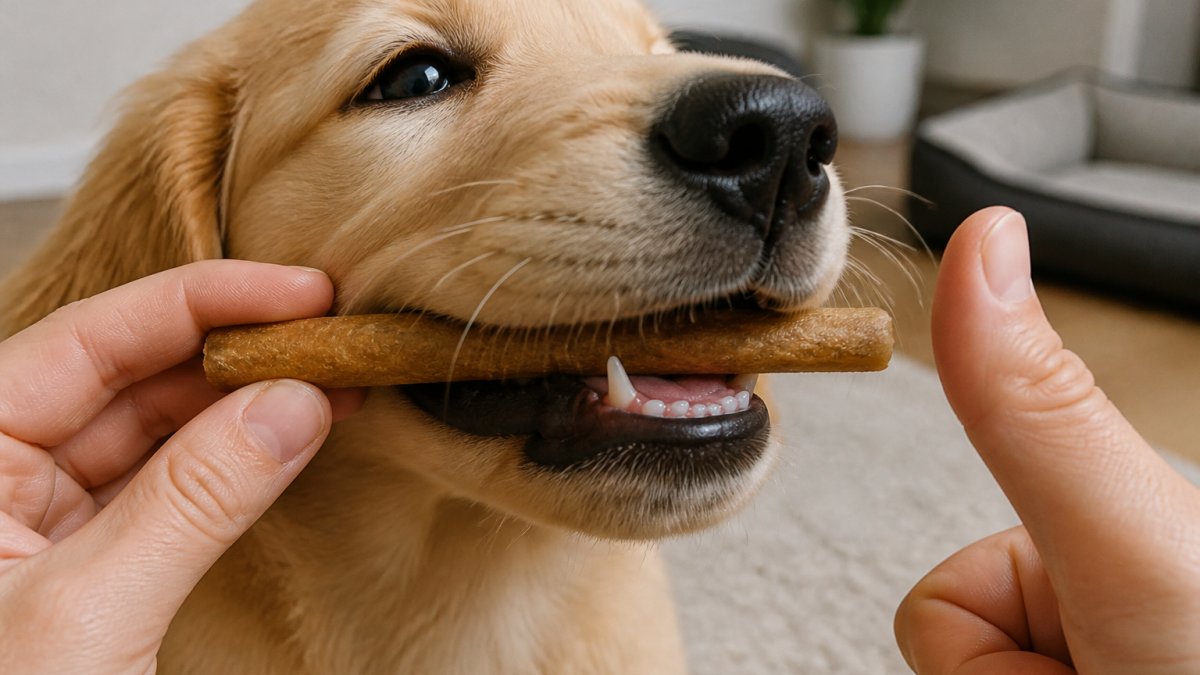
Dental Chews Versus Brushing for Puppies
Dental chews support oral health but don't replace tooth brushing. Brushing removes plaque below the gumline where chews can't reach. Start tooth brushing early with a soft-bristled toothbrush and dog-specific toothpaste. Dental chews serve as a helpful supplement to brushing, not a replacement, and are especially valuable during teething.
Choosing the right dental chew for your puppy requires attention to age, size, hardness, and ingredients. The process might seem complex, but it comes down to one principle: safety first. Our selection of premium treats and chews, including options like the Bixbi Trainer Treats Bacon, gives you confidence that you're making a healthy choice.

Frequently Asked Questions
At what age can puppies have dental chews?
Most puppies can begin using soft dental chews around 4 months old, once their baby teeth start coming in. For puppies under 4 months, consult your veterinarian before introducing any chew. Puppies 6 months and older can handle firmer chews. Always choose size-appropriate and age-appropriate options to prevent choking hazards and ensure the chew matches your puppy's developmental stage.
Are dental chews safe for puppies?
Dental chews can be safe for puppies when chosen carefully and supervised properly. Select chews that are size-appropriate, made from digestible ingredients, and free of harsh chemicals or fillers. Always supervise chewing sessions and remove the chew if your puppy shows signs of distress. Avoid chews that are too hard or small enough to pose a choking risk. When in doubt, ask your veterinarian for recommendations.
What ingredients should I avoid in puppy dental chews?
Avoid dental chews containing artificial preservatives, synthetic dyes, corn, wheat, soy, and fillers. Steer clear of chews with xylitol, which is toxic to dogs. Look for options with natural, digestible ingredients like pumpkin, peanut butter, and oat flour. Products like Cookie Pal Pumpkin Chia treats use organic, gluten-free, and GMO-free ingredients, making them a safer choice for puppies with sensitive stomachs.
Can dental chews replace brushing a puppy's teeth?
Dental chews complement but do not replace regular tooth brushing. While chews help reduce plaque and tartar buildup through mechanical action, brushing remains the most effective way to maintain oral hygiene. Combine dental chews with regular brushing and veterinary checkups for optimal puppy dental health. This multi-faceted approach addresses both mechanical cleaning and direct plaque removal.