

How to Choose Safe Dog Accessories: 2026 Guide

Table of Contents
- Why Safe Dog Accessories Matter for Your Pup's Health
- Non-Toxic Dog Toys: What to Look For
- How to Choose a Dog Harness That Fits Properly
- Safe Dog Chew Toys for Aggressive Chewers
- Collar and Leash Safety: Closures, Hardware, and Visibility
- Regulatory Standards and Certifications for Dog Accessories
- Breed-Specific Accessory Requirements and Sustainability
- Conclusion
- Frequently Asked Questions
Last Updated: September 15, 2026
Why Safe Dog Accessories Matter for Your Pup's Health
Choosing safe dog accessories is one of the most important decisions you'll make for your pet, and not every product on the shelf is built to the same standard.
The stakes are higher than most people assume. Ingested toy pieces and treat fragments are a leading cause of intestinal blockages in dogs, and the FDA's guidance on pet product safety makes clear that materials, small parts, and construction all fall under consumer safety scrutiny. A toy that fails at any of those points isn't just a waste of money. It's a hazard.
Below, we'll walk through how to evaluate materials, measure for a proper fit, and match accessories to your dog's size, breed, and chewing style. Most of this takes ten minutes. All of it prevents a vet visit.
Non-Toxic Dog Toys: What to Look For
Non-toxic dog toys are made from materials that won't release harmful chemicals when chewed, licked, or swallowed. The safest use natural rubber, food-grade silicone, or untreated cotton, with clear labeling.
"Non-toxic" isn't a regulated marketing term in pet products the way it is in children's goods. The most reliable signal is a specific material disclosure rather than a vague safety claim, if a package says "safe" but won't name the material, that's your answer.
Look for these markers:
- Named materials (natural rubber, food-grade silicone, undyed cotton)
- No strong chemical or plastic smell out of the packaging
- Sturdy, seamless construction with no glued-on parts
- Color that doesn't rub off on a damp cloth
Materials to Avoid and Safer Alternatives
Skip toys made from PVC, phthalates, BPA, and lead-based paints, the materials most often flagged in pet safety discussions and common in cheap imports with thin labeling.
Safer swaps are straightforward: replace vinyl squeakers with natural rubber, painted plastic with undyed nylon, and synthetic rope with cotton that won't fray into long strands. A higher price doesn't guarantee safer materials, so read the label either way.
How to Choose a Dog Harness That Fits Properly
A properly fitted harness sits snug but comfortable, allows two fingers under each strap, and never restricts shoulder movement. Getting this right prevents chafing, escape attempts, and pressure points that cause long-term discomfort.
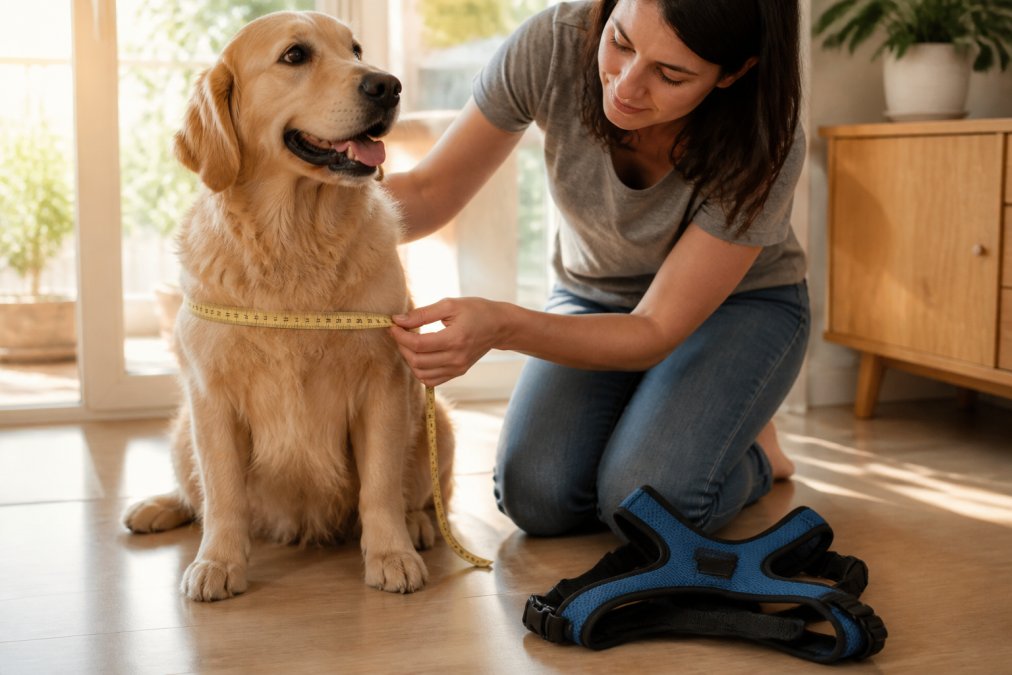
Fit matters more than style, and it's where most harness purchases go wrong: too loose lets a determined dog back out near traffic, too tight rubs the armpits raw.
Step-by-Step Measuring Guide
You need two measurements: neck circumference and chest girth. Grab a soft tape measure and a friend if your dog wiggles.
- Measure neck circumference at the base of the neck, where a collar naturally sits.
- Measure chest girth at the widest point, just behind the front legs.
- Measure the back length from the base of the neck to the tail for full-body harnesses.
- Weigh your dog, since most sizing charts combine weight with girth.
- Compare both numbers to the manufacturer's chart and size up if you're between sizes.
- Test the fit with two fingers under every strap, then watch your dog walk, sit, and turn.
For small dogs and puppies, a reflective puppy harness from Shake Wag & Roll addresses two safety needs at once: escape-proof adjustability and visibility on early morning or evening walks. The padded chest strap reduces chafing, and the reflective stitching keeps your dog visible in low light.

Safe Dog Chew Toys for Aggressive Chewers
Safe dog chew toys for aggressive chewers are dense, single-piece products with no removable parts, rated for the toughest chew strength. Natural rubber and thick nylon hold up best; hollow, plush, or glued-together toys will not.
The core rule: if your dog can tear off a piece, that piece can be swallowed. Aggressive chewers need toys where the entire object is one solid unit. Avoid squeakers, attached ropes, and painted surfaces, these fail first.
Match chew strength to the toy's rating, rotate toys every few days, and inspect each weekly for cracks, gouges, or loosening hardware. Replace at the first sign of damage.
Collar and Leash Safety: Closures, Hardware, and Visibility
Secure closures and quality hardware are the difference between a collar that holds and one that pops open mid-walk. Metal buckles and welded D-rings outperform plastic quick-release clips under load, especially for dogs over thirty pounds.
Squeeze the D-ring: if it flexes or the weld looks uneven, it won't survive a sudden lunge. On retractable leashes, a locking mechanism is an important safety feature.
Visibility is the safety feature owners overlook most. Reflective elements and LED lighting make your dog visible to drivers during dark walks, which matters more in winter when evening walks happen after sunset. An LED adjustable dog collar from Shake Wag & Roll offers flashing and steady light modes with a waterproof build, so rainy walks don't short it out. Pair it with a leash that has a locking brake for full control.
Regulatory Standards and Certifications for Dog Accessories
There is no single federal certification covering all dog accessories in the United States. Oversight is split across agencies, and understanding that split is the first step to reading a label like a safety inspector.
Here's how the pieces fit together:
- The Consumer Product Safety Commission has jurisdiction over general consumer product hazards, which can include pet accessories that present unreasonable risk of injury. The CPSC enforces the Consumer Product Safety Act and can pursue recalls of defective pet products.
- The FDA oversees pet food, chews, and some edible or ingestible items under the Federal Food, Drug, and Cosmetic Act. Its authority does not extend to a rubber toy or a nylon leash.
- The Federal Trade Commission polices advertising claims. If a package says "non-toxic" or "vet approved" without substantiation, that's an FTC issue, not a CPSC one.
Voluntary Standards Worth Knowing
What to Look For on a Label
A credible package usually does three things:
Recalls and Reporting
Breed-Specific Accessory Requirements and Sustainability
Matching Gear to Body Shape
Matching Gear to Behavior and Drive
Sustainability and Safe Disposal
Conclusion
Frequently Asked Questions
What materials should I avoid when buying dog accessories?
Avoid accessories made with BPA, phthalates, lead, and formaldehyde. These chemicals can leach from cheap plastics, painted metals, and some imported rubbers. Look for toys labeled non-toxic, hypoallergenic, and free from these substances. For chews, skip rawhide and hard nylon that can splinter. Instead, choose natural rubber or food-grade silicone. Always check for a strong plastic or chemical smell, which often signals harmful volatile compounds.
How do I determine the correct size for dog collars and harnesses?
Measure your dog's neck circumference for collars and chest girth for harnesses using a soft tape measure. Add two fingers of space for comfort, ensuring a snug but comfortable fit that prevents escape without choking. For harnesses, measure the widest part of the chest behind the front legs. Always refer to the manufacturer's sizing chart, as brands vary. Adjustable straps help fine-tune the fit. Recheck monthly, especially for puppies, as their measurements change rapidly.
Are there specific safety standards for dog products in the US?
The US does not have comprehensive federal safety standards specifically for dog accessories. However, the Consumer Product Safety Commission (CPSC) can act on hazardous pet products under general consumer safety laws. Some states, like California, require Prop 65 warnings for chemicals known to cause cancer or birth defects. Reputable brands voluntarily follow standards like ASTM F963 for toy safety and carry third-party testing certifications. Always look for labels indicating non-toxic materials and compliance with these voluntary standards.
What should I look for in a durable dog leash?
Choose a leash made from strong, weather-resistant materials like nylon, leather, or biothane. Check the hardware: look for solid brass or stainless steel buckles and D-rings that won't rust or snap. Stitching should be tight and reinforced at stress points. For large or strong dogs, a fixed-length leash offers better control. Reflective elements improve visibility during night walks. A padded handle adds comfort for you. Inspect regularly for wear and tear, especially at the clasp and handle.
How can I tell if a dog toy is safe for my pet?
A safe dog toy matches your dog's size, chewing style, and activity level. It should be free of small parts that can detach and become choking hazards. Avoid toys with squeakers that can be swallowed, and supervise play with plush toys. For aggressive chewers, select chew-proof toys rated for power chewers. Check for non-toxic labels and durable materials. Inspect toys regularly for cracks, tears, or loose pieces, and replace them immediately. Interactive toys that dispense treats can also keep your dog engaged safely.
What are the benefits of choosing non-toxic dog accessories?
Non-toxic dog accessories reduce your dog's exposure to harmful chemicals like lead, BPA, and phthalates, which can cause allergies, digestive issues, or long-term health problems. They are especially important for puppies and dogs with sensitive systems. Non-toxic toys and chews also tend to be more durable and made with higher-quality materials, offering better value. Choosing hypoallergenic and non-itchy fabrics for collars and harnesses prevents skin irritation. Overall, non-toxic accessories support your dog's wellbeing and give you peace of mind.