

How to Clean Dog Toys Properly: A 2026 Guide

Table of Contents
- Why Cleaning Dog Toys Matters for Your Pup's Health
- How Often to Wash Dog Toys: A Simple Schedule
- How to Clean Plush Dog Toys Without Ruining Them
- Cleaning Rubber, Silicone, and Rope Toys
- Best Non-Toxic Cleaners for Pet Toys
- Sanitizing vs. Cleaning: What's the Difference?
- How to Clean Dog Toys Properly: Step-by-Step
- Conclusion: Keep Playtime Safe and Fresh
- Frequently Asked Questions
Last Updated: September 26, 2026
Why Cleaning Dog Toys Matters for Your Pup's Health
Learning how to clean dog toys properly is one of the simplest ways to protect your dog's health. Toys pick up saliva, dirt, and bacteria every time your dog plays.
How Often to Wash Dog Toys: A Simple Schedule
Most dog toys need cleaning every one to two weeks; toys used daily or shared between dogs need it more often. Here's a simple schedule:
| Toy Type | Cleaning Frequency | Method |
|---|---|---|
| Plush and soft toys | Every 1-2 weeks | Machine or hand wash |
| Rubber and silicone | Weekly | Warm water and mild dish soap |
| Rope toys | Every 2 weeks | Soak and rinse |
| Interactive and electronic | Monthly, plus wipe-downs | Surface wipe only |
Several factors change the timing:
- Frequent chewer? Clean weekly.
- Dog with allergies or sensitive skin? Clean every few days.
- Outdoor-only toys? Rinse after every outdoor session.
- Sick dog in the house? Clean daily until they recover.
How to Clean Plush Dog Toys Without Ruining Them
The safest way to clean plush dog toys is a gentle machine wash inside a laundry bag or pillowcase, which protects seams and stuffing.
Follow these steps:
- Check the toy for rips or loose squeakers. Toss damaged toys rather than washing them.
- Place the toy inside a laundry bag or a zippered pillowcase.
- Use a pet-safe detergent and a gentle cycle with warm water.
- Add an extra rinse cycle to remove all soap residue.
- Air dry the toy completely before giving it back.
Cleaning Rubber, Silicone, and Rope Toys
Rubber, silicone, and rope toys behave very differently in water, heat, and cleaning solutions. Treating them the same ruins toys or leaves your dog chewing on a chemically compromised surface.
Rubber and silicone toys
Natural rubber and food-grade silicone are non-porous, making them the easiest toys to clean, and the easiest to damage with the wrong method.
What works:
- Warm water with a few drops of mild, dye-free dish soap
- A soft-bristle scrub brush or an old toothbrush for textured grooves and squeaker holes
- A 10-minute soak in one part white vinegar to three parts warm water for odor and slobber buildup
- A full air-dry on a dish rack before the toy goes back in the bin
What to avoid, and why it matters:
- Vinegar on certain rubber blends. Repeated acidic soaks can dry out cheap rubber or latex-blend squeakers, leaving a tacky film your dog will chew at. If a toy feels sticky after a vinegar soak, switch to plain soap and water.
- Dishwasher heat. The top rack can reach 140-150°F during heated dry, hot enough to warp thin rubber, crack squeaker housings, and degrade glue. If you use a dishwasher, run the top rack with heated dry off.
- Boiling. Boiling accelerates rubber breakdown and can release compounds you do not want in your dog's mouth. Skip it.
- Abrasive scrubbers. Steel wool and scouring pads scratch the surface and create crevices where bacteria collect. Use soft bristles only.
Rope toys
Rope toys are the highest-risk category in your toy bin. Cotton and hemp fibers are porous, hold moisture for hours, and let mold and bacteria grow deep inside the braid. Step-by-step:
- Soak the rope in warm water with a small amount of mild dish soap.
- Work the suds through the braid with your hands, do not scrub hard, which frays the fibers.
- Rinse under running water until the water runs clear and no suds remain.
- Squeeze out as much water as you can by hand, then roll the rope in a dry towel and press down to pull out more.
- Hang it in direct sun with good airflow, a sunny windowsill or outdoor line beats a bathroom.
- Allow a full 24 hours to dry. If the center of the braid still feels cool or damp, give it another day.
When to throw a rope toy away, no exceptions:
- Any musty or sour smell, even faint
- Dark spots, gray patches, or a greenish tint anywhere in the braid
- Frayed ends or loose strands your dog can pull free and swallow
- A rope that has been soaked and dried more than a handful of times and now feels stiff or brittle
A quick material check before you clean
If you are not sure what a toy is made of, look for a recycling code or manufacturer stamp. Code 3 (PVC) should not be soaked in vinegar or exposed to high heat, since PVC can leach plasticizers. Codes 5 (polypropylene) and 7 (often silicone or TPU) are generally stable for the methods above. When in doubt, plain warm water and mild soap is the safe default.
Best Non-Toxic Cleaners for Pet Toys
The best non-toxic cleaners for pet toys are plain white vinegar, mild dish soap, and warm water, no harsh chemicals needed. Here's what works and what to avoid:
Safe options:
- Mild dish soap (free of dyes and heavy fragrance)
- White vinegar diluted with water
- Baking soda for scrubbing tough spots
- Pet-safe detergent for machine washing
Avoid these:
Tooth & Gum Wipes for Dogs & Cats →
- Bleach and ammonia-based cleaners
- Scented sprays and fabric softeners
- Disinfecting wipes made for human surfaces
Sanitizing vs. Cleaning: What's the Difference?
Cleaning and sanitizing are not the same job, and the difference matters most when your dog has been sick.
The pathogens dog owners actually worry about
Three come up again and again, and they behave very differently on a toy surface:
- Canine parvovirus. Parvo is the hardest of the three to kill. As a non-enveloped virus it resists many common disinfectants, including alcohol-based ones, and can survive on surfaces for months. A toy that touched a parvo-positive dog needs more than a vinegar soak.
- Giardia. A protozoan parasite spread through feces-contaminated water and surfaces. It is susceptible to many disinfectants but requires contact time, the surface must stay wet for the full dwell time on the label.
- Kennel cough (Bordetella bronchiseptica) and other respiratory bacteria. These are much easier to kill than parvo; a hot wash with detergent handles most cases.
What actually works, by toy type
Plush and fabric toys:
- Wash on the hottest cycle the fabric can tolerate with a pet-safe detergent. Heat plus detergent is the most reliable combination for routine sanitizing after illness.
- For parvo exposure, washing alone is not enough. The CDC's general guidance on disinfecting surfaces after parvovirus exposure calls for a 1:32 dilution of household bleach (about ½ cup bleach per gallon of water) with 10 minutes of contact time. That concentration damages most plush toys, which is why many veterinarians advise discarding plush toys that touched a parvo-positive dog.
- If you do bleach a durable fabric toy, rinse repeatedly until no bleach smell remains, then air dry fully in the sun.
Rubber and silicone toys:
- A 1:32 bleach dilution with 10 minutes of wet contact time is standard for parvo. Rinse thoroughly afterward, bleach residue is a real hazard if your dog chews the toy.
- For routine sanitizing (no known illness), a hot soapy wash is sufficient. Vinegar soaks help with odor but are not a reliable parvo disinfectant.
Rope toys:
- Rope cannot be reliably sanitized. The braid traps moisture and shields pathogens from contact with any disinfectant. If a rope toy was in contact with a sick dog, throw it away.
Electronic and battery-operated toys:
- You cannot submerge these, so you cannot reliably sanitize them. Wipe the exterior with a damp cloth and mild soap, then a pet-safe surface wipe if needed. If a battery toy was exposed to a parvo-positive dog, retire it.
When sanitizing is actually necessary
Most of the time, cleaning is enough. Sanitize when:
- Your dog has been diagnosed with parvo, giardia, or another contagious illness
- A toy was shared with a dog of unknown vaccine status
- A toy sat in a yard or park where other dogs eliminate
- You are bringing a new puppy into a home with an older dog
CDC guidance on disinfecting surfaces after parvovirus exposure
How to Clean Dog Toys Properly: Step-by-Step
Here is the full process for how to clean dog toys properly, from sorting to storage.
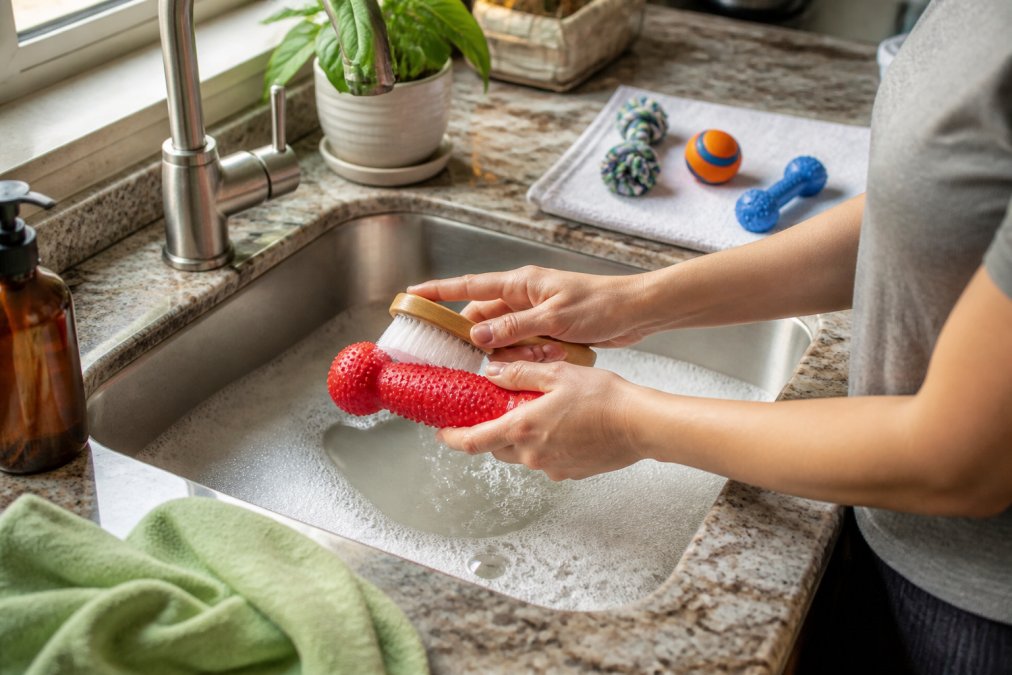
Total time: 20-30 minutes plus drying time Difficulty: Easy
What you'll need:
- Mild dish soap
- White vinegar
- Laundry bag or pillowcase
- Scrub brush
- Clean towels
- Pet-safe detergent
Conclusion: Keep Playtime Safe and Fresh
A dirty toy bin undermines everything you do to keep your dog healthy. The good news: a simple routine of mild dish soap, white vinegar, and a laundry bag handles almost every toy in the house.
Frequently Asked Questions
Is Dawn dish soap safe to wash dog toys?
Dawn dish soap is generally safe for cleaning dog toys when used in small amounts and rinsed thoroughly. It cuts through grease and slobber effectively. However, avoid using it on porous toys like plush or rope, as residue can linger and cause stomach upset. For a gentler option, choose a pet-safe detergent or a 50/50 white vinegar and water solution. Always rinse toys until no suds remain.
How long do germs stay on dog toys?
Germs like bacteria and viruses can survive on dog toys for hours to several days, depending on the material and environment. Porous toys, such as plush or rope, harbor pathogens longer than non-porous rubber or silicone. Regular cleaning, at least once a week for heavy chewers, helps prevent bacteria buildup and mold growth. If your dog is sick, sanitize toys daily to avoid reinfection.
Can I use vinegar and baking soda to wash dog toys?
Yes, white vinegar and baking soda are effective, non-toxic cleaners for dog toys. Vinegar kills many germs and removes odors, while baking soda acts as a mild abrasive for caked-on grime. Mix a paste of baking soda and water for scrubbing, then rinse with a vinegar solution. Avoid combining them in the same container, as they react and lose cleaning power. Always air dry toys completely.
What is the best way to disinfect rubber dog toys?
To disinfect rubber dog toys, wash them with warm water and mild dish soap, then soak in a diluted white vinegar solution (1 part vinegar to 1 part water) for 10 minutes. Rinse thoroughly and air dry. Avoid bleach, which leaves harmful residue. Clean rubber toys weekly for best hygiene.