

How to Clean a Waterproof Dog Collar: Step-by-Step

Table of Contents
- Step 1: Gather Your Supplies and Check the Collar Tag
- Step 2: Remove Dirt and Muck Before You Wash
- Step 3: Wash a Waterproof Dog Collar With Soap and Water
- Can You Put a Dog Collar in the Washing Machine?
- Step 4: Rinse, Air-Dry, and Inspect the Hardware
- How to Clean a Smelly Dog Collar and Stop Odor Coming Back
- How to Clean a Biothane Dog Collar (and Other Waterproof Materials)
- How Often to Clean a Waterproof Dog Collar
- Frequently Asked Questions
Last Updated: October 5, 2026
Step 1: Gather Your Supplies and Check the Collar Tag
Knowing how to clean a waterproof dog collar starts with reading the tag. Most waterproof collars have a care label telling you the material and how to treat it. Ignore it and you risk cracking the coating or fading the color.
Before you touch any soap, gather these supplies:
- Mild liquid soap or dog-safe shampoo
- A soft-bristle brush or old toothbrush
- Two clean microfiber cloths
Check the tag for material type, cleaning method, and drying instructions. If it says "wipe clean only," skip the soak. If it says "waterproof," you can wash it fully.
Step 2: Remove Dirt and Muck Before You Wash
Scrape off the worst of the dirt before the collar gets wet. Washing a muddy collar turns mud into a slurry that works deeper into fabric and seams.
Here's the fastest way to strip off surface grime:
- Let caked mud dry for 10 minutes, then brush it off
- Wipe the collar with a dry cloth to lift loose dirt
- Use a damp cloth on the outer surface only
A common mistake is dunking a filthy collar straight into a sink, which pushes grit into the stitching where smells hide. Dry-brush first, always. If your dog just came out of a river or lake, rinse with plain water first, river muck carries bacteria that will stink up your house if it sits.
Step 3: Wash a Waterproof Dog Collar With Soap and Water
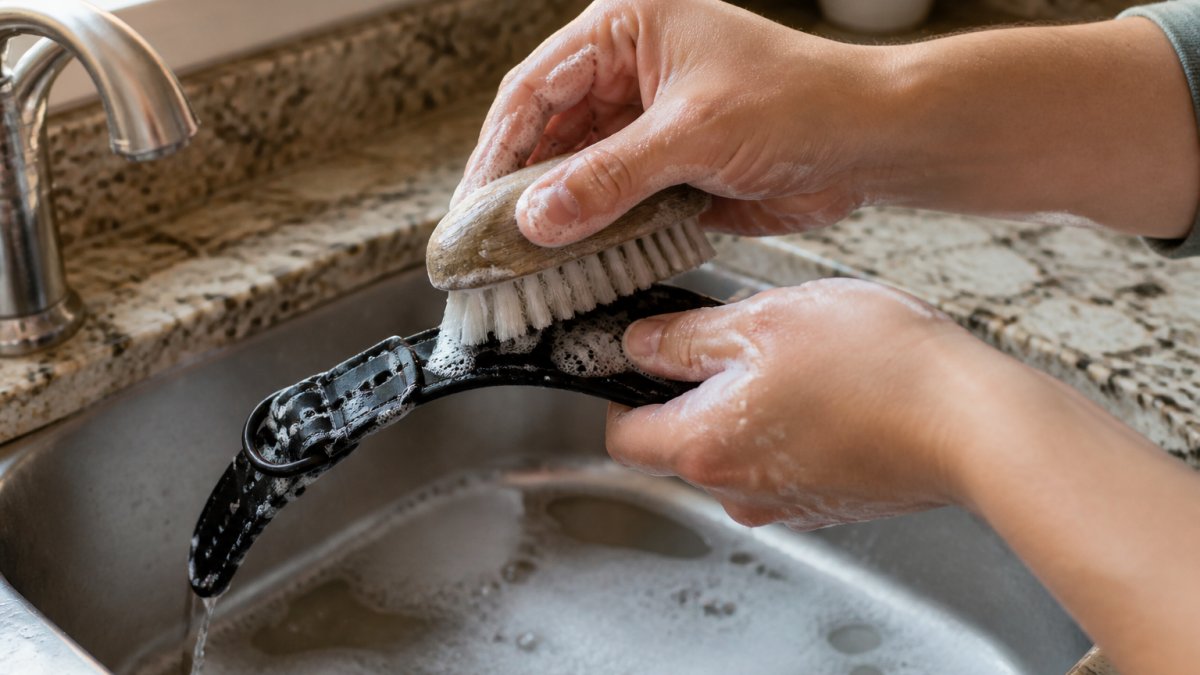
Hand washing is the safest method for any waterproof dog collar and the one most manufacturers recommend. The goal is to lift grime and bacteria without leaving residue, whatever stays on the collar ends up against your dog's neck.
Set up before you start
- Fill a bowl with lukewarm water. Hot water can warp plastic buckles and stress coated webbing.
- Add a few drops of mild soap, a pea-sized amount is plenty for one collar.
- Keep a second bowl of clean lukewarm water for rinsing.
Wash in this order
- Inside surface first. The side touching your dog's neck holds the most oil, dander, and bacteria. Work soapy water in with your fingers first.
- Then the outside. Use a soft-bristle brush in small circles. Don't scrub hard, you're lifting film, not sanding.
- Seams and stitching. Brush every seam where webbing meets hardware, where grit and odor hide.
- Buckle, D-ring, and tag loop. Clear the buckle channel and D-ring base with a brush or cloth-wrapped fingernail. Packed grit makes buckles stick or pop open.
- Rinse under cool running water until it runs clear and no suds remain. Residue is the most common cause of skin irritation after a wash.
- Squeeze gently. Never wring or twist a waterproof collar; twisting can crack the coating or stress stitching.
Best soap for cleaning a dog collar
The best soap is a mild, fragrance-free liquid soap or dog-specific shampoo formulated for sensitive skin, free of dyes and heavy perfumes.
Avoid these:
- Scented human shampoos with essential oils, many essential oils are toxic to dogs if licked.
- Laundry detergent, which leaves irritating residue even after rinsing.
- Antibacterial hand soaps with added chemicals.
Dawn dish soap works in a pinch because it rinses clean, but it strips oils, so use it sparingly and rinse thoroughly. For waterproof materials like coated webbing or silicone, mild soap is all you need, the surface doesn't absorb anything, so heavy cleaners just sit on top and irritate skin.
Before the collar goes back on your dog
- Confirm the rinse water ran clear and the collar doesn't smell like soap.
- Wipe hardware dry rather than letting water sit in the buckle.
- Air-dry completely, a damp collar against the neck causes irritation and mildew.
Can You Put a Dog Collar in the Washing Machine?
Sometimes, but not always. Machine washing works for plain nylon or fabric collars with no metal hardware. It's a bad idea for leather, coated webbing, or anything with a plastic buckle that could crack in a hot cycle.
If you do machine wash:
- Use a mesh laundry bag to protect the collar
- Choose cold water and a gentle cycle
- Skip the dryer entirely
Never machine wash a collar with a metal ID tag attached, the tag bangs the drum and can scratch the finish or damage the machine.
Step 4: Rinse, Air-Dry, and Inspect the Hardware
Air-drying is the only safe way to dry a waterproof dog collar. Dryer heat breaks down waterproof coatings and warps plastic buckles. Hang the collar over a chair back or towel rack, out of direct sun, which fades colors and dries out coated surfaces.
While it dries, inspect the hardware:
- Check the buckle for cracks or weak springs
- Look at the D-ring for rust or bending
- Test the tag loop for fraying
A damp collar left in a closed drawer grows mildew fast. Always let it dry fully before it goes back on your dog.
When to Replace the Collar Instead of Cleaning It
Replace the collar when the buckle won't hold, the D-ring bends, or the coating peels in chunks. Cleaning can't fix structural damage.
Signs it's time for a new collar:
- The buckle pops open when your dog pulls
- The D-ring shows rust or deep grooves
- The material feels stiff or cracked
A worn collar can snap during a walk, which puts your dog at real risk. If you spot any of these, retire the collar and pick up a fresh one.
How to Clean a Smelly Dog Collar and Stop Odor Coming Back
Odor comes from bacteria, not dirt, so killing the smell means killing the bacteria. Regular soap and water handles most cases. For a stubborn stinky collar, add baking soda.
Try this odor-busting routine:
- Soak the collar in warm water with a spoonful of baking soda for 20 minutes
- Scrub the seams and hardware with a soft brush
- Rinse until the water runs clear
- Air-dry in a well-ventilated spot
- Wipe down with a pet-safe deodorizing spray once dry
If the smell returns within days, the collar may be trapping moisture inside padding or seams, a sign the material is breaking down and it's time to replace it. A common mistake is masking odor with perfume or fabric spray, which layers scent on top of bacteria and can irritate your dog's skin.
How to Clean a Biothane Dog Collar (and Other Waterproof Materials)
"Waterproof" is a category, not a single material. Treating every waterproof collar the same way is how owners crack coatings, cloud finishes, or leave grime packed around hardware. The routine should match what the collar is made of.
Coated webbing (Biothane and similar)
Coated webbing is a polyester or nylon core sealed inside a PVC or TPU coating. Nothing soaks in, which is why it resists odor so well. The trade-off: the coating is the waterproof layer, and abrasive brushes and harsh cleaners can scratch or dull it.
- Wipe with a soft cloth and a few drops of mild, fragrance-free soap in lukewarm water.
- For caked mud, let it dry first, then brush with a soft-bristle brush, never a wire brush or scouring pad.
- Rinse thoroughly so no soap film remains, then towel dry. Coated webbing air-dries in minutes.
Silicone-like and rubberized collars
Silicone and rubberized collars are non-porous and typically the easiest to clean, but surface tack attracts lint, hair, and dust.
- Rinse under lukewarm water to lift loose debris.
- Wash with mild soap and your fingers; a soft brush is fine on textured surfaces.
- Avoid alcohol-based wipes and solvent cleaners, which can dry out or discolor the material over time.
Waterproof fabric and laminated shells
Waterproof fabric collars rely on a laminated membrane or durable water-repellent (DWR) finish, which degrades with heat, detergent residue, and repeated machine agitation.
- Hand wash in lukewarm water with mild soap.
- Rinse until the water runs clear, leftover detergent is what kills DWR performance.
- Air-dry away from direct sun and heat. Never put a laminated collar in a dryer.
Hardware, seams, and attachment points
Hardware is where most waterproof collars fail first, and it's the part owners clean least.
- Use a soft brush or a damp cloth wrapped around a fingernail to clear grit from the buckle channel and the D-ring base.
- Work a damp cloth along the stitching where the webbing meets the buckle housing; that seam traps moisture and odor.
- Dry hardware with a cloth rather than letting it air-dry against the collar, which can leave water sitting in the buckle.
| Material | Cleaning method | Typical dry time | Watch out for |
|---|---|---|---|
| Coated webbing (Biothane-type) | Wipe or hand wash with mild soap | Minutes | Abrasive brushes, machine agitation |
| Silicone / rubberized | Rinse, wash with fingers or soft brush | Minutes | Alcohol wipes, solvent cleaners |
| Waterproof fabric / laminated | Hand wash, thorough rinse | 2-3 hours | Heat, detergent residue, dryer |
| Leather (not waterproof) | Wipe with barely damp cloth, then condition | Several hours | Soaking, which ruins untreated leather |
Waterproof collars resist dirt, muck, and water, making them ideal for dogs that swim, hike, or roll in everything. But "waterproof" doesn't mean "maintenance-free." Matching the cleaning method to the material, and giving hardware the same attention as webbing, keeps a collar fresh and structurally sound.
How Often to Clean a Waterproof Dog Collar
Clean a waterproof collar every two to four weeks for a normal routine. Bump that up to weekly if your dog swims, hikes, or gets muddy often.
Use this schedule as a guide:
- Weekly: Wipe down after swimming or rain
- Every 2-4 weeks: Full soap-and-water wash
- Monthly: Deep clean with baking soda
- As needed: Spot clean after rolling in something gross
Dogs with sensitive skin may need more frequent cleaning, since trapped dirt and bacteria cause irritation.
A dirty collar is more than a smell problem. Our community of dog owners shares real care tips, and our team is always here to help you pick gear that lasts.
Frequently Asked Questions
How can I clean a smelly dog collar?
Start by brushing off dried dirt, then wash the collar with warm water and a gentle soap. For stubborn odors, soak it for 15 minutes in a mix of warm water and a few tablespoons of baking soda. Scrub the webbing and hardware with a soft brush, rinse thoroughly, and air-dry completely before putting it back on your dog. Avoid leaving the collar damp, since moisture lets odor-causing bacteria grow.
Can I wash my dog's collar in the washing machine?
Only if the collar is fully waterproof and the manufacturer allows it. Use a mesh laundry bag, cold water, and a gentle cycle with mild detergent. Skip the dryer, because heat can warp hardware and damage coatings. If your collar has leather, glued seams, or a GPS unit, hand-wash it instead. When in doubt, hand washing is the safer choice for any waterproof dog collar.
What is the safest way to clean a waterproof dog collar?
Hand washing with warm water and mild dog-safe soap is the safest method. Remove the collar from your dog first, brush off loose dirt, then scrub gently with a soft brush. Rinse until no soap remains. Avoid bleach, harsh solvents, and human shampoos with strong fragrances. Dry the collar flat or hang it in open air, and check the buckle, D-ring, and seams before putting it back on.
How often should I clean my dog's waterproof collar?
Wipe the collar with a damp cloth weekly, and do a full wash every four to six weeks. Clean it right after swimming, river trips, or heavy mud, since wet fabric and hardware trap odor and grime. Dogs with sensitive skin or those that swim often may need cleaning every two weeks. Regular care keeps the collar looking good and helps you spot wear before it becomes a safety issue.