

How to Pick Dog Food: A 2026 Guide

Table of Contents
- Start With Your Dog's Life Stage and Health Needs
- How to Read Dog Food Labels for Nutritional Adequacy
- Identify High-Quality Ingredients
- Avoid Artificial Additives and Fillers
- Recognize Signs of Food Allergies in Dogs
- Dog Food Transition Guide for Safe Switching
- Assess Your Dog's Body Condition and Adjust
- When to Consult a Veterinary Nutritionist
Last Updated: August 24, 2026
Start With Your Dog's Life Stage and Health Needs
Your dog's age, size, and health status form the foundation for how to pick dog food. A puppy needs dramatically different nutrition than a senior dog, and a dog with food sensitivities requires an entirely different approach than a healthy adult with no restrictions.
Life stage formulation matters because metabolic needs shift dramatically across a dog's lifespan. Puppies need higher caloric density and specific calcium-to-phosphorus ratios to support bone development (aafco.org). Adult dogs require balanced maintenance nutrition. Senior dogs often benefit from lower calories, joint support, and easier digestibility.
Beyond age, consider your dog's activity level and any existing health conditions. An active working dog needs higher protein and fat for sustained energy. A dog recovering from illness or with digestive issues needs a formulated diet specifically designed for healing. Overweight dogs need controlled caloric intake with adequate fiber.

Starting by identifying your dog's life stage and health profile helps make significantly better food choices. It eliminates guesswork and narrows your options to formulations actually designed for your dog's situation.
How to Read Dog Food Labels for Nutritional Adequacy
Understanding the guaranteed analysis is your first step toward reading dog food labels effectively. This section of the label lists minimum percentages of crude protein and crude fat, plus maximum percentages of crude fiber and moisture. These numbers tell you what your dog is actually getting nutritionally.
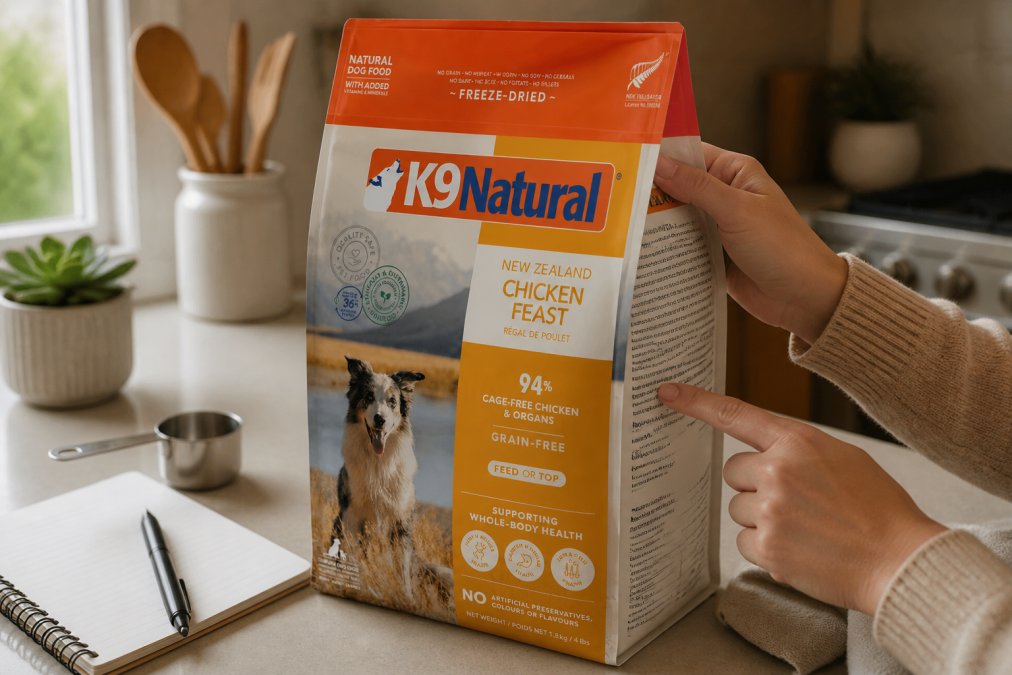
Understanding the Guaranteed Analysis
The guaranteed analysis provides minimum crude protein (typically 18-26% for adult dogs), minimum crude fat (usually 8-15%), maximum crude fiber (typically 4-6%), and maximum moisture content (aafco.org). These percentages represent what's in the food, though they don't tell the complete story about digestibility or bioavailability.
Protein quality matters as much as protein percentage. Meat-based proteins have higher bioavailability than plant-based sources, meaning your dog absorbs and uses them more efficiently. A food with 22% protein from chicken is nutritionally different from one with 22% protein from corn meal, even though the numbers match.
Fat content supports skin and coat health, hormone production, and nutrient absorption. Essential fatty acids like omega-3 and omega-6 are particularly important for immune function and reducing inflammation. Many high-quality formulations specifically list these fatty acids rather than just total fat percentage.
Decoding Marketing Buzzwords
"Natural," "premium," and "holistic" are marketing terms without legal definitions. They don't appear on the guaranteed analysis and don't tell you anything concrete about nutritional content. Focus instead on what the label actually states: ingredient list, guaranteed analysis, and AAFCO (Association of American Feed Control Officials) certification.
"Grain-free" doesn't mean better. It's a marketing category, not a nutritional advantage. Some dogs thrive on grain-inclusive formulas with oats, barley, or brown rice. Others do better grain-free. The key is how your individual dog responds, not the marketing claim.
"Human-grade" or "restaurant-quality" ingredients sound appealing but are unregulated terms. What matters is whether the food meets AAFCO standards for complete and balanced nutrition and whether it's been through feeding trials to verify it delivers what the label promises.
Identify High-Quality Ingredients
The ingredient list appears in descending order by weight, so the first few ingredients dominate the formula. Look for named meat sources (chicken, beef, fish) rather than vague terms like "meat meal" or "animal by-products." Named proteins tell you exactly what protein source your dog is eating.
High-quality foods typically list a meat or fish as the first ingredient, followed by recognizable whole foods like sweet potato, peas, or vegetables. By-products are protein sources but offer lower bioavailability than whole meat. They're not harmful, but they indicate a lower-quality formulation compared to foods using whole proteins.
The ingredient list also reveals whether the food uses artificial preservatives. Natural preservatives like mixed tocopherols (vitamin E) and rosemary extract preserve food without synthetic chemicals. If you see BHA, BHT, or ethoxyquin, the food relies on artificial preservatives, something many owners prefer to avoid.
Look for balanced nutrient profiles that include essential amino acids and fatty acids. The best formulations aren't just high in protein; they're formulated to ensure your dog absorbs and utilizes that protein efficiently. This is where veterinary nutritionist involvement in product development matters.
Avoid Artificial Additives and Fillers
Artificial preservatives, colors, and flavors serve no nutritional purpose and many owners choose to avoid them. Natural alternatives like vitamin E, rosemary extract, and mixed tocopherols preserve food just as effectively without synthetic chemicals. Reading the ingredient list lets you spot artificial additives immediately.
Excessive fillers, cheap carbohydrate sources used primarily to bulk up the formula, dilute nutritional value. While some carbohydrates are fine and necessary for kibble structure, foods relying heavily on corn, wheat, or soy as primary ingredients typically offer lower nutritional density than meat-based formulations.
Artificial flavors and colors exist to make food appealing to owners, not dogs. Dogs don't care about the color of their kibble. If a food relies on artificial coloring or synthetic flavoring, it's often a sign that the base ingredients aren't palatable enough to stand on their own. High-quality formulations don't need artificial enhancement.
Some ingredients marketed as "fillers" actually serve legitimate purposes. Brown rice, oats, and sweet potatoes provide fiber, B vitamins, and sustained energy. The issue isn't the presence of plant-based ingredients; it's when they dominate the formula at the expense of meat-based protein.
Recognize Signs of Food Allergies in Dogs
Food allergies manifest differently than environmental allergies. Chronic itching, especially around the ears, paws, and face, is the most common sign. Some dogs develop skin infections secondary to constant scratching. Others experience digestive issues like diarrhea, vomiting, or loose stools.

Stool quality is an underrated indicator of dietary appropriateness. Firm, well-formed stools suggest good digestibility and nutrient absorption. Loose stools or diarrhea lasting more than a few days after food introduction signals either intolerance or allergic reaction. Some dogs also experience ear infections or yeast overgrowth as an allergic response.
The challenge with food allergies is that symptoms often take weeks or months to develop after introducing a new food. This delayed response confuses owners who expect immediate reactions. It's why transitioning slowly to a new food, over 7-10 days, helps you identify which ingredient might be problematic.
Common allergens include beef, chicken, dairy, wheat, and soy. However, any ingredient can trigger an allergic response in a sensitive dog. An elimination diet under veterinary guidance is the gold standard for identifying the culprit. This involves feeding a limited ingredient diet with novel proteins your dog hasn't eaten before, then reintroducing ingredients one at a time to pinpoint the trigger.
Dog Food Transition Guide for Safe Switching
Switching dog food abruptly causes digestive upset in most dogs. The gut microbiome needs time to adjust to new ingredients and nutrient profiles. A gradual transition over 7-10 days minimizes gastrointestinal distress and helps you identify if the new food is causing problems.
| Transition Day | Old Food | New Food | Watch For |
|---|---|---|---|
| Days 1-2 | 75% | 25% | Normal digestion |
| Days 3-4 | 50% | 50% | Stool consistency |
| Days 5-6 | 25% | 75% | Appetite and energy |
| Days 7-10 | 0% | 100% | Any adverse reactions |
Start by mixing 25% new food with 75% old food for the first two days. This small introduction lets the digestive system begin adjusting without shock. Over the following week, gradually increase the new food percentage while decreasing the old food.
Some dogs need a slower transition, especially those with sensitive stomachs or a history of digestive issues. Extending the transition to 14 days is perfectly reasonable and often prevents problems. The goal is a smooth adjustment, not speed.
Watch stool quality throughout the transition. Firm stools indicate good tolerance. Loose stools or diarrhea might signal the new food isn't right for your dog, or it might just mean you need to transition more slowly. Give it a few more days at the current ratio before assuming the food is problematic.
If your dog refuses to eat the transition mixture, try feeding the old and new food separately rather than mixing them. Some dogs are picky about mixed textures or flavors. Separate meals still allow gradual adjustment while respecting your dog's preferences.
Assess Your Dog's Body Condition and Adjust
Body condition scoring is how veterinarians and nutritionists evaluate whether a dog is at a healthy weight. A dog at ideal body condition has ribs you can feel with gentle pressure but not see prominently, a visible waist when viewed from above, and an abdominal tuck when viewed from the side.
Overweight dogs need caloric adjustment, not necessarily a different food. Many owners overfeed even high-quality foods. Portion sizes on dog food bags are often guidelines, not prescriptions. Your individual dog's needs depend on age, activity level, metabolism, and current weight.
Underweight dogs might need higher caloric density, more frequent meals, or a food with higher fat content. Some dogs simply don't absorb nutrients efficiently and benefit from more digestible formulations or smaller, more frequent meals.
Regular weight checks, monthly or quarterly, help you track whether your current food and portions are working. If your dog is gaining weight steadily, reduce portions by 10-15%. If losing weight, increase portions gradually or switch to a higher-calorie formulation. Small adjustments are better than dramatic changes.
Body condition isn't just about appearance; it affects health outcomes. Overweight dogs face higher risks of joint problems, diabetes, and shortened lifespan. Maintaining ideal body condition through appropriate feeding extends quality years with your dog.
When to Consult a Veterinary Nutritionist
A veterinary nutritionist has specialized training in animal nutrition and can formulate diets for specific health conditions. They're different from your general veterinarian, though your vet can refer you to one. Nutritionists are particularly valuable if your dog has chronic health issues, food allergies, or isn't thriving on commercial formulas.
Conditions that warrant nutritionist consultation include chronic diarrhea, food allergies, kidney disease, diabetes, obesity, and poor coat quality despite good commercial food. Nutritionists can also evaluate whether your dog's current diet is truly balanced or if supplementation is needed.
Some dogs benefit from customized or home-cooked diets formulated by a nutritionist to ensure complete and balanced nutrition. This is especially true for dogs with multiple health issues or those whose owners want maximum control over ingredients. A nutritionist ensures these diets meet all nutritional requirements rather than relying on guesswork.
According to veterinary nutrition resources from the American Veterinary Medical Association, working with a board-certified veterinary nutritionist ensures your dog's diet is formulated correctly for their specific situation. This is particularly important for therapeutic diets addressing medical conditions.
When choosing a new food, consider consulting a veterinary nutritionist if you're unsure whether a formula meets your dog's needs. They can evaluate the guaranteed analysis, ingredient quality, and feeding trials to confirm the food is appropriate. This investment prevents costly health issues down the road.
Picking the right dog food comes down to understanding your individual dog's needs and reading labels accurately. Start with your dog's life stage, assess ingredient quality, and watch how your dog responds. When in doubt, consult your veterinarian or a veterinary nutritionist to ensure you're making the best choice for your dog's health.
At Shake Wag & Roll, we understand that choosing the right nutrition is personal to each dog. Our carefully selected premium formulations, including options like K9 Natural Freeze Dried Chicken Dog Food and Dr. Marty Nature's Blend for healthy digestion, are chosen specifically for dogs with discerning owners who prioritize quality ingredients and nutritional adequacy. Whether your dog needs limited ingredient options for food sensitivities or high-quality proteins for optimal health, our community of dog lovers is here to help you find what works best for your furry companion.

Frequently Asked Questions
Q: What is the AAFCO statement and why does it matter on dog food labels?
A: The AAFCO (Association of American Feed Control Officials) statement confirms that a dog food meets minimum nutritional standards for your dog's life stage. Look for text like 'complete and balanced diet for adult dogs' on the label. This statement matters because it ensures the food provides essential amino acids, fatty acids, and other nutrients your dog needs to thrive. Without this statement, the food may lack nutritional adequacy.
Q: How do I know if dog food is high quality by reading the ingredient list?
A: High-quality dog food lists meat as the first ingredient, not by-products or fillers. Look for named protein sources like chicken, beef, or fish rather than generic 'meat meal.' Avoid foods with artificial preservatives, corn, wheat, or soy as primary ingredients. Check the guaranteed analysis for protein content (18-25% for adults) and fat (10-15%). Premium options like K9 Natural Freeze Dried Chicken prioritize meat-based protein with zero fillers or artificial additives.
Q: Should I choose grain-free or grain-inclusive dog food?
A: Both can be nutritionally adequate if formulated properly. Grain-inclusive foods with whole grains provide fiber and digestibility. Grain-free options use peas, potatoes, or legumes instead. The choice depends on your dog's digestibility and any food allergies. If your dog has no grain sensitivity, grain-inclusive foods are often more affordable. Consult your vet if your dog has a history of allergies before switching to grain-free formulas.
Q: How do I transition my dog to a new food safely?
A: Transition over 7-10 days by gradually mixing increasing amounts of new food with the old food. Start with 25% new food and 75% old food for days 1-2, then 50/50 for days 3-4, then 75% new and 25% old for days 5-6. By day 7-10, feed 100% new food. This slow transition prevents digestive upset and diarrhea. Monitor stool quality during the switch and slow the transition if your dog shows signs of digestive distress.
Q: What are the most important ingredients to look for in dog food?
A: Prioritize named meat proteins (chicken, beef, fish), essential fatty acids (omega-3 and omega-6), and balanced carbohydrates or vegetables. Avoid by-products, meal by-products, artificial preservatives, and excessive fillers. Look for the guaranteed analysis showing adequate protein (18%+ for adults), fat (10%+), and fiber. Products like Dr. Marty's freeze-dried formulas and Taste of the Wild emphasize meat-based protein with real vegetables for a balanced nutrient profile.
Q: How can I tell if my dog is getting the right amount of food?
A: Monitor your dog's body condition score by checking if you can feel ribs without pressing hard and seeing a visible waist from above. Adjust portions based on activity level, age, and metabolism. Most dog foods include feeding guidelines on the bag based on weight, but these are starting points. If your dog gains or loses weight, adjust portions accordingly. Consult your vet if you're unsure about proper portions for your dog's age and size.
This article was written using GrandRanker