

Why Dogs Destroy Expensive Toys: Causes & Solutions

Table of Contents
- Why Dogs Destroy Expensive Toys: The Root Causes
- How to Stop Dog from Destroying Toys: Practical Strategies
- Durable Toys for Aggressive Chewers: Materials That Last
- Dog Toy Safety Guide: Preventing Hazards and Ingestion Risks
- Interactive vs. Solo Play: Matching Toys to Your Dog's Needs
- When to Seek Veterinary Intervention
- Frequently Asked Questions
Last Updated: September 1, 2026
Why Dogs Destroy Expensive Toys: The Root Causes
Dogs destroy toys because of natural instincts, developmental stages, and emotional needs. Understanding why your dog tears through expensive toys helps you address the behavior at its source rather than just replacing toys repeatedly.

Natural hunting instincts and prey drive
Your dog's drive to destroy toys traces directly to their predatory ancestry. Dogs descended from wolves, and that prey drive remains encoded in their DNA. When a toy squeaks, moves unpredictably, or has stuffing that can be torn out, it triggers the same hunting sequence your dog's ancestors used to survive.
This instinct is strongest in certain breeds. Terriers, retrievers, and herding dogs were selectively bred to chase, grab, and shake prey. A toy that mimics prey behavior activates this hardwired response. The intensity of this drive varies dramatically between individual dogs. A high-prey-drive dog needs outlets for this instinct, or they'll direct it at whatever toys are available.
Boredom and lack of mental stimulation
Many destructive chewing episodes happen when dogs lack adequate mental engagement. A bored dog doesn't have enough to occupy their mind, so they create their own entertainment by destroying toys. A 30-minute walk provides physical exercise but often leaves the mind understimulated.
This is especially common in intelligent breeds like Border Collies, Poodles, and German Shepherds. These dogs were bred to work and solve problems. Without adequate mental stimulation, they become frustrated and destructive.
Teething and puppy development
Puppies destroy toys for a completely different reason than adult dogs. Between three and six months of age, puppies go through teething. Their gums itch intensely as baby teeth fall out and permanent teeth push through. Chewing provides relief.
During this phase, almost any toy will be destroyed. Puppies aren't being destructive intentionally, they're managing physical discomfort. Teething typically peaks between four and seven months, then gradually subsides by nine months (avma.org). Puppies need appropriate outlets for their chewing drive like soft toys, rubber toys, and rope toys.
Separation anxiety and stress
Some dogs destroy toys specifically when their owners leave. This destruction pattern signals anxiety rather than boredom or prey drive. Dogs with separation anxiety often show other signs: pacing before you leave, destructive behavior focused on entry points, excessive vocalization, or elimination in the house.
Stress-driven destruction looks different from other types. The dog may focus on one specific toy repeatedly, or they may destroy toys only during certain times like when you leave for work.
How to Stop Dog from Destroying Toys: Practical Strategies
Stopping toy destruction requires matching your intervention to the underlying cause. A strategy that works for a bored dog won't help a dog with separation anxiety. A solution for a high-prey-drive dog differs from what a teething puppy needs.
Redirecting destructive behavior with supervised play
Redirection works by channeling your dog's natural drives into appropriate outlets. Instead of eliminating the urge to destroy, you give that urge a constructive target. This approach works best for dogs with high prey drive or those seeking mental stimulation.
Supervised play sessions let you control which toys your dog destroys and which they don't. Bring out a durable toy designed for aggressive chewing, engage your dog in interactive play, and let them satisfy their destructive urges on that specific toy. When they lose interest, put it away. The key word here is "supervised." You're present during the play session, watching for signs of overstimulation or frustration.

Toy rotation and enrichment techniques
Rotating toys prevents boredom by creating novelty without requiring new purchases. Keep most toys stored away and bring out a small selection for a few days, then rotate in different toys. This rotation strategy works because dogs find novelty inherently stimulating.
Enrichment goes beyond simple rotation. Puzzle toys that require problem-solving provide mental stimulation that prevents boredom-driven destruction. Toys that dispense treats as your dog manipulates them keep them engaged. Snuffle mats where you hide treats in fabric strips encourage natural foraging behavior.
The best enrichment combines different types of stimulation. One day might feature a puzzle toy, another day a treat-dispensing toy, and a third day interactive play with you. This variety keeps your dog's mind engaged and reduces destructive behavior.
Durable Toys for Aggressive Chewers: Materials That Last
Not all toys are created equal. A toy designed for gentle chewers won't survive an aggressive chewer. Understanding which materials withstand intense chewing helps you invest in toys that actually last.
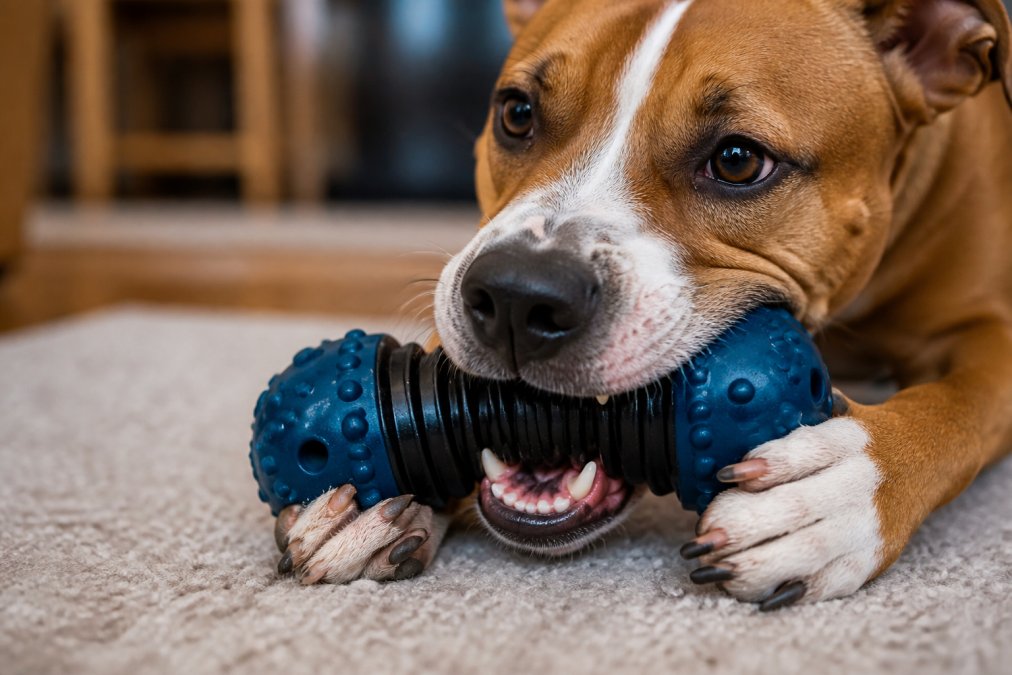
Choosing chew-resistant materials
Natural rubber is one of the most durable materials for dog toys. It's flexible enough to absorb impact from powerful jaws but tough enough to resist puncture. Nylon is another highly durable option, though quality matters significantly. High-quality nylon toys can last months with aggressive chewers, while lower-quality nylon breaks down faster and can leave small pieces that dogs ingest.
Rope toys are often recommended, but they require supervision. While rope is durable, dogs can ingest rope fibers, which creates serious health risks.
Avoid toys with small parts, squeakers that can be easily extracted, or stuffing that can be torn out. These features appeal to dogs, but they create serious ingestion risks.
Shake Wag & Roll's Dog Toys for Aggressive Chewers combine durable nylon and rubber construction specifically designed to withstand intense chewing. These toys are engineered for dogs that destroy standard toys within days.
Breed-specific chewing profiles
Large breed dogs with powerful jaws need toys engineered differently than small breed dogs. Matching toy durability to your dog's size and bite force prevents constant replacement.
Terrier breeds grab, shake, and tear. Toys for terriers need to resist this shaking motion. Solid rubber toys and heavy nylon toys withstand the terrier chewing style better than rope toys.
Retrievers tend to carry toys in their mouths for extended periods. They're less likely to destroy toys through aggressive shaking and more likely to puncture them through sustained pressure. Retrievers need toys with thick walls that can handle constant pressure without puncturing.
Herding breeds like Border Collies and Australian Shepherds often have high prey drive combined with intelligence. They want toys that provide mental challenge. Puzzle toys and treat-dispensing toys appeal to herding breeds more than simple chew toys.

Dog Toy Safety Guide: Preventing Hazards and Ingestion Risks
A toy that survives aggressive chewing isn't automatically safe. Safety encompasses durability, material toxicity, and the absence of choking hazards.
Material safety and toxicity concerns
Natural rubber is generally safe. If pieces break off, they typically pass through the digestive system without issue. Nylon is also relatively safe, though large pieces can create blockages.
Avoid toys made with phthalates, BPA, or other chemicals known to be toxic (the FDA). Some cheaper toys use these materials as softeners or plasticizers. Purchasing toys from reputable manufacturers who test for heavy metals reduces this risk significantly.
Toys filled with foam, stuffing, or plastic pellets create ingestion risks. A dog that destroys the toy's outer layer can access the filling, which often causes gastrointestinal blockages. Toys with removable parts or thin outer layers that tear easily should be avoided.
Signs a toy has become a choking hazard
Small pieces or chunks breaking off indicate the toy is deteriorating. Once a toy starts shedding pieces, it should be removed immediately. Tears or punctures in the toy's outer layer expose internal materials that pose ingestion risks.
Toys that have become thin or worn through from chewing are approaching failure. Toys with loose or exposed squeakers, bells, or other small parts should be removed immediately.
When to replace damaged toys
The safest approach is to replace toys as soon as they show significant wear. For toys your dog destroys quickly, plan for regular replacement and focus on choosing toys made from safe materials.
Toys that have been in use for several months should be inspected carefully. Keep a mental inventory of your dog's toys and their condition. When you notice a toy is deteriorating, remove it before it becomes a hazard.
Interactive vs. Solo Play: Matching Toys to Your Dog's Needs
Different toys serve different purposes. Interactive toys require your participation like rope toys, balls you throw, and tug toys. Solo play toys are designed for your dog to use independently like chew toys, puzzle toys, and treat-dispensing toys.
The mistake many owners make is relying solely on solo play toys to prevent destruction. The ideal approach combines both types. Interactive play sessions provide bonding and mental stimulation. Solo play toys keep your dog occupied during times when you're unavailable.
For dogs with separation anxiety, solo play toys alone won't solve the problem. These dogs need anxiety management strategies in addition to toys. Consider your dog's personality when choosing between interactive and solo toys. Some dogs are highly social and crave interaction with you. Others are more independent and prefer solo play.
When to Seek Veterinary Intervention
Most toy destruction is behavioral and doesn't require veterinary attention. However, certain situations warrant professional help.
If your dog has ingested toy material, contact your veterinarian immediately. Symptoms of ingestion include vomiting, loss of appetite, lethargy, or constipation (peer-reviewed research). Gastrointestinal blockages are serious and often require surgery.
Severe separation anxiety that manifests as destructive behavior may require veterinary behavioral support. Your veterinarian can rule out medical causes and may recommend medications to help manage anxiety while you work on behavioral modification.
If your dog shows signs of obsessive chewing that seems compulsive rather than normal, consult your veterinarian. Excessive destructiveness in adult dogs that develops suddenly may indicate pain or illness. Puppies with extreme destructiveness during teething that seems abnormal should be evaluated.
Dogs destroy expensive toys because of natural instincts, developmental stages, boredom, and stress. Understanding the root cause of your dog's destructive behavior helps you address it effectively. At Shake Wag & Roll, we believe the solution isn't just replacing toys repeatedly, it's choosing toys engineered to withstand your dog's chewing style while remaining safe. Our Dog Chew Toys for Aggressive Chewers combine durable nylon and rubber construction with safety-tested materials, giving your dog a toy that satisfies their natural urges without creating health risks. Pair durable toys with supervised play, toy rotation, and appropriate enrichment to transform toy destruction from a frustration into a manageable part of your dog's healthy development.
Frequently Asked Questions
Q: Is it normal for my dog to destroy every toy I buy?
A: Yes, destructive chewing is normal canine behavior, especially for puppies, anxious dogs, and certain breeds with high prey drive. However, the intensity and frequency matter. If your dog destroys toys within minutes and shows signs of stress or boredom, it signals unmet mental or physical stimulation needs. Aggressive chewers benefit from durable toys for aggressive chewers specifically designed to withstand intense chewing without breaking apart into choking hazards. Rotate toys regularly and supervise play sessions to redirect destructive behavior toward appropriate outlets.
Q: How can I tell if my dog is destroying toys out of anxiety or boredom?
A: Anxiety-driven destruction typically occurs when your dog is alone, accompanied by pacing, whining, or excessive drooling. Boredom-related chewing happens during the day and your dog may abandon the toy once satisfied. Separation anxiety often involves targeting specific items like toys near doorways. To address anxiety, increase physical exercise before leaving, use interactive toys that provide mental stimulation, and consider crate training as a safe space. For boredom, rotate toys weekly and introduce puzzle toys that require problem-solving. If destructive behavior persists despite these changes, consult your veterinarian to rule out underlying stress or medical issues.
Q: What materials are safest for aggressive chewers?
A: The safest materials for aggressive chewers are heavy-duty rubber, reinforced nylon, and natural rubber compounds that resist tearing and don't splinter. Avoid toys made from soft plastic, thin rubber, or materials that easily break into small pieces, as these pose gastrointestinal blockage risks if ingested. Look for toys labeled as chew-resistant or indestructible and check for certifications indicating non-toxic materials. Shake Wag & Roll offers dog toys for aggressive chewers designed with industrial-strength rubber specifically lab-tested for durability. Always inspect toys regularly for damage and remove them immediately if pieces begin to separate, regardless of material quality.
Q: How do I know when a toy has become a choking hazard?
A: Replace a toy immediately if you notice loose pieces, tears, cracks, or chunks missing from the surface. Any toy with exposed stuffing, squeakers, or small detachable parts poses ingestion risks. Signs of wear include flattening, discoloration, or soft spots where material has degraded. For toys with bells or plastic eyes, ensure these are securely attached and cannot be chewed free. If your dog has a history of swallowing foreign objects, supervise all play with toys and consider removing toys after 15-20 minutes of use. When in doubt, throw it out, the cost of replacing a toy is far less than treating a gastrointestinal blockage, which can require emergency veterinary surgery.
This article was written using GrandRanker