

Choosing Safe Toys for Dogs: A 2026 Safety Guide

Table of Contents
- How to Match Safe Toys for Dogs to Size and Chew Style
- Durable Dog Toys for Aggressive Chewers: What Holds Up
- Dog Toy Safety Hazards to Avoid Before You Buy
- How to Clean Dog Toys Safely (and How Often)
- Supervised vs. Unsupervised Play: Setting the Rules
- Puppy vs. Senior Dogs: Age-Specific Toy Safety
- Toy Rotation, Recycling, and Eco-Friendly Disposal
- Conclusion
- Frequently Asked Questions
Last Updated: September 14, 2026
How to Match Safe Toys for Dogs to Size and Chew Style
Choosing safe toys for dogs starts with two questions: how big is your dog, and how hard does it bite? A toy that survives a Chihuahua's gentle gnawing can become a choking hazard in the jaws of a determined Labrador. This guide from Shake Wag & Roll walks through sizing, materials, cleaning, and supervision so you can buy with confidence instead of guesswork.
Toy Sizing by Breed and Weight
A toy should be small enough to carry but too large to swallow whole. As a working rule, pick toys wider than your dog's muzzle so they cannot be taken fully into the mouth, and skip anything that fits entirely behind the teeth.
- Under 10 kg (small breeds): toys roughly 5-8 cm across
- 10-25 kg (medium breeds): toys roughly 8-12 cm across
- Over 25 kg (large breeds): toys 12 cm and up, built for heavy jaws
Spotting an Aggressive Chewer
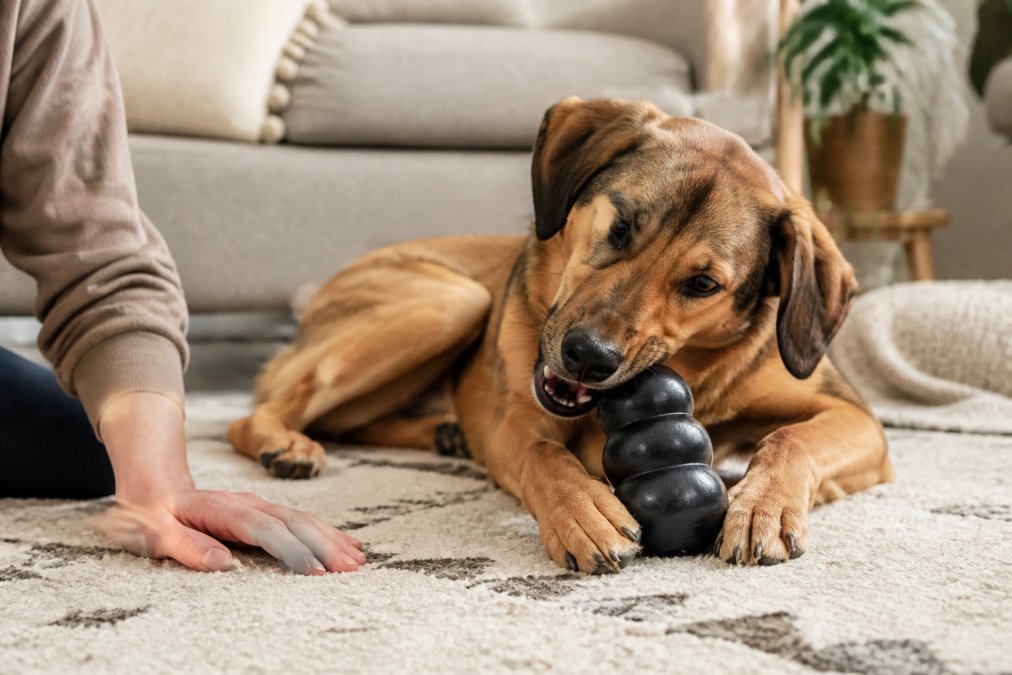
An aggressive chewer doesn't just nibble; it commits. Telltale signs include frayed rope ends within a day, deep tooth marks in rubber, and toys that come apart at the seams rather than wearing down gradually. If your dog falls into this category, choose durable dog toys for aggressive chewers made from solid natural rubber or reinforced nylon rather than plush or thin vinyl.

Durable Dog Toys for Aggressive Chewers: What Holds Up
Natural rubber and reinforced nylon outlast everything else for heavy chewers. These materials flex under pressure instead of cracking, which is exactly what you want when a powerful jaw is working on them.
Shake Wag & Roll's natural rubber horseshoe-shaped chew toy is built for exactly this job, and it's non-toxic and tested for durability. For dental-focused chewing, the toothbrush stick chew toy has bristle grooves you can fill with dog toothpaste, so chewing doubles as teeth cleaning.

| Material | Durability | Best For | Watch Out For |
|---|---|---|---|
| Natural rubber | High | Aggressive chewers | Wears down over months |
| Reinforced nylon | High | Power chewers | Too hard for sensitive teeth |
| Cotton rope | Medium | Tug and fetch | Rope fibers if swallowed |
| Plush | Low | Gentle seniors | Detachable parts |
| TPR | Medium-high | Teething puppies | Replace once grooved |
Dog Toy Safety Hazards to Avoid Before You Buy
The biggest dog toy safety hazards are splintering plastic, detachable parts, and materials that block the gut when swallowed. But there's a fourth hazard most guides skip entirely: the chemicals in the material itself. "Non-toxic" is not a regulated term in the pet toy industry, so it can mean almost anything. Here's how to read past the marketing and evaluate what's actually in the toy.
What "Non-Toxic" Actually Means (and Doesn't)
Unlike children's toys, pet toys are not required to meet federal toy-safety chemical standards (Toy Safety Business Guidance). There is no mandatory pre-market testing for pet toys the way there is for kids' products. That means "non-toxic," "pet-safe," and "vet-approved" are marketing claims, not certifications, unless the label names a specific standard the product was tested against.
What to look for instead:
- BPA-free and phthalate-free labels: These matter most for soft vinyl and plastic toys. BPA and phthalates are plasticizers that can leach, especially when a dog chews and the material warms and flexes. A toy that says "BPA-free" but not "phthalate-free" is only half the story.
- Food-grade or medical-grade silicone: A meaningful, verifiable claim. Food-grade silicone is held to a known standard, so it's a stronger signal than "non-toxic."
- Natural rubber vs. synthetic rubber: Natural rubber is tapped from trees; synthetic rubber is petroleum-based. Both can be safe, but natural rubber avoids the petrochemical base and is more likely to be free of the plasticizers used in cheap vinyl.
- Named testing: If a brand says the toy was tested by a third-party lab for heavy metals or phthalates, that's specific and checkable. "Lab-tested" with no lab named is not.
A common pattern is that the cheapest vinyl and plush toys are the most likely to carry vague safety language. Paying for a named material (natural rubber, food-grade silicone, reinforced nylon) can be a worthwhile investment.
Materials That Crack, Splinter, or Block
Hard plastic bones and dried rawhide can splinter into sharp shards or soften into a single mass that causes gastrointestinal blockage. Rawhide is a common culprit because dogs swallow large pieces as it softens. Nylon bones are safer when sized correctly, but worn-down nylon should be retired immediately, once the surface is grooved, it can shed fragments.
Detachable Parts and Choking Risks
Squeakers, glued-on eyes, bells, and loose stitching are the most common choking hazards in dog toys. Any toy that rattles should be squeezed first to confirm the squeaker sits behind reinforced stitching. If a piece comes off during play, throw the whole toy away rather than sewing it back on.
A Pre-Purchase Safety Checklist
Run every new toy through these checks before it reaches your dog:
- Squeeze the toy, does any part shift, rattle, or feel loose?
- Tug the seams, eyes, and squeaker housing, do they hold?
- Press a thumbnail into the material, does it dent easily (too soft for a power chewer)?
- Check the label for a named material or a named testing standard, not just "non-toxic"
- Confirm the toy is wider than your dog's muzzle so it can't be swallowed whole
- Sniff it, a strong chemical or plastic smell can indicate off-gassing from cheap vinyl
How to Clean Dog Toys Safely (and How Often)
Learning how to clean dog toys safely comes down to material, water temperature, and drying time. The goal is twofold: remove the saliva, food residue, and biofilm that feed bacteria, and avoid methods that degrade the toy into a hazard. A toy that's clean but cracked is still a choking risk, so cleaning and inspection happen together.
Material-by-Material Cleaning Methods
- Solid natural rubber: Wash in warm water (about 100-110°F) with a pet-safe dish soap, scrub the grooves with a bottle brush, rinse until no suds remain, and air-dry fully. Rubber is porous enough to hold odor, so a 10-minute soak in a 1:1 white vinegar and water solution every few weeks resets it. Avoid the dishwasher's heated dry cycle, which can warp or harden rubber over time.
- Reinforced nylon: Warm soapy water and a stiff brush. Nylon is non-porous, so it dries fast and resists odor. Skip abrasive scrubbers, which rough up the surface and create places for bacteria to settle.
- TPR (thermoplastic rubber): Same as rubber, but check for grooving after each wash. Once chew marks become deep grooves, the toy traps debris and should be retired.
- Cotton rope: Rope is the hardest to keep sanitary because fibers hold moisture. Soak in hot water with pet-safe soap, agitate to work suds between strands, rinse thoroughly, then dry completely, a wet rope grows mildew within a day. Some rope toys are dishwasher-safe on the top rack; check the tag. Replace rope once it smells sour or strands separate, since both signal internal decay.
- Plush: Machine-wash on gentle with a pet-safe detergent, then dry on low until completely dry. Stuffing that stays damp grows mold inside the toy, which is why a fully dry cycle matters more than the wash itself.
- Treat-dispensing toys: Rinse after every single use. Kibble and peanut butter residue left in a hollow toy is a bacterial incubator, and the interior is the hardest part to reach. A bottle brush or a soak in warm soapy water handles most designs.
How Often to Wash
- Rubber, nylon, and TPR: weekly, or after any outdoor play in dirt or water
- Rope: every two weeks; replace if it smells sour or feels stiff
- Plush: weekly; discard once stuffing escapes a seam
- Treat-dispensing toys: rinse after every use, deep-clean weekly
Disinfecting Without Damaging the Toy
For toys that have been in contact with a sick dog or shared between dogs, a diluted bleach solution (about 1 tablespoon of household bleach per gallon of water) can disinfect hard rubber and nylon, but only if you rinse thoroughly and let the toy dry completely before it goes back to the dog (the CDC). Never bleach rope or plush; the fibers hold residue you can't rinse out. A safer everyday disinfectant is white vinegar, which handles odor and most surface bacteria without the residue risk.
Cleaning Is Also Inspection
Every wash is a free inspection pass. While the toy is wet, look for cracks, separated seams, exposed stuffing, and loosened squeakers. Retire anything that fails before it goes back into rotation, a wet toy hides damage that's obvious once it dries.
Supervised vs. Unsupervised Play: Setting the Rules
Supervised play means you're watching and can intervene within seconds; unsupervised play means the toy stays with your dog when you leave the room. The rule is simple: new toys, rope toys, and anything with a treat inside are supervised-only. Only proven, one-piece rubber toys should be left with a dog alone.
Keep unsupervised sessions short and remove the toy when you return. Boredom drives destructive chewing, so rotating what's available keeps toys interesting and reduces the urge to shred.
Puppy vs. Senior Dogs: Age-Specific Toy Safety
Puppies need soft, flexible toys for teething that soothe sore gums without damaging baby teeth, while seniors need low-impact toys that are easy to grip and gentle on aging joints. A toy that's perfect for a teething puppy can be too hard for an older dog's worn enamel, and a senior's soft toy won't survive a young dog's jaws.
For puppies, Shake Wag & Roll's 4-pack teething chew toy set offers four shapes for 2-8 month olds, with bumpy textures that clean teeth and food-dispensing designs that add mental stimulation. Interactive puzzle toys are especially valuable for puppies and seniors alike, since they burn energy without stressing growing or aging bodies.

Toy Rotation, Recycling, and Eco-Friendly Disposal
Rotating toys every few days keeps them novel, which reduces boredom and destructive chewing, and it also lets you inspect each toy for wear and tear before it goes back into circulation. Rotation is one of the simplest ways to extend toy life and catch damage early.
- Check for cracks, tears, or separated seams
- Confirm squeakers and parts are still secure
- Retire any toy with exposed stuffing or frayed rope
- Wash before returning to the rotation
When a toy reaches the end of its life, don't just bin it. Many natural rubber and cotton toys can be recycled through pet-product take-back programs, and worn cotton rope can be composted if it's untreated. For everything else, check whether your local recycling facility accepts mixed rubber before disposal. Eco-friendly disposal keeps synthetic fibers and rubber out of landfills and is a small habit that adds up over years of toy replacement.
Conclusion
Every dog owner eventually faces the same problem: a toy that looked tough in the store, shredded by dinner. Getting the size, material, and supervision right helps, and a rotation habit can catch damage early. Shake Wag & Roll stocks durable, high-quality toys built for real chewers, from natural rubber chew toys to teething sets and dental sticks, plus expert canine care tips to help you choose well. Sign up with Shake Wag & Roll and discover toys that can stand up to play.
Frequently Asked Questions
What are the safest materials for dog toys?
Natural rubber and food-grade TPR are top choices for safe toys for dogs because they flex instead of shattering, so they resist splintering and hold up to heavy chewing. Reinforced cotton rope works for tug games if you watch for loose fibers. Avoid rawhide, cooked bones, and thin plastic, which can crack into sharp pieces or cause a gastrointestinal blockage. Look for non-toxic materials and a label that states the toy was tested for pet safety.
How can I tell if a dog toy is the right size for my pet?
A toy should be too large to fit fully inside your dog's mouth and throat. If it disappears behind the teeth or your dog has to work hard to grip it, it is a choking hazard. Match the toy to your dog's weight and jaw strength, not just breed. For powerful chewers, size up. A toy that is size-appropriate for a 60-pound dog is usually unsafe for a 15-pound dog, and the reverse wastes money.
What types of toys should be avoided for dogs?
Skip toys with detachable parts like squeakers, glued-on eyes, or small bells that can be swallowed. Avoid rawhide and cooked bones, which can splinter or cause an obstruction. Thin latex squeakers and cheap plush toys with synthetic fibers are also risky for dogs who shred. Any toy showing cracks, tears, or exposed stuffing should be removed immediately, not repaired, because wear and tear creates ingestion risk.
How often should I inspect my dog's toys for damage?
Check every toy before each play session and do a deeper inspection weekly. Run your fingers along seams, knots, and edges for tears, exposed stuffing, or loose rope fibers. Aggressive chewers can destroy a toy in minutes, so inspect those daily. If you see a crack, a hole, or a missing piece, throw the toy away. A damaged toy is a choking hazard, and a swallowed fragment can lead to an obstruction that requires veterinary care.
Are there specific toy safety standards for pet products?
The United States does not have a single mandatory federal standard for dog toys the way it does for children's products. Some manufacturers follow voluntary guidelines and test for non-toxic materials, but enforcement is limited. That means you have to check labels yourself. Look for toys marked non-toxic, food-grade, or veterinary-approved, and buy from brands that publish material details. When in doubt, choose natural rubber over mystery plastic.
What is the 7 7 7 rule for dogs?
The 7 7 7 rule is a common guideline for the first three weeks after adoption: 7 days to decompress, 7 days to settle into a routine, and 7 days to start bonding and building trust. It is not a toy safety rule, but it helps explain why a new dog may ignore toys at first. During that adjustment period, offer a few safe toys for dogs and let your new pet explore at its own pace without forcing play.
How do I clean dog toys safely?
Most rubber and TPR toys can be washed in warm water with a pet-safe dish soap, rinsed well, and air-dried. Rope toys can go in a mesh laundry bag on a gentle cycle, but skip the dryer because heat can shrink or weaken the fibers. Plush toys without squeakers can be machine washed on cold and air-dried. Clean chew toys weekly, and immediately after a sick dog uses them, to reduce bacteria and keep playtime safe.