

PupJoy Alternative for Organic Treats: 5 Best Picks

Table of Contents
- Why Dog Owners Are Moving Away From Subscription Treat Boxes
- Quick Comparison: Five Organic Dog Treats Worth Switching To
- How to Read Dog Treat Labels Before You Buy
- Best Limited Ingredient Dog Treats for Allergies and Sensitive Stomachs
-
Five Organic Dog Treats That Beat the Subscription Model
- Cookie Pal Pumpkin Chia Bites: Best for Bulk Buyers and Digestive Health
- Bonne et Filou Dog Macarons: Best for Picky Eaters and Special Occasions
- Portland Pet Food Company Pumpkin Biscuits: Best for Small-Batch American Sourcing
- Bubba Rose Donuts: Best Budget Entry Point for Healthy Snacking
- Hoggin' Dogs Prime Rib Ice Cream Mix: Best for Heavy Chewers and Hot Days
- Subscription Box vs. One-Time Purchase: The Real Cost Comparison
- How to Choose High-Quality Organic Treats for Your Dog
- Frequently Asked Questions
Last Updated: September 11, 2026
Why Dog Owners Are Moving Away From Subscription Treat Boxes
Subscription treat boxes solved discovery but created a control problem: you don't choose the protein, texture, or timing. For dogs with allergies or sensitive stomachs, that loss of control outweighs the convenience.
Owners often pay for treats their dog won't eat, or treats built on chicken and wheat their dog can't have. Buying organic treats directly, in the sizes and proteins you need, usually costs less per year than a recurring box. This guide from Shake Wag & Roll breaks down five organic dog treats that work as a PupJoy alternative for organic treats, plus how to read a label before you spend anything.
Quick Comparison: Five Organic Dog Treats Worth Switching To
Every option below is a one-time purchase, so you buy when you need it and skip the recurring charge.
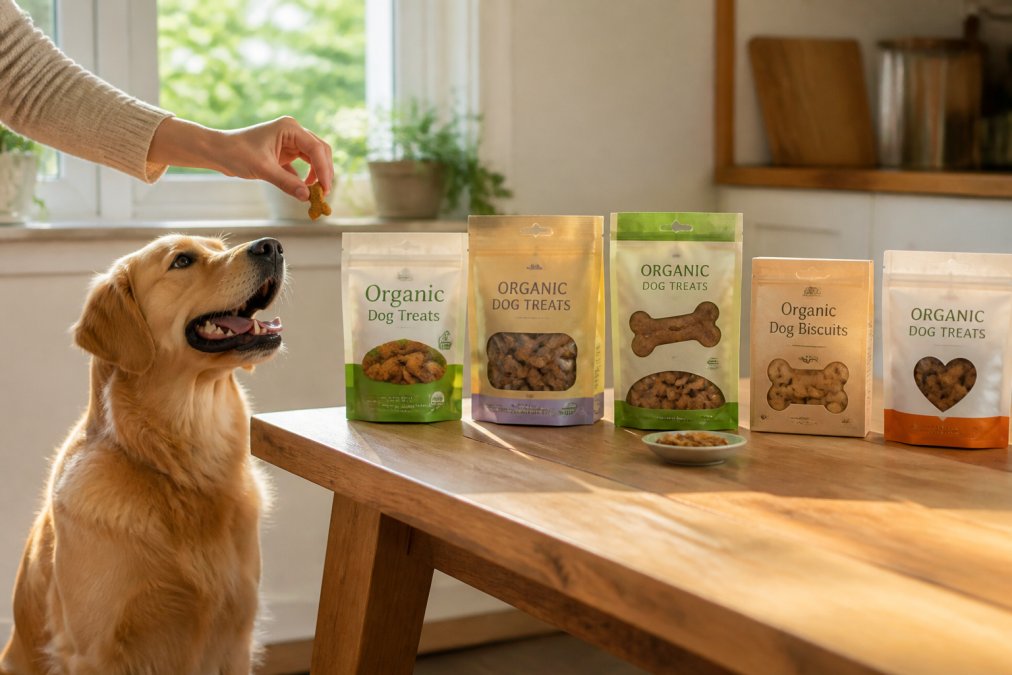
| Product | Price | Best For | Key Detail |
|---|---|---|---|
| Cookie Pal Pumpkin Chia Bites | $41.81 (4 x 10 oz) | Bulk buyers, digestive health | 95%+ organic, gluten-free |
| Bonne et Filou Dog Macarons | $25.42 (6 count) | Picky eaters, gifting | Human-grade, no artificial preservatives |
| Portland Pet Food Pumpkin Biscuits | $57.86 (6 x 5 oz) | Small-batch sourcing | Made in the USA, 5 ingredients |
| Bubba Rose Donuts | $3.75 | Budget entry point | Low-cost trial size |
| Hoggin' Dogs Prime Rib Ice Cream Mix | $6.99 | Heavy chewers, hot days | Lactose-free, no added sugar |
How to Read Dog Treat Labels Before You Buy
Reading a dog treat label means checking the ingredient list, guaranteed analysis, and certification claims rather than trusting front-of-package marketing.

The Ingredient-Transparency Audit: Six Checks in Order
Run these in sequence. The first check that fails tells you to put the bag down.
- First ingredient test. Ingredients are ordered by weight before processing. If the first item is a grain, starch, or unnamed fat ("animal fat," "poultry fat"), the treat is built on volume. A named protein or legume should lead.
- Ingredient-splitting test. Manufacturers split one ingredient into fractions so no single fraction outweighs the protein. Look for the same grain appearing three ways, "ground corn, corn gluten meal, corn bran", which together can outrank the named protein.
- Water-weight test. Fresh meat is roughly 70% water, so "chicken" listed first can drop below a dry grain once moisture is removed. If fresh meat leads but a grain or starch is second, the grain may be the real primary ingredient by dry weight.
- Unnamed-fat and unnamed-meal test. "Animal fat," "meat meal," and "by-product meal" do not name the species. A named version ("beef fat," "chicken meal") is traceable; an unnamed one is not.
- Preservative and humectant test. Scan the last third of the list for BHA, BHT, ethoxyquin, propylene glycol, and corn syrup. These extend shelf life or mask low-quality base ingredients. A treat preserved with mixed tocopherols (vitamin E) or one with a short shelf life and no preservative is the cleaner pick.
- Certification-verification test. A USDA organic seal or a Non-GMO Project butterfly is verifiable. A front-of-bag "natural" or "holistic" badge is not a regulated certification and can sit on a bag that still contains synthetic preservatives.
Reading the Guaranteed Analysis Without Getting Fooled
The guaranteed analysis reports minimums and maximums on an as-fed basis, so water inflates every number. A soft treat at 12% crude protein and a dry biscuit at 12% are not equivalent; the biscuit delivers far more protein per ounce (the FDA).
Two numbers matter most for everyday feeding:
- Crude fat minimum. Treats above roughly 15% crude fat are rich for daily feeding and better reserved for high-energy dogs or as an occasional reward (petnutritionalliance.org). The Bubba Rose Donuts pick in this guide runs 15% minimum, which is why it is flagged as a sometimes-treat.
- Crude fiber maximum. A high fiber ceiling (often from added cellulose or beet pulp) can signal a filler-heavy formula rather than genuine digestive support.
To compare two treats fairly, convert both to a dry-matter basis: subtract the moisture percentage, then divide the nutrient percentage by the remaining dry matter.
Ingredients to Avoid: Fillers, By-Products, and Synthetic Sweeteners
Three categories deserve a hard pass. Fillers like corn, wheat middlings, and cellulose add bulk with no nutritional value. Meat by-products are rendered scraps that can include parts not fit for human consumption, and the label rarely names the animal. Synthetic sweeteners such as propylene glycol and corn syrup make low-quality food palatable, while artificial preservatives like BHA, BHT, and ethoxyquin extend shelf-life at a cost.
What Organic Certification and Non-GMO Claims Actually Mean
Organic certification means a product meets the USDA National Organic Program standards for how ingredients are grown and processed. The USDA organic labeling standards define four tiers, from "100% Organic" down to "made with organic ingredients," and only the top tiers can display the USDA seal.
Non-GMO means the ingredients were not bioengineered, a separate claim from organic, so a product can carry one without the other. Check for third-party verification rather than trusting an unverified badge.
Best Limited Ingredient Dog Treats for Allergies and Sensitive Stomachs
The best limited ingredient dog treats use one primary protein and a short list of recognizable ingredients, making it easier to isolate a trigger. For a sensitive stomach, start with a single novel protein and carb, then add nothing else for two weeks.
Cookie Pal Pumpkin Chia Bites fit this approach well: organic lentils and sprouted buckwheat rather than wheat or corn, with pumpkin and chia for digestive support. Portland Pet Food Company's Pumpkin Biscuits take it further with just five ingredients: garbanzo bean flour, pumpkin, peanut butter, molasses, and cinnamon.

Allergy-Specific Substitution Matrix: Swap Problem Proteins Without the Guesswork
Most allergy elimination fails because owners swap one problem ingredient for another without a plan. Use this matrix.
| If Your Dog Reacts To | Swap In | Avoid |
|---|---|---|
| Chicken | Lentil or garbanzo base | Poultry by-product meal |
| Wheat or corn | Sprouted buckwheat, oat flour | Wheat middlings, corn gluten |
| Beef | Peanut butter or pumpkin | Unnamed "meat meal" |
| Dairy | Coconut oil-based treats | Yogurt coating, cheese |
| Artificial preservatives | Short-shelf-life baked treats | BHA, BHT, ethoxyquin |
Introduce one swap at a time and log what changed and when. If symptoms clear, you've found your trigger.
Five Organic Dog Treats That Beat the Subscription Model
Each pick is a one-time purchase you can reorder on your own schedule. Read the limitation on each before you commit.
Cookie Pal Pumpkin Chia Bites: Best for Bulk Buyers and Digestive Health
At $41.81 for four 10-ounce bags, this is the value pick for multi-dog households. The formula is 95%+ organic, gluten-free, and non-GMO, with organic pumpkin and chia for digestion. The catch: it's a 40-ounce case pack, so if your dog is indifferent to pumpkin, you're sitting on a lot of it.
Bonne et Filou Dog Macarons: Best for Picky Eaters and Special Occasions
Picky eaters respond to novelty, and these handmade macarons deliver it. Made in the USA with human-grade ingredients, they contain no artificial coloring or preservatives and are corn-free and wheat-free. They're a hard treat built for a long-lasting chew, with an 18-month shelf life and no refrigeration.
The limitation: they're a treat, not a meal replacement, and cost more per unit than biscuits. For elderly or small dogs, break each macaron in half by twisting both sides.
Portland Pet Food Company Pumpkin Biscuits: Best for Small-Batch American Sourcing
This is the pick for owners who want to know exactly where ingredients come from. The biscuits are made in the USA in small batches, and the recipe is five pronounceable ingredients: garbanzo bean flour, pumpkin, peanut butter, molasses, and cinnamon.
At $57.86 for six 5-ounce bags, it's the most expensive option per case here. You're paying for sourcing transparency and a short ingredient list, not volume.
Bubba Rose Donuts: Best Budget Entry Point for Healthy Snacking
At $3.75, this is the lowest-risk way to test whether your dog likes a baked, oat-and-peanut-butter treat before buying in bulk. Ingredients are oat flour, rice flour, peanut butter, carob, eggs, cinnamon, and honey, topped with a yogurt coating.
Two caveats: the yogurt coating contains dairy, so skip it for dairy-sensitive dogs, and the guaranteed analysis runs 15% crude fat minimum, on the higher side for everyday feeding.
Hoggin' Dogs Prime Rib Ice Cream Mix: Best for Heavy Chewers and Hot Days
This one is different: a mix you freeze at home. Empty the packet, add two-thirds of a cup of water, blend until smooth, and freeze at least five hours. It's lactose-free with no added sugar, a workable hot-weather treat for dogs who can't do dairy.
It's not a traditional chew, so it won't redirect a determined chewer the way a hard biscuit will. Think of it as a summer treat and a way to add moisture to a picky dog's day.
Subscription Box vs. One-Time Purchase: The Real Cost Comparison
The subscription model wins on convenience and loses on control: a recurring box locks you into someone else's protein choices and shipping schedule. One-time purchasing lets you buy the exact formula your dog tolerates, in the quantity your household needs. The real difference shows up in the annual math, not the monthly pitch.
The Annual Cost Framework
Most subscription boxes bundle a fixed weight of treats with shipping, hiding the per-ounce cost and turning unused treats into pure waste. To compare fairly, calculate cost per ounce actually consumed, not cost per box shipped. Here is the framework, using the one-time picks in this guide as the benchmark:
| Factor | Subscription Box | One-Time Purchase |
|---|---|---|
| Protein choice | Set by the box | You choose each order |
| Allergy control | Limited swaps | Full control |
| Cost basis | Fixed monthly charge, per-ounce cost hidden | Case price divided by total ounces |
| Waste risk | Unwanted treats pile up and expire | Buy only what works |
| Flexibility | Pause or cancel | Reorder anytime |
| Shipping | Often bundled into the plan | Varies; free thresholds common |
Run the math on the one-time picks. Cookie Pal Pumpkin Chia Bites at $41.81 for four 10-ounce bags is roughly $1.05 per ounce across 40 ounces. Portland Pet Food Pumpkin Biscuits at $57.86 for six 5-ounce bags is roughly $1.93 per ounce across 30 ounces. Those figures are the number to beat: if a subscription's effective per-ounce cost after shipping is higher than the one-time option your dog actually eats, it's costing you more for less control.
The Waste Multiplier Nobody Prices In
The subscription pitch assumes your dog eats everything in the box, but a multi-dog home or an allergy dog rejects part of every shipment. If a dog rejects even one of four items in a monthly box, the effective cost per consumed treat rises by roughly a third, a hidden premium that never appears in the advertised monthly price.
A one-time buyer avoids this by starting with the smallest trial size. The $3.75 Bubba Rose Donuts entry point exists precisely so you can test a format before committing to a case.
When a Subscription Still Makes Sense
For a single small dog with no allergies and a flexible palate, a subscription can be the lower-effort choice, and the per-ounce premium may be worth the discovery value. The calculus flips when any of these apply:
- Multi-dog household. Case packs spread across two or more dogs drop the per-ounce cost below most subscription plans.
- Allergy or sensitive-stomach dog. You need to control the protein every order, which a fixed box cannot guarantee.
- Picky eater. A dog that rejects novelty makes a rotating box a liability, not a benefit.
- Budget-conscious buyer. One-time purchasing lets you buy the largest case size of the one formula that works, which is the cheapest per-ounce path.
The Budget-Conscious Organic Sourcing Playbook
You don't need a subscription to buy organic treats affordably. Three moves cut cost without cutting quality:
- Buy the largest case of the one formula your dog tolerates. Per-ounce cost drops sharply with case size, and you eliminate waste from unwanted varieties.
- Skip gifting and novelty formats. Macarons and decorated donuts carry a per-unit premium for presentation, not nutrition. Reserve them for special occasions.
- Watch for free-shipping thresholds. Case packs often clear a free-shipping minimum a single small bag does not, erasing the shipping advantage a subscription advertises.
How to Choose High-Quality Organic Treats for Your Dog
Start with the protein, then the ingredient count, then the certification. A treat with a named protein, five or fewer recognizable ingredients, and a verified organic or non-GMO claim clears the bar for most dogs.
Match the format to the dog. Hard biscuits and macarons suit heavy chewers and occupy them longer. Soft baked treats and frozen mixes suit seniors, small breeds, and dogs with dental issues. Budget for the case size that matches your household, and buy a small trial first if you're unsure.
If you want these formulas without hunting through labels yourself, Shake Wag & Roll carries organic chews and limited ingredient diets selected for exactly this purpose, alongside expert canine care tips and a community of owners comparing notes on what actually works.
Frequently Asked Questions
What should I look for on an organic dog treat label?
Start with the first five ingredients, which make up most of the treat. Look for named proteins like chicken, pumpkin, or peanut butter, and recognizable whole foods such as oats, lentils, or chia seeds. Avoid meat by-products, synthetic sweeteners, and artificial preservatives like BHA or BHT. A USDA Organic seal means at least 95% organic ingredients, while non-GMO and human-grade claims indicate higher sourcing standards. Cookie Pal Pumpkin Chia treats, for example, list organic ground lentils and organic pumpkin as their base.
Are subscription boxes or direct-purchase organic treats better?
Direct purchase wins for most owners because you control exactly what your dog eats, when you reorder, and how much you spend. Subscription boxes send a rotating selection that may include treats your dog cannot tolerate, especially with food allergies. Buying individual bags or cases lets you stock proven favorites in bulk. A four-pack case of Cookie Pal treats at $41.81 breaks down to roughly $10.45 per 10-ounce bag, which competes well with most monthly box pricing without locking you in.
What are the best limited ingredient dog treats for sensitive stomachs?
Treats with five or fewer ingredients and a single protein source work best for sensitive stomachs. Portland Pet Food Company Pumpkin Biscuits use just garbanzo bean flour, pumpkin, peanut butter, molasses, and cinnamon, all baked in small batches. Cookie Pal Pumpkin Chia Bites are another strong option since they are gluten-free, wheat-free, and made with 95% organic ingredients. Introduce any new treat one at a time over several days so you can spot which ingredient causes a reaction.
How do I switch my dog from a subscription box to buying organic treats directly?
Check your current box's ingredient list first, then match those proteins and base flours to individual products. If your dog does well on pumpkin or peanut butter, start there. Order one bag or case, feed it as a training reward or topper for a week, and watch for digestive changes. Keep the switch gradual: replace one treat session at a time rather than swapping everything at once. This approach also lets you compare cost per ounce across brands before committing to bulk cases.
Finding organic treats your dog tolerates shouldn't require a monthly gamble on a box you didn't choose. Shake Wag & Roll stocks the organic chews and limited ingredient diets covered here, with durable toys for heavy chewers and expert care guidance to match. Browse the collection, start with a trial size, and reorder only what your dog loves. Sign up for exclusive offers and new product drops from Shake Wag & Roll.