

Is Grain-Free Dog Food Actually Better? A 2026 Review

Table of Contents
- What Grain-Free Dog Food Really Means on the Label
- The DCM in Dogs and Grain-Free Food Connection
- Signs of Grain Allergy in Dogs: When Grain-Free Is Medically Necessary
- How to Choose the Best Dog Food for Your Dog
- Grain-Free vs. Grain-Inclusive: A Side-by-Side Comparison
- Breed-Specific Risks and Budget-Friendly Options
- Frequently Asked Questions
Last Updated: September 25, 2026
What Grain-Free Dog Food Really Means on the Label
Grain-free dog food is a complete and balanced diet formulated without grains like wheat, corn, rice, or barley, using alternative carbohydrate sources instead. At Shake Wag & Roll, we hear this question constantly from dog parents: is grain-free dog food actually better? The honest answer is that it depends entirely on your individual dog, not on marketing claims.
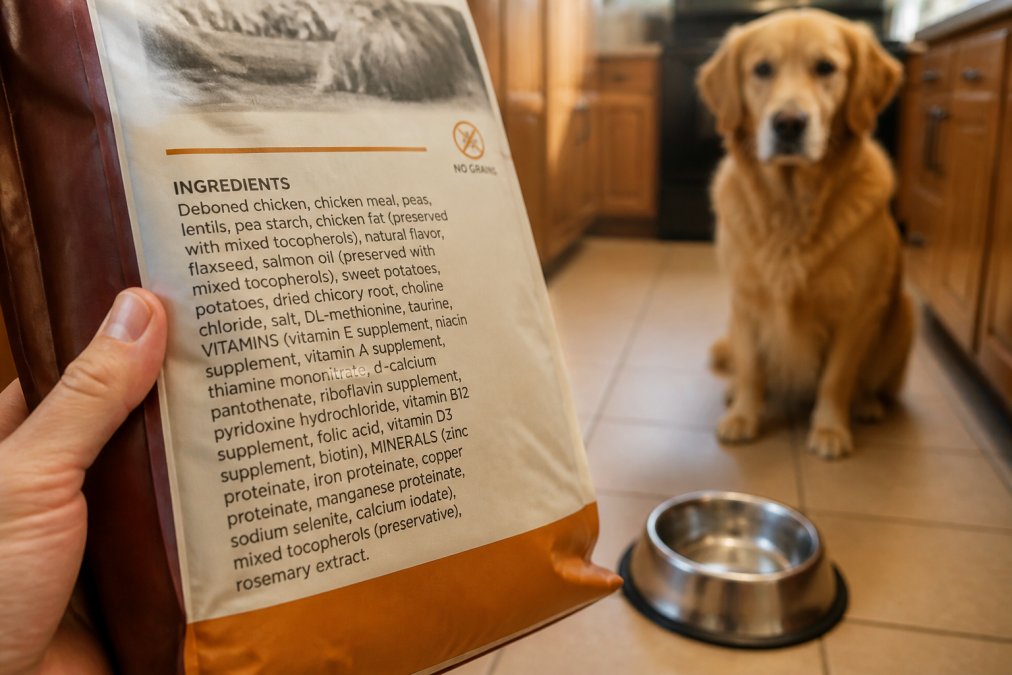
Ingredients That Replace Grains
Manufacturers replace grains with legumes, pulses, and starches. Common substitutes include peas, lentils, chickpeas, sweet potatoes, and tapioca. These ingredients can provide fiber and carbohydrates, but their nutrient density varies widely. Peas and lentils, for instance, contain protein but also phytates that can interfere with mineral absorption. The key is whether the overall recipe meets your dog's metabolic needs, not which single ingredient headlines the bag.
The DCM in Dogs and Grain-Free Food Connection
The connection between grain-free diets and canine dilated cardiomyopathy remains one of the most debated topics in veterinary nutrition, and it is the single biggest reason this question is not settled. Dilated cardiomyopathy is a disease of the heart muscle in which the ventricles enlarge and weaken, reducing the heart's ability to pump blood. It can lead to congestive heart failure, arrhythmias, and sudden death.
What the FDA Actually Did
The FDA's Center for Veterinary Medicine opened an investigation after receiving an uptick in DCM reports in dogs eating certain diets. In July 2018, the agency published its first public alert. In June 2019, it released its most detailed update, summarizing more than 500 reports of canine DCM, including cases in breeds not historically predisposed to the disease. The agency noted that the vast majority of reported cases involved diets labeled "grain-free" and containing high proportions of peas, lentils, other legume seeds, or potatoes.
FDA's investigation into diet-associated DCM
Why Legumes and Pulses Are Under Scrutiny
Grain-free recipes typically replace grains with legumes and pulses, peas, lentils, chickpeas, fava beans, and dry beans, plus starchy roots like sweet potato and tapioca. These ingredients are not inherently harmful. The concern is what happens when they make up a large share of a recipe's protein and carbohydrate load. Several mechanisms have been proposed:
- Taurine and its precursors. Taurine is an amino sulfonic acid the heart relies on for normal contractile function. Dogs can synthesize taurine from methionine and cysteine, but that pathway depends on adequate dietary protein and on the ratio of these precursors to other amino acids. Legume-heavy formulas can shift that ratio.
- Fiber and phytate binding. Legumes are high in fiber and phytates, which can bind minerals and interfere with nutrient absorption when they dominate a recipe.
- Protein quality. Some grain-free formulas lean on plant protein to hit guaranteed-analysis numbers, which can dilute the animal-protein contribution that supports taurine status.
- Individual variation. Some dogs appear to be poor taurine synthesizers regardless of diet, which is why whole-blood taurine testing is sometimes used in suspected cases.
Breeds With Higher Baseline Risk
DCM has a known genetic component in certain breeds, which complicates any diet discussion. Breeds with documented predisposition include Doberman Pinschers, Boxers, Great Danes, Irish Wolfhounds, and Cocker Spaniels. Golden Retrievers have also appeared frequently in the FDA's diet-associated case reports, which is notable because the breed is not classically considered a high-DCM breed. If you own one of these breeds, the threshold for discussing diet with your veterinarian should be lower, not higher, even if your dog currently looks healthy.
What This Means Practically
The honest read of the evidence is that grain-free is not proven safe or proven dangerous for the general dog population. It is a category with an open regulatory question mark, a plausible mechanism, and a small but real number of severe outcomes. That is enough to justify caution for predisposed breeds and for any dog showing cardiac symptoms, and it is not enough to justify panic for a dog that has thrived on a grain-free formula for years under veterinary supervision.
Signs of Grain Allergy in Dogs: When Grain-Free Is Medically Necessary
True grain allergies in dogs are far less common than owners assume. A genuine grain allergy involves an immune response to a specific protein, and it's diagnosed through veterinary testing, not guesswork. If your dog has a confirmed allergy to wheat, corn, or another grain, a grain-free diet becomes a medical necessity rather than a lifestyle choice.
Common Symptoms to Watch For
- Chronic itching, especially around paws, ears, and belly
- Recurring ear infections or skin infections
- Gastrointestinal upset: vomiting, diarrhea, or excessive gas
- Patchy hair loss or a dull, brittle coat
- Paw licking and chewing
These clinical symptoms can also point to environmental allergies or food sensitivities to proteins like chicken or beef, not grains. A veterinary consultation with an elimination diet is the only reliable way to identify the trigger.
How to Choose the Best Dog Food for Your Dog
Choosing the best dog food starts with your dog's individual needs, not a trend. Age, breed, activity level, and any diagnosed conditions all shape what belongs in the bowl.
Wild-Caught Salmon Dog Kibble by Open →
Evaluating Nutrient Profiles and Ingredients
Look past the front of the bag. Check the guaranteed analysis for protein, fat, and fiber content. Verify that the recipe meets AAFCO nutrient profiles for your dog's life stage. Scan the amino acid profile, since taurine and its precursors matter for cardiac health. A 100% traceable recipe, like those from Open Farm available at Shake Wag & Roll, lets you see exactly where ingredients come from, which is a level of transparency most mass-market brands don't offer.

Grain-Free vs. Grain-Inclusive: A Side-by-Side Comparison
Neither option wins outright. The right choice depends on your dog's health status, breed predispositions, and confirmed allergies. But the comparison most articles run stops at the table. The parts that actually change outcomes are what replaces the grain, how you switch, and what it costs over a year.
| Factor | Grain-Free | Grain-Inclusive |
|---|---|---|
| Best for | Confirmed grain allergies; dogs thriving under vet supervision | Most dogs without sensitivities |
| Carbohydrate sources | Legumes, pulses, sweet potato, tapioca | Rice, oats, barley, wheat, corn |
| Protein contribution | Often partly plant-based from peas/lentils | More often animal-based |
| DCM concern | Under FDA investigation | Lower reported association |
| Fiber content | Varies widely by legume type | Generally consistent |
| Cost | Often higher | Typically lower |
Ingredient Substitution: What Actually Replaces the Grain
The label tells you what is absent, not what is present. When a manufacturer removes wheat, corn, rice, and barley, something has to fill the carbohydrate and protein gap. In practice, that means one or more of the following:
- Peas and pea protein. Cheap, high in plant protein, and increasingly used as a primary protein source rather than a minor ingredient.
- Lentils and chickpeas. Good fiber, but high in phytates that can bind minerals like zinc and iron.
- Fava beans and dry beans. Similar profile to lentils; fava beans have been specifically named in FDA case data.
- Sweet potato and tapioca. Mostly starch and fiber; low protein contribution.
- Potatoes. Common in both grain-free and grain-inclusive formulas.
Transitioning Without GI Distress
Most articles tell you whether to switch. Few tell you how. An abrupt change is one of the most common causes of vomiting, diarrhea, and food refusal in dogs, and it can make you blame the new diet when the problem was the speed.
A standard protocol most practitioners recommend:
- Days 1-2: 75% old food, 25% new food.
- Days 3-4: 50% old, 50% new.
- Days 5-6: 25% old, 75% new.
- Day 7 onward: 100% new.
Budget Reality
Grain-free is not automatically more expensive, but the premium tier usually is. Over a year, the difference between a mid-priced grain-inclusive formula and a premium grain-free formula can run into the hundreds of dollars for a large-breed dog. That matters because the best diet is the one you can sustain. A few practical levers:
- Compare cost per pound, not per bag. Bag sizes vary widely and the unit price is what you actually pay.
- Check the guaranteed analysis, not the marketing. A grain-inclusive formula with a named animal protein first and an AAFCO statement for your dog's life stage can meet the same nutritional standard as a premium grain-free bag.
- Buy the largest bag your dog will finish before it goes stale. Kibble oxidizes; a 30-pound bag that lasts six months is not a savings.
- Ask your veterinarian before paying for boutique. For most dogs without a confirmed allergy, there is no evidence the premium grain-free tier outperforms a well-formulated grain-inclusive diet.
Breed-Specific Risks and Budget-Friendly Options
Some breeds appear more predisposed to DCM, including Golden Retrievers, Doberman Pinschers, Boxers, and Great Danes. If you own one of these breeds, discuss diet with your vet before committing to grain-free, even if your dog seems healthy.
Frequently Asked Questions
Do vets recommend grain-free food for dogs?
Most veterinarians recommend grain-free diets only for dogs with a confirmed grain allergy or intolerance. For the general dog population, grain-inclusive diets are typically advised unless there is a medical reason to avoid grains. The FDA investigation into diet-associated heart disease has made vets more cautious about recommending grain-free food without a specific diagnosis.
What is the downside of grain-free dog food?
The main downside is the potential link to dilated cardiomyopathy (DCM), a serious heart condition. The FDA investigated cases of DCM in dogs eating grain-free diets, particularly those high in legumes and pulses. Other downsides include higher cost and the risk of nutritional imbalances if the diet is not formulated by a veterinary nutritionist.
What is the link between grain-free diets and DCM in dogs?
The FDA investigated a potential connection between grain-free diets and DCM in dogs. Many reported cases involved diets containing peas, lentils, or other legume seeds as main ingredients. While a direct cause-and-effect relationship has not been proven, the investigation prompted warnings and further research into how these ingredients may affect taurine levels and cardiac health.
How can I tell if my dog has a grain allergy?
Signs of grain allergy in dogs include itching, skin redness, ear infections, vomiting, diarrhea, and poor coat condition. If you suspect a grain allergy, consult your veterinarian for proper testing. A hypoallergenic diet trial is often used to confirm the diagnosis before switching to a grain-free diet.